Editorial: Don't take away farmers' tools
OPINION: Farmers are being put on notice by the Green Party.




 increase font size
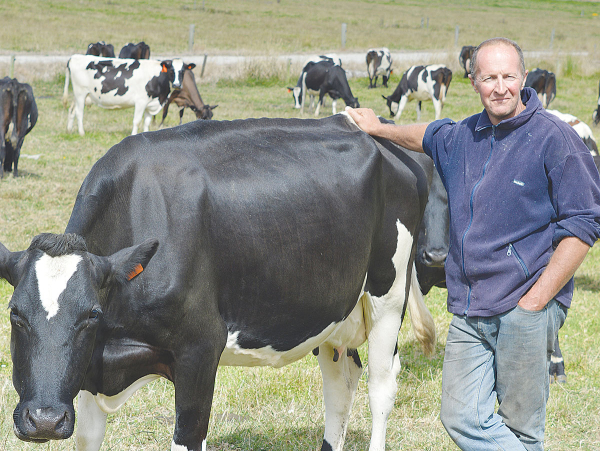 ACT MP Mark Cameron says while Damien O’Connor has done a good job with trade, he has failed as the Agriculture Minister.
ACT Party agriculture spokesman Mark Cameron claims that current Agriculture Minister, Damien O’Connor doesn’t understand farmers.
In a recent interview with Country TV, Cameron, a Ruawai dairy farmer, said that while O’Connor has done well for the country in his Trade Minister role, the same could not be said for his role as Agriculture Minister.
“Damien’s done a pretty good job with trade… arguably, he could have done better for the protein side of the sectors, that is the red meat sector and the dairy, with some of the FTAs [Free Trade Agreements] he’s sort of got in the pipeline and worked towards,” Cameron says.
However, Cameron is quick to note that the speed and rate of regulatory change on farm is something O’Connor and the political left wing have “got wrong”.
“When it comes to domestic regulatory settings, he [O’Connor] doesn’t understand us. He really doesn’t.”
Cameron claims that despite O’Connor’s background in farming it was clear that he was “at the behest of [Environment Minister] David Parker” on certain environmental issues including winter grazing.
In his interview with Country TV last month, O’Connor claimed that much of the rhetoric surrounding the practice of Intensive Winter Grazing (IWG) was inaccurate and inaccurate commentary, which he claimed came from former Federated Farmers president turned ACT Party candidate Andrew Hoggard.
“It’s a lot of rhetoric and it’s been run up by organisations like Fed Farmers under Andrew Hoggard; now Andrew’s stepped up and he’s going to stand for ACT which is fine, but some of the messages that they were sending to farmers were quite inaccurate,” O’Connor claims.
However, Cameron complains that the conversation around IWG “wasn’t nuanced enough”.
“People weren’t being consulted on causality, cause and effect,” he says. “If it’s not implementable on farm, the fact that those on the left, our mates in Labour, were talking about prosecuting farmers for pugging depths of animals… it was never going to work.”
Cameron claims that what he calls the more practical language coming from the political right shows a disconnect between O’Connor and Parker and what farmers could achieve.
He says that he has spent much of the past three years he’s been in Parliament explaining the impact of certain policies on farmers.
“But when you’re explaining it, you’re not debating the issues,” he says.
Cameron says that, with the upcoming election, there will be more farmers around Parliament to debate the issues.
“I think the fact that going forward the language on the right is really going to get into the weeds of what causality looks like.”
OPINION: Farmers are being put on notice by the Green Party.

Associate Agriculture Minister Mark Patterson says his party – NZ First - isn’t opposed to the “trade element” of a free trade deal with India.
Retiring MP and dairy farmer Mark Cameron is blasting the Green Party for proposing to ban the use of synthetic fertiliser and cutting cow numbers.
A miserable budget that didn’t deliver much for anyone.
OPINION: At a time when farmers are advocating for less government spending and no new taxes, the dairy sector is rightly concerned by ACT's new immigration policy.
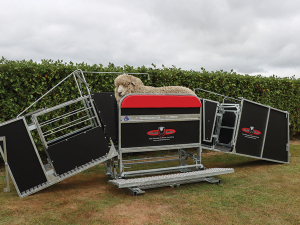
Oamaru-based livestock handling specialist Te Pari has bought Combi Clamp, the New Zealand manufacturer of Combi Clamp manual sheep handlers.
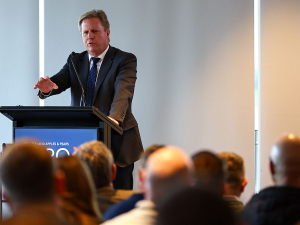
Agriculture Minister Todd McClay has admitted that a scheme bringing workers from Pacific nations to work on orchards has become too hard to navigate but says changes are coming.
A new app designed in New Zealand aims to help sheep, beef and deer farmers capture, analyse and use body condition score data more effectively.
Canterbury farmer Andy Macfarlane has been appointed to the board of AgriZeroNZ, the public-private partnership designed to accelerate the development and deployment of emissions reduction tools for New Zealand farmers.
For over 50 years Mel Ewers has been supporting the apple sector navigate through compliance and quality assurance issues.
The apple sector is enjoying a bumper harvest season.
OPINION: City and regional councils have been put on notice - stop using extreme climate forecasting scenarios that can drive…
OPINION: The Green Party’s rivers and oceans policy may have a new name but nothing else has changed.