
NZ Milk Price Could Hit $10/kgMS as Global Supply Eases
A 'tsunami' of milk from key exporting countries is winding down and this may be good news for New Zealand dairy farmers.




 increase font size
 Rabobank’s Todd Charteris says the bank’s sustainability efforts are largely focused on supporting its clients to reduce their emissions.
Rabobank says climate change creates both risks and opportunities for the bank and its clients and that the food and agriculture sector needs to recognise the potential for both.
Rabobank NZ chief executive Todd Charteris notes that the transition pathway for New Zealand food and agriculture will ultimately be driven by market access considerations, give our agriculture sector's dependence on regional and global trade.
"Transitioning to lower emissions intensity farming systems can support market access and can lead to improved efficiencies, reduced input costs and better profitabiltiy.
"Where appropriate, it can also support the growth ambitions of our clients within the context of increasingly stringent regulatory standards.
"The transition is also essential to us collectively managing the risks that we all share."
Charteris made the comments at the launch of Rabobank NZ's latest Sustainability Report covering the bank's end-to-end ambition for sustainability and highlighting its progress in the 2023 calendar year.
Rabobank says that, with its own operational improvements only moving the emissions reduction needle so far, its sustainability efforts are largely focused on supporting its clients to reduce their emissions.
"It is in our interests to do our bit to minimise the impacts of climate change. For us that means supporting New Zealand's farmers and growers to balance the priorities of providing food security to a growing world with reducing the impact agriculture has on the environment," says Charteris.
"Within our Climate Statements, we have assessed the relative risks and opportunities for Rabobank across a number of climate scenarios. It was a hugely valuable exercise that is increasingly informing the decisions we make as a bank.
"Many of our food and agri clients are also looking at climate scenarios for their own businesses, and we strongly encourage our clients who haven't as yet done this, to go through the same exercise."
The Sustainability Report outlines several initiatives undertaken by the bank to help transition its business, as well as those of its clients, to more sustainable business practices. Key initiatives highlighted include:
The report follows the publication of its Climate Statements on 30 April which focus on climate risk and opportunities in Rabobank's New Zealand business.
"As with our first Sustainability Report last year, this report provides a comprehensive view of our support and contribution to the rural sector and it's transition toward a more sustainable future," says Charteris.
"The report focuses on Rabobank New Zealand's local environmental, social, and governance (ESG) strategies and initiatives, and how these are contributing to our global commitments."
A 'tsunami' of milk from key exporting countries is winding down and this may be good news for New Zealand dairy farmers.

Chinese beef trade quotas and a looming suspension of Brazilian beef imports into the European Union are expected to reshape global beef trade flows over the remainder of 2026, with implications for New Zealand exporters, according to Rabobank's Q3 Global Beef Quarterly report.
New Zealand consumers are paying more for beef mince than ever before, with the average retail price now sitting above $24 per kilogram, according to Rabobank.
West Otago dairy farmer Luke Kane has been awarded the 2026 Rabobank Dr John Morris Business Development Prize.
Twenty five secondary school students from around New Zealand recently completed a three day residential programme designed to explore career opportunities across the food and fibre production supply chain.


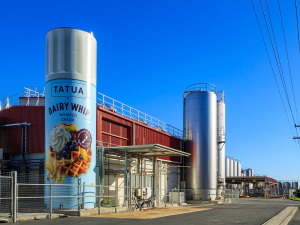
Waikato milk processor Tatua has again declared a record milk payout to farmer shareholders, leaving other processors in the dust.

A Labour-led Government won’t be bringing back the controversial freshwater rules of 2020.
National’s much-touted free trade deal with India featured in the Rural Issues Debate at Mystery Creek, Hamilton on Wednesday night.
New Zealand's 2026-27 freshwater fishing season has opened, with anglers encouraged to head to rivers and lakes over the coming days as conditions look favourable across much of the country.
Central Otago District Council (CODC) has voted against a plan to spread treated sewage sludge from Cromwell and Alexandra on farmland near Lauder, a decision Federated Farmers says reflects strong opposition from rural residents.
Pāmu has released its FY26 Integrated Annual Report, reporting a Net Operating Profit of $113 million, more than double the $49 million recorded in FY25.


OPINION: It seems Canterbury processor Synlait is still in the doldrums.
OPINION: Get offside with New Zealand First leader Winston Peters at your own peril.




