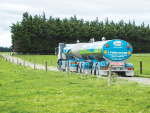
Fonterra FY26 Results: $9.69 Milk Price, $3.4bn Profit
Fonterra has unveiled its annual results for the 2026 financial year, posting $27 billion in revenue and close to $20 billion returned to New Zealand farmer owners and unit holders.




 increase font size
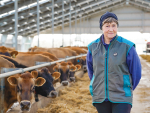
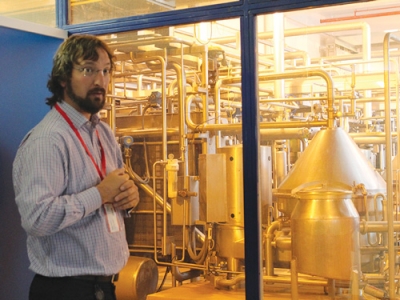 Fonterra’s energy manager Tony Ooston.
Energy blitzes at Fonterra's 36 sites identified 900 initiatives for energy efficiency, says Fonterra energy manager, Linda Thompson.
The ongoing energy programme began in 2003, cutting the co-op's 'energy intensity' by 16.8%, calculated on the gigajoules of energy per tonne of product made, says Thompson. That saving is equivalent to two years' annual household use by all Wellington houses.
The sites are audited against best practice and on the principles of the ISO 5001 standard for energy management, covering, for example, energy consumption, contracts and management.
From those blitzes about 900 initiatives were identified, implemented at the sites and ranked from the biggest benefit down. Last season they took a slightly different approach and looked at target plants including Te Awamutu and Te Rapa. At Te Awamutu they make dual use of water already heated.
Tony Ooston, also a co-op energy manager, says on the boilers at Pahiatua, built last year, and Lichfield, under construction, they have installed high-efficiency economisers that extract every last bit of heat. The economisers are the biggest in New Zealand for the size of the gas-fired boilers. That heat extraction also cuts gas consumption. The plant achieves 93% energy efficiency vs 87% in a typical boiler.
They are now looking at retro-fit possibilities at other plants, starting with cost-benefits.
Longburn, Tuamarina and Culverden are concentrate plants where water is extracted from milk before it is sent to manufacturing plants, thus saving energy in transport. The water is reused.
Oosten says the Edendale plant has expanded production, but by raising energy efficiency they haven't had to increase boiler capacity. "All we've had to do is balance the heat load at the site and utilise existing assets."
Mark Leslie, Fonterra director, NZ manufacturing, says there is not one big 'silver bullet' for energy efficiency; instead lots of little things stack up. The concentrate sites are one example: concentrated milk requires less fuel to move it. Tuamarina and Culverden are 250km from the nearest plant so it creates energy efficiency.
Last year they concentrated milk at Longburn then railed it south across Cook Strait to Clandeboye. Lighting design also raises energy efficiency.
Thompson says computer analysis determines the most efficient routes for milk collection; since 2010 they have cut diesel use by 10% per 100km tanker running. The schedules are optimised every 12 hours using a predictive analysis of the volumes produced at each farm.
Oosten says 40% of the milk is picked up in the three peak months, this season 87 million litres, equating to a farm collection every eight-nine seconds.
Leslie says they ship products to China and 146 other countries as energy efficiently as possible.
Fonterra has 2500 inspections a year by regulatory authorities and customers, and energy efficiency is an increasingly hot topic.
Fonterra has unveiled its annual results for the 2026 financial year, posting $27 billion in revenue and close to $20 billion returned to New Zealand farmer owners and unit holders.
Fonterra Co-operative Group has confirmed the independently assessed candidates standing for election to its board in 2026.
Fonterra has revised its Farmgate Milk Price forecast for the 2026/27 season, lifting the midpoint and narrowing the range on the back of improving global dairy commodity prices.
Outgoing Fonterra Co-operative Council chair John Stevenson says that it has been a privilege to represent the co-op's farmer shareholders.
OPINION: It seems Canterbury processor Synlait is still in the doldrums.



Federated Farmers says it welcomes Labour's commitment to reviewing the Sharemilking Agreements Act, calling on other major parties to do the same.
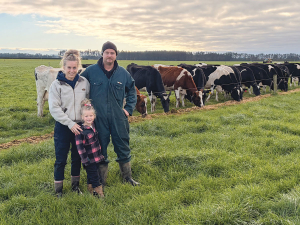
For Canterbury dairy farmers Sian Meijer and Rick Wobben, wearable technology has become one of their most valuable on-farm tools - helping manage 1850 cows across an expansive, high-performing dairy operation while improving efficiency, mating outcomes and day-to-day decision making.
Fonterra has unveiled its annual results for the 2026 financial year, posting $27 billion in revenue and close to $20 billion returned to New Zealand farmer owners and unit holders.
The first major update to the Dairy Cattle Code of Welfare in more than a decade has been released, marking what DairyNZ describes as an important step in ensuring animal welfare standards continue to evolve alongside scientific evidence and on-farm realities.
Ravensdown shareholders have elected Jane Montgomery and Kate Acland to the Ravensdown Board for three-year terms, following a closely contested director election.
Federated Farmers says new legislation replacing the Resource Management Act will cut red tape, unlock investment and help grow New Zealand's export-led economy, after the Planning Bill and Natural Environment Bill passed their third reading in Parliament yesterday.



OPINION: It seems Canterbury processor Synlait is still in the doldrums.
OPINION: Get offside with New Zealand First leader Winston Peters at your own peril.




