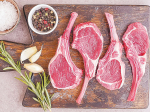
NZ Red Meat Exports Hit $867m in August, Up 23%
New Zealand's red meat and fifth-quarter exports reached $867 million in August, up 23% on the same month last year, as stronger returns lifted earnings across all major markets.




 increase font size
 Keith Woodford, agri-food systems.
Several years ago New Zealand had a 20% market share of infant formula in China and now that has dropped to under 10%, says Keith Woodford, agri-food systems, Lincoln University.
Just about every value-add product is currently losing market share in China.
If we don't collaborate for online marketing under a New Zealand Inc brand then we will remain in the commodity business, Woodford told a recent China Business Summit in Auckland.
"I am a proponent of online marketing of our food. We have one big company in NZ and we have lots of smaller companies," he said.
"Nearly all our smaller companies if they try to go it alone in China will fail. If they try to go the supermarket way they will get lost in that jungle. But if they try to go the online way by themselves they will get lost in that jungle too."
He cited over a million products on one popular site.
"There is only one way for NZ to capture value-add with its agri food in China and that is to capture an integrated NZ Inc approach," he said.
"Just talking clean and green isn't going to get you far but at least if we work together in an integrated NZ framework we have a chance to be on the same standing, the same level, as the big international companies we are trying to compete with.
"The priorities are food quality, food safety and, even more, food products.
"I have a vision for a NZ portal: it would have all NZ products there; any Chinese consumer would go onto that site and know they were all NZ guaranteed products with appropriate authentication.
"Their purchases would go into the online cart and within 24 hours would be delivered to their house."
Woodford said all the bits of the system are already there. But the overall integration will cost money to set up. One company he has spoken to was spending a billion dollars on its digital and IT system.
"We don't need to spend that much, but this is the billion dollar opportunity for NZ," Woodford said. "It is actually the multi-billion dollar opportunity and it is multi-billion for each and every year. The demographic we are interested in is essentially the same demographic that travels to NZ."
He said there would soon be 100 million Chinese in the high income bracket. To capture the value add with our agri food we must all work together.
"I would like to see this as a government-private partnership. I first did some work on this four and a half years ago for New Zealand Trade and Enterprise but it got lost somewhere in the bureaucracy because of changes," he said.
"I then thought maybe it can be led by private enterprise but most of the private firms have enough issues of their own rather than trying to pull the whole thing together.
"So I am back trying to talk to some senior Government ministers about whether they can help with the initial facilitation of this." It would be hard, but the opportunities are huge.
New Zealand's red meat and fifth-quarter exports reached $867 million in August, up 23% on the same month last year, as stronger returns lifted earnings across all major markets.

Meat Industry Association data, released alongside the Red Meat Sector conference in Wellington, shows export value climbing across the US, China, UK and Canada.
OPINION: The stats speak for themselves.
Speculation of a possible joint move by Fonterra and a2 Milk to buy Synlait raises a much bigger strategic question, says agribusiness expert Dr Nic Lees.
Lynnette Hudson's 30-year obsession with Pinot Noir was sparked working vintage in Burgundy, seeing how subtle changes in terroir were expressed in the glass. It was, she says, "an elightening moment in every way".

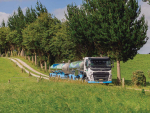
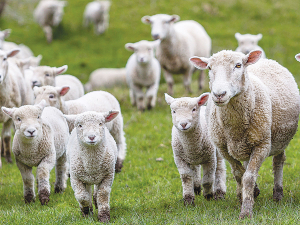
A New Zealand initiative supporting farmers to restore the health of grazing landscapes has received international backing through the Regenerative Fund for Nature, a global collaborative fund supporting regenerative agriculture and the communities that produce natural fibres for the fashion industry.
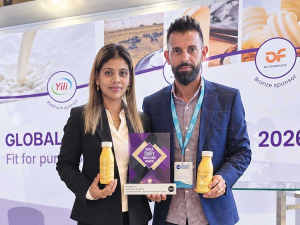
Combine premium New Zealand products, blend in a family ritual and what do you get? A world-class functional drink.
Entries are now open across eleven regions for the 2027 New Zealand Dairy Industry Awards (NZDIA).
Safer Farms is urging farmers to make sure everyone working on farm has safe, suitable footwear for the job.
The Government is backing work on a community-led water storage scheme that could irrigate up to 11,000 more hectares of the Poverty Bay flats, Agriculture Minister Todd McClay says.
Agri-tech company Herd-i has become a new all-region sponsor of the New Zealand Dairy Industry Awards (NZDIA), the largest nationwide celebration of excellence in the dairy sector.

OPINION: It seems Canterbury processor Synlait is still in the doldrums.
OPINION: Get offside with New Zealand First leader Winston Peters at your own peril.




