Rabobank Launches HortPathways for Emerging Hort Leaders
Twenty-eight emerging leaders from across the horticulture sector spent two days last month learning valuable skills and connecting with industry experts.




 increase font size
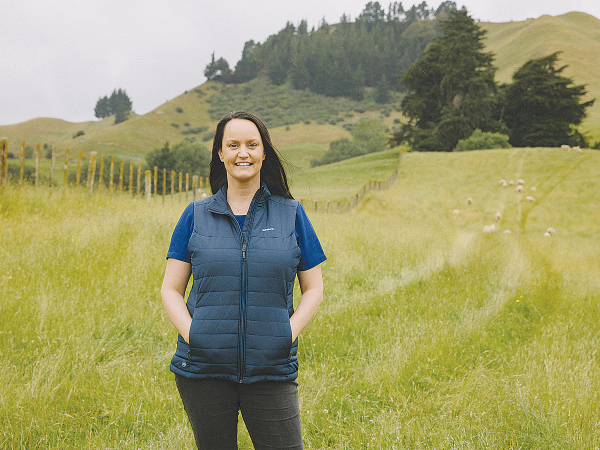 Emma Higgins, Rabobank says the next season will be a challenging one.
Buckle up and prepare for a bumpy ride in the coming season.
That's the message to dairy farmers from Rabobank's senior agricultural analyst Emma Higgins who says there are more risks now than last season and these are building, especially in our main market - China.
She says, while Rabobank is forecasting a $9 milk price, there is still a great deal of uncertainty about what might happen in the coming months.
The focus is on when the hard lockdowns in Shanghai might lift. The Ministry of Foreign Affairs is saying it could be mid to late June before any sense of normality returns to the city, which is a major port through which many of NZ's exports go through.
Higgins says questions remain about how and when that might happen in the coming weeks.
"This is a key watching point and obviously there are still conversations going around the risk of secondary sanctions being applied to China should they enter into the geopolitical tussle between the US and Russia. If that were to happen, there is a risk that our major market could evaporate overnight, which would have dire consequences for NZ.
"We are not there yet, bus as I say, the risks are building and that is only one market, let along things like rampant inflation and other recessionary risks as well," she says.
On top of the Covid lockdowns in Shanghai, Higgins says the Chinese economy is slowing and economists the world over are slashing forecasts for global growth.
She says there are other factors taking place within China that are of concern to our dairy industry - in particular the phenomenal growth of their domestic dairy industry.
Higgins says, in the last two years, milk production in China has grown by 15% and a staggering 8% in the first quarter of this year. She says the expansion of the Chinese dairy herd has been a target for their government and that has implications for NZ.
"The consumption data in China is quite bumpy but we don't think consumption has grown at quite the same rate as production yet. At the same time, their imports have been incredibly strong. NZ has obviously been a major player in that and so when you build that picture up... we do think that the China market is well stocked and we do expect to see some weakness appearing across the course of this year, in terms of their import demand.
"In the first quarter of this year our shipments to China actually slowed down by 20% year on year for quarter one."
Given all this information, one could be forgiven for thinking that China is moving towards what happened in the then EEC in the 1980s - over supply called 'milk lakes'. Higgins' view is that China is "well stocked" with dairy products and there are other factors which have contributed to this during the pandemic, such the broken supply chains.
"Also, the fact that companies may have changed their buying strategies and perhaps moving from 'just in time' to 'just in case' which could have contributed to some of the import growth," she says.
Higgins says adding to the woes is the Ukraine conflict which no one could have predicted a year ago. She says talking through some of these scenarios is "uncomfortable" and not nice but the risks need to be put out there.
Twenty-eight emerging leaders from across the horticulture sector spent two days last month learning valuable skills and connecting with industry experts.

A 'tsunami' of milk from key exporting countries is winding down and this may be good news for New Zealand dairy farmers.
Chinese beef trade quotas and a looming suspension of Brazilian beef imports into the European Union are expected to reshape global beef trade flows over the remainder of 2026, with implications for New Zealand exporters, according to Rabobank's Q3 Global Beef Quarterly report.
New Zealand consumers are paying more for beef mince than ever before, with the average retail price now sitting above $24 per kilogram, according to Rabobank.
West Otago dairy farmer Luke Kane has been awarded the 2026 Rabobank Dr John Morris Business Development Prize.


Alliance is calling for final applications for its 2027 Graduate Programme, with applications closing on Sunday 25 October.
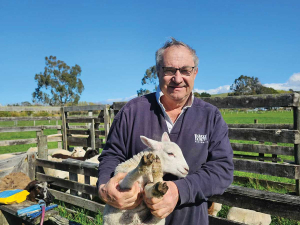
Decades piloting planes has ensured vet and farmer David Hayes is focused on safety. So, after a serious accident while welding on farm, he is sharing his experience so others can learn from it.
Canterbury milk processor, Synlait Milk has confirmed Leon Fung as its chief executive officer.
OPINION: Making it easier to collect rainwater and use it to grow crops and livestock is a no brainer.
As part of its Election 2026 coverage, Rural News asked political parties how they would help pull the arable sector out of the doldrums. Here's what they said:
Farmers are being encouraged to rethink how they manage waste on farm with the launch of ruralwastesorted.co.nz, a new website bringing together practical tips, real farmer experiences and resources.


OPINION: It seems Canterbury processor Synlait is still in the doldrums.
OPINION: Get offside with New Zealand First leader Winston Peters at your own peril.




