Fonterra FY26 Results: $9.69 Milk Price, $3.4bn Profit
Fonterra has unveiled its annual results for the 2026 financial year, posting $27 billion in revenue and close to $20 billion returned to New Zealand farmer owners and unit holders.




 increase font size
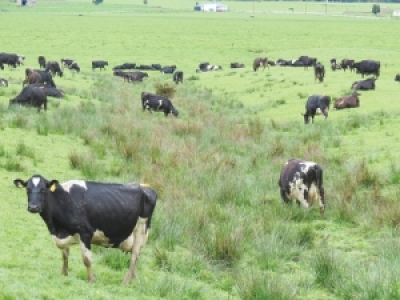 ComCom has queried whether new dairy conversions should have 'open entry' to join Fonterra in its latest report.
The Commerce Commission has queried whether new dairy conversions should have 'open entry' to join Fonterra in its latest report.
In the report released today the Commerce Commission says there is not sufficient competition at the farm gate and factory gate to consider full deregulation at this time.
Deputy Chair Sue Begg says keeping the open entry and exit provisions in place during any reforms would help with the transition by aiding the growth in competition at the farm gate by suppliers that could then enter the factory gate market.
"However, we think it is worth exploring whether open entry for new dairy farm conversions should be removed," Begg says.
"Open entry for new conversions contributes little to supporting competition in the farm gate market, while imposing costs on Fonterra."
The Commission released its final report on the state of competition in New Zealand's dairy industry in a review review which began in June last year at the request of the Minister for Primary Industries as required under the Dairy Industry Restructuring Act 2001 (DIRA).
Begg says while the costs and benefits of the DIRA Regulation are more or less balanced, the risks of removing it too soon outweigh the risks of it remaining longer than it should.
"As it stands, without regulation Fonterra would be able to increase the price of raw milk it sells to other domestic processors and this would likely flow through to higher retail prices of dairy products for New Zealand consumers," Begg says.
"Increased competition is needed, particularly at the factory gate, and our view is it is better to err on the side of caution before embarking on full deregulation."
The final report recommends that a pathway to deregulation would be smoothed by facilitating the development of a factory gate market for non-DIRA milk. Options the Minister could consider include:
· reducing DIRA milk entitlements;
· investigating if and when the DIRA milk price covers Fonterra's opportunity costs; and
· tightening the terms and conditions for DIRA milk supply.
The final report also confirms the recommendation to reset the market share thresholds in both the North and South Islands to 30% (up from the current 20%), as well as resetting the time limit threshold to the 2021/22 season as the triggers for the next competition review of the dairy industry.
"The support of the dairy processors, industry bodies and experts has been integral to enabling us to complete this work in such a short timeframe. On behalf of the Commission, I would like to thank all those who provided information, gave interviews and submitted on our draft report," Begg says.
Fonterra has unveiled its annual results for the 2026 financial year, posting $27 billion in revenue and close to $20 billion returned to New Zealand farmer owners and unit holders.

Fonterra Co-operative Group has confirmed the independently assessed candidates standing for election to its board in 2026.
Fonterra has revised its Farmgate Milk Price forecast for the 2026/27 season, lifting the midpoint and narrowing the range on the back of improving global dairy commodity prices.
Outgoing Fonterra Co-operative Council chair John Stevenson says that it has been a privilege to represent the co-op's farmer shareholders.
OPINION: It seems Canterbury processor Synlait is still in the doldrums.



Federated Farmers says it welcomes Labour's commitment to reviewing the Sharemilking Agreements Act, calling on other major parties to do the same.
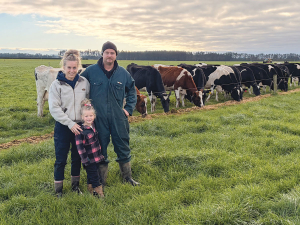
For Canterbury dairy farmers Sian Meijer and Rick Wobben, wearable technology has become one of their most valuable on-farm tools - helping manage 1850 cows across an expansive, high-performing dairy operation while improving efficiency, mating outcomes and day-to-day decision making.
Fonterra has unveiled its annual results for the 2026 financial year, posting $27 billion in revenue and close to $20 billion returned to New Zealand farmer owners and unit holders.
The first major update to the Dairy Cattle Code of Welfare in more than a decade has been released, marking what DairyNZ describes as an important step in ensuring animal welfare standards continue to evolve alongside scientific evidence and on-farm realities.
Ravensdown shareholders have elected Jane Montgomery and Kate Acland to the Ravensdown Board for three-year terms, following a closely contested director election.
Federated Farmers says new legislation replacing the Resource Management Act will cut red tape, unlock investment and help grow New Zealand's export-led economy, after the Planning Bill and Natural Environment Bill passed their third reading in Parliament yesterday.




OPINION: It seems Canterbury processor Synlait is still in the doldrums.
OPINION: Get offside with New Zealand First leader Winston Peters at your own peril.




