
FAR Eyes NZ Grain as Dairy Supplementary Feed
Dr Scott Champion, Foundation for Arable Research chief executive, says that everyone in the supply chain had a role to play in driving the sector's long-term success.




 increase font size
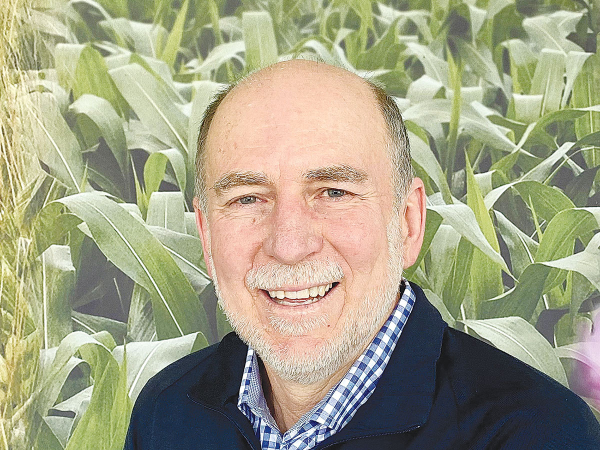 FAR senior maize researcher David Densley.
Adapting to future consumer and environmental requirements while retaining profitability will be one of the key talking points at the Foundation for Arable Research's 2024 maize conference.
The "Maize Profit and Productivity" conference is on February 12 and 13 at the Claudelands Event Centre in Hamilton.
Its programme will explore and discuss how to build profitable and resilient maize systems and will feature international speakers. It will also include an afternoon at FAR's Norther Crop Research Site at Tamahere, near Hamilton where triel work will be discussed.
FAR senior maize researcher David Densley says the conference will start with a global view of sustainability and carbon emissions targets being set by food companies like Nestle, what this means for New Zealand, and then zero in on ways maize growers can and are adapting to these changes.
Three grower panels will discuss what they are doing on-farm, including developing soils that are more resilient to climate variability, reducing nitrogen fertiliser without compromising profitability, the role of biologicals within the production system and the application of precision agriculture.
“So, these farmers are saying that it may sound daunting, but this is the journey we are on and we are continually refining our production system to make this work for us. The message is don’t be overwhelmed.
“It’s a balance of how do I get more profitability, how do I get more resilience in my system and how do I meet environmental requirements,” Densley says.
International speakers include Dr Connor Sible, a US expert on biological options. Connor Sible is a post-doctorate research associate at the University of Illinois and works with internationally-renowned maize researcher Professor Fred Below, who attended last year’s FAR maize conference.
Sible’s research focus is plant growth regulators, biologicals and bio-stimulants in maize and soybean cropping systems. His primary focus is working to categorise these products based on their active components and the mode of action designed to create an agricultural advantage, and determine in which situations these products perform best and bring their greatest value to growers. Connor Sible will be in New Zealand for a week as a guest of FAR.
The other overseas speaker, Scott Shearer, professor and chair of Food Agricultural and Biological Engineering at Ohio State University, will present via video link.
He will discuss the current and future role of precision agriculture in US maize systems. Scott Shearer says that farmers are turning to technology to reach their goals. “We’ve evolved from precision agriculture to digital agriculture,” he says.
He will be followed by FAR’s technology manager Chris Smith on precision agriculture in New Zealand maize systems.
For more information and to register, www.far.org.nz/events
Dr Scott Champion, Foundation for Arable Research chief executive, says that everyone in the supply chain had a role to play in driving the sector's long-term success.

Flat pricing in the face of significant increases in costs is the greatest problem facing the arable sector, says Foundation for Arable Research (FAR) chief executive Dr Scott Champion.
Four years since it was first detected in New Zealand, researchers and growers now know much more about management of maize pest fall armyworm (FAW).
Two Canadian spraying experts, Tom Wolf and Jason Deveau, are visiting New Zealand in early August to ensure that arable growers are hitting the target with this key piece of equipment.
Tickets are now available for the 2026 Arable Awards, set to be held in Christchurch on 20th August.



Fonterra Co-operative Group chief financial officer Andrew Murray has resigned to take up a role outside the dairy giant.
A major move is about to get underway to improve the quality and viability of dairy beef and cattle in NZ.
Veterinarians say changes to the code of welfare for dairy cattle provides a positive foundation for improved cattle welfare across the country.
Today, 15 October, is the International Day of Rural Women, which recognises rural women’s contribution to farming, communities and the environment.
Global dairy giant Lactalis has integrated its Australian operations with the Mainland Dairy consumer business it acquired from Fonterra earlier this year.
After almost two decades of sharemilking, saving and building equity, Aaron and Marcia Flay this year realised their long-held dream of settling on their first dairy farm.


OPINION: It seems Canterbury processor Synlait is still in the doldrums.
OPINION: Get offside with New Zealand First leader Winston Peters at your own peril.




