Fonterra FY26 Results: $9.69 Milk Price, $3.4bn Profit
Fonterra has unveiled its annual results for the 2026 financial year, posting $27 billion in revenue and close to $20 billion returned to New Zealand farmer owners and unit holders.




 increase font size
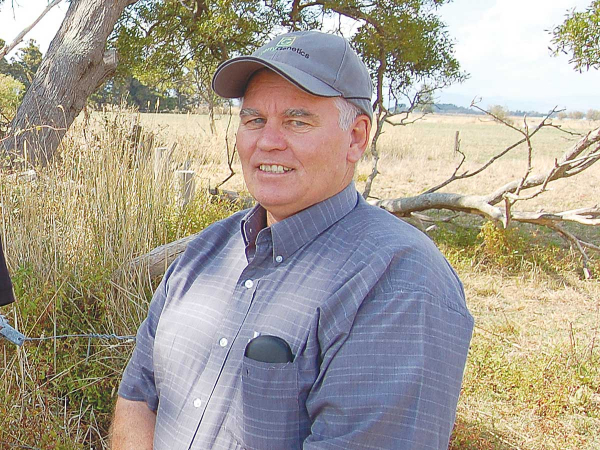 Mark Townshend.
A dairy industry leader says the COVID-19 interruption should bring positive changes to farming in New Zealand.
Mark Townshend, Ngatea, says the main positive changes for dairying will be the ability to grow NZ dairy production, lure more people to rural communities and improve the talent pool of farm staff.
With money earners like tourism and international student education kneecapped for the medium term, food production will be crucial for NZ’s economy.
“If NZ wants the affluence to provide first world health, education and social services, growing NZ’s home-base of food production is not a choice, it is a necessity,” Townshend told Dairy News.
To have the social license to grow, farmers may have to take further steps to protect water quality but Townshend says increased production of food under NZ’s world class carbon efficient methods should not be an issue.
“While more food production here would be increasing NZ’s own carbon emissions, there would be improvement in total global emission efficiency as we produce more and the less carbon efficient elsewhere producing less.”
Townshend says the post-COVID-19 landscape should be better for logical and responsible discussions around responsible genetic modification (GM) opportunities.
“Obvious ones which come to mind include carbon efficient and drought resistant pasture species, and removing the animal welfare and cost implications by breeding cattle without horns.”
Townshend says most importantly, farmers will come out of the crisis with greater recognition and respect for their efforts.
“Many dairy farmers have had their confidence and pride severely dented as they have been portrayed as polluters, animal abusers, a poor banking risk and less relevant to the NZ economy: this should now reverse,” he says.
“I try to commit at least one day per week to try and help others grow in the farming sector. But personally, I feel tired from trying to constantly lift the spirits of many of those which I touch in my daily farming life.”
Farmers should also face a more receptive banking sector.
“Agri-banking should be comparatively easier than over the last couple of years: although all banking is likely to be challenging,” he says.
However, Townshend cautions farmers not to oversell the importance of agriculture to NZ.
“We need to be humble and reserved on the matter, and we do not need to tell people because for those with reasonable intelligence, it is so obvious,” he says.
Townshend says Rural Support Trust chairman and an old mate Neil Bateup talks about people in rural communities supporting each other in these trying times.
“It might be a good time to reflect on the hardship of farming in recent years and work out from our experiences how we can personally support people we know who will be going through hell in other sectors in the wake of COVID-19,” he says.
Opening for Fonterra
Mark Townshend, a former Fonterra director, says the co-op is ideally placed to be a world class provider of high value, high quality dairy-based food.
“Fonterra’s expertise in milk collection and milk processing is world class: probably best in the world,” he says.
“Over the last few years, there has been a tendency for niche players to identify out segments of the dairy cabinet and extract very good margins on products with a “story”, even if the story has little nutritional or scientific backing.
“Affluent mums have bought these products for their families and been prepared to pay well. The new economic normal will somewhat curb this trend.”
He says Fonterra and NZ dairying are very well placed to trade on its excellent farming practices.
Fonterra has unveiled its annual results for the 2026 financial year, posting $27 billion in revenue and close to $20 billion returned to New Zealand farmer owners and unit holders.
Fonterra Co-operative Group has confirmed the independently assessed candidates standing for election to its board in 2026.
Fonterra has revised its Farmgate Milk Price forecast for the 2026/27 season, lifting the midpoint and narrowing the range on the back of improving global dairy commodity prices.
Outgoing Fonterra Co-operative Council chair John Stevenson says that it has been a privilege to represent the co-op's farmer shareholders.
OPINION: It seems Canterbury processor Synlait is still in the doldrums.


Farmers across parts of Southland and South Otago are continuing to deal with difficult conditions after a prolonged run of wet weather, with pressure building around feed supply, stock management, pasture damage, farm infrastructure and everyday workloads.
Federated Farmers says it welcomes Labour's commitment to reviewing the Sharemilking Agreements Act, calling on other major parties to do the same.
For Canterbury dairy farmers Sian Meijer and Rick Wobben, wearable technology has become one of their most valuable on-farm tools - helping manage 1850 cows across an expansive, high-performing dairy operation while improving efficiency, mating outcomes and day-to-day decision making.
Fonterra has unveiled its annual results for the 2026 financial year, posting $27 billion in revenue and close to $20 billion returned to New Zealand farmer owners and unit holders.
The first major update to the Dairy Cattle Code of Welfare in more than a decade has been released, marking what DairyNZ describes as an important step in ensuring animal welfare standards continue to evolve alongside scientific evidence and on-farm realities.
Ravensdown shareholders have elected Jane Montgomery and Kate Acland to the Ravensdown Board for three-year terms, following a closely contested director election.

OPINION: It seems Canterbury processor Synlait is still in the doldrums.
OPINION: Get offside with New Zealand First leader Winston Peters at your own peril.




