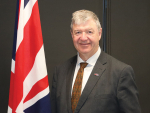
UK Politician Alistair Carmichael Praises "Positive Spirit" of NZ Farmers
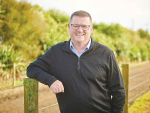
A leading British farming politician says he's impressed with the positive attitude of New Zealand farmers that he met during his recent trip here.




 increase font size
 Agribusiness leaders are facing fatigue and vulnerability and it’s not only from Covid-19, according to the KPMG Agribusiness Agenda.
The latest KPMG Agribusiness Agenda paints a picture of low morale among sector leaders.
The report, released last week at the National Fieldays, says there is a fundamental pressure on leaders, and it was clear from conversations that industry morale has fallen significantly over the last year.
KPMG global head of agribusiness Ian Proudfoot told Dairy News that leaders are facing fatigue and vulnerability and it's not only from Covid-19.
He says local issues are also causing angst for leaders interviewed for the report. The pace of regulatory change, especially since Labour's landslide election victory, is worrying.
Proudfoot says it's clear that issues like water, decarbonisation, and immigration policies are causing fatigue. Even labour-friendly policies like creating extra public holidays aren't going down well with the sector leaders.
Proudfoot says the report has been the "hardest one" KPMG has written in the past 12 years.
"We could sense anger during our conversations, particularly in relation to the labour shortages the sector faces.
"At times it felt as though we were talking to leaders who were primarily focused on finding the strength to fight another day rather than the energised leaders of previous years."
The report states that practical labour and shipping challenges that Covid-19 has created are consuming most executive time and effort. The speed at which things are changing is unprecedented and very often means that the appropriate decision in the morning needs to be revised in the afternoon.
The pace of regulatory change means each new rule brings new compliance and reporting requirements and often requires changes to core systems.
"Change is good for our country; however, the point was made that it is the breadth of change that is stretchinf many organisations," says Proudfoot.
"In addition to this, the Climate Change Commission's final advice on farming has also presented pressure for the sector to do its part, or even to do the heavy lifting for New Zealand."
For these reasons, it is the first time in writing the Agenda that there are tangible concerns over the ability of New Zealand organisations to engage in the great big, beautiful tomorrow that is emerging rapidly across the global agri-food sector, he adds.
"Can we connect to a world of opportunity? There is a global food renaissance happening right now and we strongly believe that the ability to connect and participate in the future of food at scale, remains available to New Zealand organisations.
"However, the people that can make this happen, executive teams across the industry, are the same group of people that are currently under significant pressure dealing with the day to day challenges of their businesses."
Proudfoot says that while the report recognises that the industry is currently operating under extreme pressure, it also illustrates that there remains great potential to become highly involved in shaping the global food renaissance in many ways.
"New Zealand is in a good position but it's not going to be good forever. Our organisations need to act now and leverage our current reputation to secure a place at the table before our invitation to join the global food renaissance expires," he says.
A leading British farming politician says he's impressed with the positive attitude of New Zealand farmers that he met during his recent trip here.
OPINION: It's no surprise that "world-class biosecurity" continues to dominate as the top priority for agribusiness leaders, holding the number one spot for the 16th consecutive year in KPMG's latest agribusiness report.
Last month's National Fieldays was an important event for Canadian manufacturer Can-Am, as it unveiled its first electric ATV, the Outlander, adding extra option to the new Defender HD11 and Defender MAX HD11 line-up.
According to new research, industry leaders have ranked world-class biodiversity as the number one priority for the 16th year in a row.
New Zealand rural apparel brand Back Country is inviting Kiwis to part ways with tired, holey socks at Fieldays with a giant 'Sock Swap Fence' inspired by one of New Zealand's iconic rural roadside landmarks.
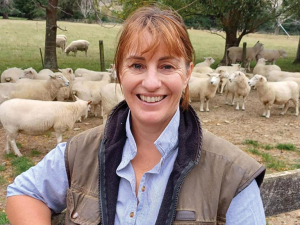
B+LNZ's Wormwise veterinarian Mary Bowron has won the Best Sheep and Beef Vet of the Year Award in recognition of her outstanding contribution to New Zealand’s sheep and beef sector.
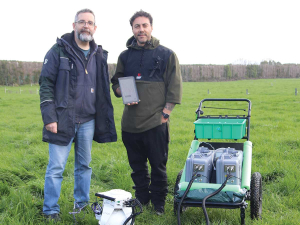
Researchers at Massey University are using a special piece of scientific equipment to improve the measurement of greenhouse gas emissions from pasture soils.
More signs of a booming kiwifruit sector.
OPINION: David Seymour and James Meager's plan to make it easier for farmers and orchardists to operate drones can best be described a 'courageous' move.
New Zealand wool is reaching new heights as air filtration companies move away from synthetic products to biodegradable alternatives.
Opuha Dam's ability to protect South Canterbury communities from major flooding has taken a significant step forward, with Opuha Water Limited (OWL) successfully commissioning a new outlet valve capable of releasing record volumes of water from the dam ahead of a weather event.
OPINION: After hogging the media limelight for telling a NZ Chinese MP to "go back home", Winston Peters has decided…
OPINION: With fuel prices soaring, one would have expected most farmers to be reclaiming excise duty on petrol.