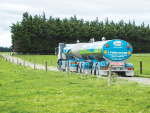
Fonterra FY26 Results: $9.69 Milk Price, $3.4bn Profit
Fonterra has unveiled its annual results for the 2026 financial year, posting $27 billion in revenue and close to $20 billion returned to New Zealand farmer owners and unit holders.




 increase font size
 Rising dairy prices will return the average dairy farmer to profitability.
The financial system is still sound but housing, dairy, and bank funding costs remain key risks, according to the Reserve Bank’s latest six-monthly Financial Stability Report.
Regarding dairy, the bank observes that low dairy prices in the 2014-15 and 2015-16 seasons caused the average dairy farm to make losses. Commodity prices have improved over recent months and this has prompted Fonterra and other dairy companies to increase their forecast milk prices which, if met, would return the average dairy farm to profitability.
However, the bank warns that parts of the dairy sector remain under pressure and some farms will struggle to be profitable, especially the 20% of dairy farms that account for 50% of dairy debt.
The good news is that fears of a severe scenario in which many farms would go out of business have receded. However, high debt levels leave the sector vulnerable to further weakness in dairy prices.
Watchlist loans and non-performing loans, although both relatively low at present, are likely to increase even as farm incomes improve. So some farmers are likely to remain under pressure from their banks.
With this in mind, Federated Farmers will continue its banking surveys. The November survey is now in the field. Federated Farmers members will have received an email late November inviting them to take the survey. Please complete it and tell us how things are going.
The growth in agricultural debt is continuing to slow, according to the Reserve Bank’s October sector credit statistics. Agricultural debt was $60.9 billion, up $32 million on September. The annual rate of growth is down to 3.8% (from 9.2% a year ago).
In the Financial Stability Report the Reserve Bank says that while lending for farm working capital has continued to grow, lending for capital investment (including farm purchases) has been falling.
Business confidence slipped in November but remains positive, indicating solid growth to come, according to ANZ’s monthly Business Outlook Survey.
Overall, a net 20.5% of respondents expect the economy to improve over the next 12 months, down four points on October, while a net 37.6% expect their own activity to increase, down one point. The latter is a better indicator of growth prospects and it remains elevated.
Agriculture for a change was more upbeat than businesses generally, with a net 27.2% expecting the economy to improve, up 20 points, and a net 32.3% expecting their own activity to increase, up eight points. Improved dairy prices will have been a big factor.
The terms of trade slipped 1.8% in the September quarter, according to Statistics NZ’s quarterly overseas trade indexes. Export goods prices fell by 2.8% in the quarter, with falls for dairy (down 3.7%), meat (down 3.1%), and forestry (down 4.1%). Goods import prices were down a more modest 1%.
The terms of trade is a measure of the purchasing power of New Zealand’s exports abroad. It has fallen in four of the last five quarters but with dairy prices recovering more recently the terms of trade should start improving again.
• Nick Clark is general policy manager at Federated Farmers NZ
Fonterra has unveiled its annual results for the 2026 financial year, posting $27 billion in revenue and close to $20 billion returned to New Zealand farmer owners and unit holders.
Fonterra Co-operative Group has confirmed the independently assessed candidates standing for election to its board in 2026.
Fonterra has revised its Farmgate Milk Price forecast for the 2026/27 season, lifting the midpoint and narrowing the range on the back of improving global dairy commodity prices.
Outgoing Fonterra Co-operative Council chair John Stevenson says that it has been a privilege to represent the co-op's farmer shareholders.
OPINION: It seems Canterbury processor Synlait is still in the doldrums.



Federated Farmers says it welcomes Labour's commitment to reviewing the Sharemilking Agreements Act, calling on other major parties to do the same.
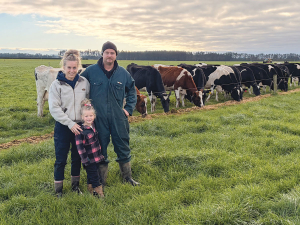
For Canterbury dairy farmers Sian Meijer and Rick Wobben, wearable technology has become one of their most valuable on-farm tools - helping manage 1850 cows across an expansive, high-performing dairy operation while improving efficiency, mating outcomes and day-to-day decision making.
Fonterra has unveiled its annual results for the 2026 financial year, posting $27 billion in revenue and close to $20 billion returned to New Zealand farmer owners and unit holders.
The first major update to the Dairy Cattle Code of Welfare in more than a decade has been released, marking what DairyNZ describes as an important step in ensuring animal welfare standards continue to evolve alongside scientific evidence and on-farm realities.
Ravensdown shareholders have elected Jane Montgomery and Kate Acland to the Ravensdown Board for three-year terms, following a closely contested director election.
Federated Farmers says new legislation replacing the Resource Management Act will cut red tape, unlock investment and help grow New Zealand's export-led economy, after the Planning Bill and Natural Environment Bill passed their third reading in Parliament yesterday.



OPINION: It seems Canterbury processor Synlait is still in the doldrums.
OPINION: Get offside with New Zealand First leader Winston Peters at your own peril.




