Flood fund criteria way off the mark
Nearly four months on from the floods that devastated much of rural Canterbury, the Government has fallen short of the promises it made to local farmers, says National MP Nicola Grigg.




 increase font size
 Some damage on farms will be permanent and some of it will take years to heal.
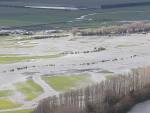
Canterbury is drying out after a rare red alert weather bomb dumped up to half a metre of rain across the province in only three days and caused "devastating" damage to swathes of farmland, especially in the dairying heartland of Ashburton.
Some of the damage will be permanent, says Mid-Canterbury Federated Farmers president David Clark.
Clark said there were two levels of impact: farms all over the region faced silting and water damage and poor utilisation of feed because it is so wet; but then there were the farms adjacent to the rivers which burst their banks.
"They've got all the problems that the other farmers face, but then they've got, in many cases, devastating on-farm damage.
"Some of the damage on these farms will be permanent and some of it will take years to heal," he said.
"We've got sections of river berm that have completely disappeared. Currently we have active rivers running through farmland that need to be put back into their fairways."
Clark said fences and culverts were washed out and laneways damaged. There was a lot of scouring, or shingle and willows from the rivers deposited into paddocks.
Some farms have lost a good portion of their winter feed.
Clark met the Prime Minister Jacinda Ardern, Agriculture Minister Damien O'Connor and Acting Minister for Emergency Management Kris Faafoi during their fact-finding tour of the damage. He called the meeting "constructive".
"We have certainly impressed upon the government the need for them to assist district councils and the regional council in repairing roads and rivers.
"We would also hope that there could be some assistance given to removing trees and rocks that came out of the river berms and help to remove them from farms."
Agriculture Minister Damien O'Connor has declared it an adverse event, unlocking funding of $500,000 for flood recovery measures.
"The money will be used for recovery grants, to enable the region's three Rural Support Trusts to provide extra help to farmers, and for other flood assistance where needed.
"We will continue to assess whether further support is required as the full extent of the flooding becomes clearer."
O'Connor said there was widespread flooding and significant damage to property and the road network.
"It's putting further pressure on farmers who have been battling drought and we're committed to helping them get through."
Other recovery measures include an Enhanced Taskforce Green work programme to assist with clean-up and recovery, Rural Assistance Payments to help farmers with essential living costs, and flexibility through the Income Equalisation Scheme.
MPI is working closely with Civil Defence Emergency Management staff, industry groups and others to help with the recovery effort, including the animal welfare response.
"Support is available for farmers who are short of livestock feed, or who have had baleage and fodder crops washed away or damaged by floodwaters," said O'Connor.
Speaking to media at Christchurch Airport after inspecting the damage by helicopter, Prime Minister Jacinda Ardern said there was a big cleanup job ahead.
"From that aerial view you just get a sense of the scale. It is quite devastating in some areas and there's a lot of work for us to do.
"You could see that winter feed has been affected, you could see that from the air. You could see how for some farms they'll be completely cut off from even accessing their feed. You can see damage to fencing and the impact on transport links."
Nearly four months on from the floods that devastated much of rural Canterbury, the Government has fallen short of the promises it made to local farmers, says National MP Nicola Grigg.
The Government has announced it will commit $4 million into relief funding for flood-affected Canterbury farmers.
The Ministry for Primary Industries (MPI) says it is helping drought and flood-affected farmers in Canterbury to find alternative grazing for their livestock.
The vulnerability of the roads has become a major concern for Federated Farmers Mid-Canterbury president David Clark over a week into the clean-up following the region's damaging floods.
Farmers affected by Canterbury flooding are being urged to check what business interruption (BI) cover what they have in place.


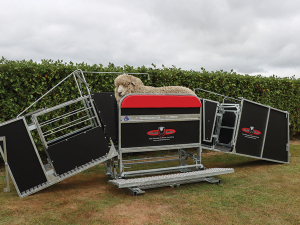
Oamaru-based livestock handling specialist Te Pari has bought Combi Clamp, the New Zealand manufacturer of Combi Clamp manual sheep handlers.

Agriculture Minister Todd McClay has admitted that a scheme bringing workers from Pacific nations to work on orchards has become too hard to navigate but says changes are coming.
A new app designed in New Zealand aims to help sheep, beef and deer farmers capture, analyse and use body condition score data more effectively.
Canterbury farmer Andy Macfarlane has been appointed to the board of AgriZeroNZ, the public-private partnership designed to accelerate the development and deployment of emissions reduction tools for New Zealand farmers.
For over 50 years Mel Ewers has been supporting the apple sector navigate through compliance and quality assurance issues.
The apple sector is enjoying a bumper harvest season.



OPINION: City and regional councils have been put on notice - stop using extreme climate forecasting scenarios that can drive…
OPINION: The Green Party’s rivers and oceans policy may have a new name but nothing else has changed.