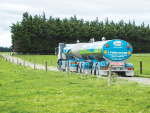
Fonterra FY26 Results: $9.69 Milk Price, $3.4bn Profit
Fonterra has unveiled its annual results for the 2026 financial year, posting $27 billion in revenue and close to $20 billion returned to New Zealand farmer owners and unit holders.




 increase font size
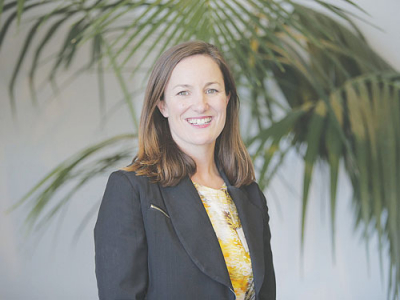 Francesca Eggleton, Fonterra.
New Zealand dairy farming has reduced greenhouse gas emissions by 20% since 1990, measured as carbon dioxide equivalent per kilogram of milk solids produced.
But with dairying responsible for half of NZ’s agricultural emissions and a quarter of the country’s emissions as a whole, dairying still has a big role to play in reducing the footprint, says Fonterra’s group environment manager, Francesca Eggleton. “It’s an issue we take very seriously.”
Eggleton detailed Fonterra’s continuing efforts to reduce greenhouse gas emissions, in a presentation to the New Zealand Agricultural Greenhouse Gas Mitigation Conference, which attracted 150 scientists, policy makers and industry representatives to Palmerston North in late March.
While different reporting standards makes direct comparison difficult, NZ is the world’s most efficient producer of milk on the basis of carbon dioxide equivalent per kilogram of fat protein corrected milk (FPCM) produced, with a score of only 0.89 CO2e per kg FPCM, versus a global average of 2.4 and a global high of more than 7.
Eggleton told the conference the lower footprint is likely to be associated with year-round grazing on pastures, high pasture production per hectare, low cow replacement rate and relatively low use of supplement feed.
She says Fonterra has spent at least $8 million through the Pastoral Greenhouse Gas Research Consortium for mitigation technologies research, including methane inhibitors, methane vaccines, low-emission feeds and low-emissions animal breeds. It is also working with the wider industry, with DairyNZ and others, to develop a greenhouse gas emission advisor qualification, to assess onfarm reporting models and research farm practices for greenhouse gas mitigation.
Fonterra is committed to reducing greenhouse gas emissions in all its business operations, and to moving towards cleaner technologies and energy sources. It has partnered with Z Energy to use biodiesel in its North Island tankers, for a potential decrease of emissions of 4% for each vehicle, and is converting a third of its urban fleet to electric.
She says Fonterra will work with its farmers to improve profitability, environmental efficiency and resilience to climate change and climate variability, and will advocate for appropriate policy.
“We believe... we can continue to use land productively and protect the environment. We have for generations, and our farmers care about the environment,” said Eggleton.
88% of Fonterra’s farmers have completed nitrogen reports under its nitrogen management programme.
She says farmers are already doing “great work” through riparian planting and fencing and effluent management.
“In areas... of intensification... our farmers, and councils and communities, have recognised this and are working to address it.”
Eggleton also told the conference the dairy industry was a key contributor to economies worldwide, employing 240 million people directly or indirectly. She presented figures showing dairy products generally were on the right side of the graph when compared with other foods, in terms of the ratio of nutrient density (protein, calcium, magnesium, riboflavin, selenium and vitamins B5 and B12) to greenhouse gas emissions.
Fonterra has unveiled its annual results for the 2026 financial year, posting $27 billion in revenue and close to $20 billion returned to New Zealand farmer owners and unit holders.
Fonterra Co-operative Group has confirmed the independently assessed candidates standing for election to its board in 2026.
Fonterra has revised its Farmgate Milk Price forecast for the 2026/27 season, lifting the midpoint and narrowing the range on the back of improving global dairy commodity prices.
Outgoing Fonterra Co-operative Council chair John Stevenson says that it has been a privilege to represent the co-op's farmer shareholders.
OPINION: It seems Canterbury processor Synlait is still in the doldrums.



Federated Farmers says it welcomes Labour's commitment to reviewing the Sharemilking Agreements Act, calling on other major parties to do the same.
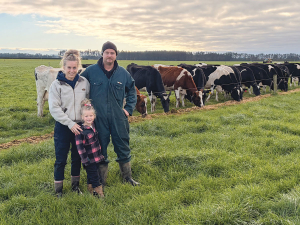
For Canterbury dairy farmers Sian Meijer and Rick Wobben, wearable technology has become one of their most valuable on-farm tools - helping manage 1850 cows across an expansive, high-performing dairy operation while improving efficiency, mating outcomes and day-to-day decision making.
Fonterra has unveiled its annual results for the 2026 financial year, posting $27 billion in revenue and close to $20 billion returned to New Zealand farmer owners and unit holders.
The first major update to the Dairy Cattle Code of Welfare in more than a decade has been released, marking what DairyNZ describes as an important step in ensuring animal welfare standards continue to evolve alongside scientific evidence and on-farm realities.
Ravensdown shareholders have elected Jane Montgomery and Kate Acland to the Ravensdown Board for three-year terms, following a closely contested director election.
Federated Farmers says new legislation replacing the Resource Management Act will cut red tape, unlock investment and help grow New Zealand's export-led economy, after the Planning Bill and Natural Environment Bill passed their third reading in Parliament yesterday.




OPINION: It seems Canterbury processor Synlait is still in the doldrums.
OPINION: Get offside with New Zealand First leader Winston Peters at your own peril.




