
Westpac Urges Farmers to Prepare Now for El Niño Drought
Westpac NZ is calling on farmers and growers to start preparing now for the possibility of a dry summer, as likely El Niño conditions raise the risk of drought across parts of the country.




 increase font size
 Westpac's Nathan Penny expects feed, fertiliser, and fuel prices to fall by the end of this year.
Some good news on the horizon for dairy farmers.
Westpac says the annual rural inflation rate has peaked and will drop from the 15.3% as at last December to a low of 4% at the end of 2023. It says it will drop another 2% during 2024.
The report by senior agri economist Nathan Penny says the reason for the drop will be lower feed, fertiliser, and fuel prices.
However, there are quite a few 'buts' in the report. One of these is the news that farm and orchard cost structures are likely to remain high. A big one, and not good news for farmers, is that wage inflation will buck the positive trends and remain high. This is due to high employment and a very tight labour market and the fact that workers still have negotiating power.
Penny says in the report that while cost inflation may cool, he doesn't believe that costs will fall back to previous levels and that farm and orchard cost structures are likely to remain permanently higher.
The report notes that dairy farms experienced the biggest spike in farm costs with prices up 17% - well ahead of sheep and beef farms and orchards. But against that, Westpac reports that feed costs will fall steeply from now due to pastures which have been super-charged by the rains of Cyclone Gabrielle and the mild summer and autumn weather. Farmers they says have ample feed for winter, putting downward pressure on feed prices.
So it's a mixed bag in some respects, but the promise of lower rural inflation will be a sweetener in the light of a testy and sour year.
Fed Farmers president Andrew Hoggard says, if the predictions translate into reality, it will be helpful for farmers who are spending less on the farm with commodity prices coming back a bit. But he says there will still be pain out there on dairy farms.
"One would hope that the Reserve Bank is listening to this and stops ramping up interest rates. They should have a breather and wait to see what impact the rate rises have had and hopefully will look to soften things up as inflation starts to come under control, because those interest rates are still high," he says.
In the light of the squeeze, Andrew Hoggard says he's made some important decisions on his own farm to hold off doing some things until the situation settles down. He says, like many, he's conerned at the geopolitical situation with the war in Ukraine which he says has impacted grain and energy prices.
Hoggard says we then have to look at the US/China issue, which paints a challenging picture for us because China, one of our major export markets, is locking horns with one of our traditional allies.
"That is a massive challenge for the NZ Government to balance all that up and it would be easier if the US would offer us an FTA. They expect us to be friends but don't want to trade with us," he says.
Westpac NZ is calling on farmers and growers to start preparing now for the possibility of a dry summer, as likely El Niño conditions raise the risk of drought across parts of the country.

A new Westpac NZ community banking van begins making visits around Northland this week.
Westpac NZ has announced new initiatives that aim to give customers more options to do their banking in person.
A $10 milk price remains on the cards for this season despite recent softening of global dairy prices.
The Commerce Commission has announced that it has filed proceedings against Westpac New Zealand.


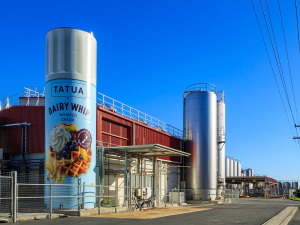
Waikato milk processor Tatua has again declared a record milk payout to farmer shareholders, leaving other processors in the dust.
A Labour-led Government won’t be bringing back the controversial freshwater rules of 2020.
National’s much-touted free trade deal with India featured in the Rural Issues Debate at Mystery Creek, Hamilton on Wednesday night.
New Zealand's 2026-27 freshwater fishing season has opened, with anglers encouraged to head to rivers and lakes over the coming days as conditions look favourable across much of the country.
Central Otago District Council (CODC) has voted against a plan to spread treated sewage sludge from Cromwell and Alexandra on farmland near Lauder, a decision Federated Farmers says reflects strong opposition from rural residents.
Pāmu has released its FY26 Integrated Annual Report, reporting a Net Operating Profit of $113 million, more than double the $49 million recorded in FY25.

OPINION: It seems Canterbury processor Synlait is still in the doldrums.
OPINION: Get offside with New Zealand First leader Winston Peters at your own peril.




