Dairy Sector Drives Strong Rural Property Market Activity in NZ
The latest data from the Real Estate Institute of New Zealand (REINZ) reveals a mixed rural property market due to consistent inflation concerns.




 increase font size
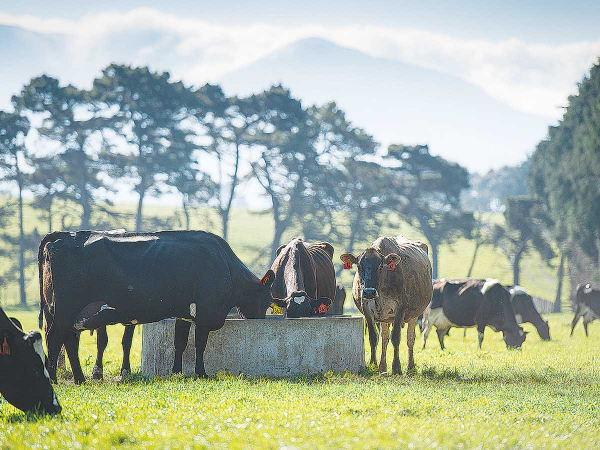 Increased environmental compliance has required greater preparation by sellers and has meant more due diligence by buyers, thus pushing out traditional selling times of farms.
Recent data from the Real Estate Institute of New Zealand (REINZ) shows that the prices of dairy farms could be on the rise.
For the three months ended December 2022, the median sale price per hectare for dairy farms was $44,060, compared to $43,160 for the three months ended November 2022.
However, this marks a decrease in the past 12 months, with the median price having hit $44,310 per hectare for the three months ended December 2021.
There were also fewer farm sales in the year to December 2022, with 15.2% fewer dairy farms and 18.7% fewer dairy support farms sold when compared to the year to December 2021.
It’s not all doom and gloom, says Shane O’Brien, rural spokesman at REINZ, as the lower number of sales may be down to something as simple as a lower number of listings.
“A late spring and a wet October across a number of regions saw a delay in the release of many listings with a healthy number of farms under offer (but not sold) at year end may flow through in sales records in early 2023,” O’Brien says.
He says increased environmental compliance has required greater preparation by sellers and has meant more due diligence by buyers, thus pushing out traditional selling times.
“Also, the increase in direct farm costs coupled with the near doubling of interest rates has brought a degree of caution to the market from buyers as they fully consider land purchase decisions with no evidence in a decrease on farm inflation or interest costs going into 2023,” O’Brien says.
He says that additionally, an uncertain political environment has added another dynamic to farm purchasing decisions, with many opting for a “wait and see approach”.
Another issue at play, O’Brien says, is continued interest in farming for forestry.
The continued interest in farmland for forestry and carbon conversion remains strong despite some changes in the purchaser’s obligations and the Overseas Investment Office (OIO) is still a market driver in some regions with good, well-developed dairy farms or dairy support land continuing to be keenly sought after by local buyers in the stronger dairying regions of Southland and Waikato.”
The latest data from the Real Estate Institute of New Zealand (REINZ) reveals a mixed rural property market due to consistent inflation concerns.
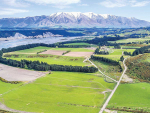
Farm sales are on the rise. According to recent data from the Real Estate Institute of New Zealand (REINZ), there was an 18.9% increase in farm sales for the three months ending August 2024 compared to the same period in 2023.
It could be that buyers are hunting out the right farm to purchase as farm sales drop for the three months ended December 2023. That’s according to the Real Estate Institute of New Zealand (REINZ).
Recently released data from the Real Estate Institute of New Zealand (REINZ) shows there were 77 fewer farm sales for the three months ended November 2023 than for the three months ended November 2022.
Recent data from the Real Estate Institute of New Zealand (REINZ) shows October was another month in which there were fewer farm sales than at the same time in 2022.
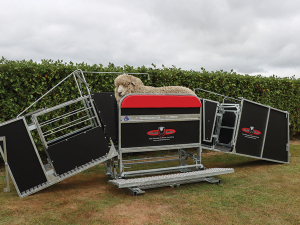
Oamaru-based livestock handling specialist Te Pari has bought Combi Clamp, the New Zealand manufacturer of Combi Clamp manual sheep handlers.
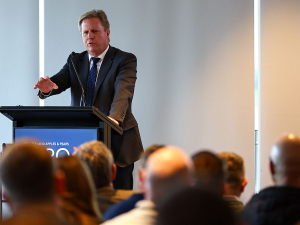
Agriculture Minister Todd McClay has admitted that a scheme bringing workers from Pacific nations to work on orchards has become too hard to navigate but says changes are coming.
A new app designed in New Zealand aims to help sheep, beef and deer farmers capture, analyse and use body condition score data more effectively.
Canterbury farmer Andy Macfarlane has been appointed to the board of AgriZeroNZ, the public-private partnership designed to accelerate the development and deployment of emissions reduction tools for New Zealand farmers.
For over 50 years Mel Ewers has been supporting the apple sector navigate through compliance and quality assurance issues.
The apple sector is enjoying a bumper harvest season.
OPINION: City and regional councils have been put on notice - stop using extreme climate forecasting scenarios that can drive…
OPINION: The Green Party’s rivers and oceans policy may have a new name but nothing else has changed.