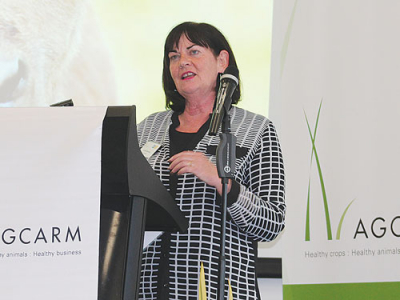
Environment minister David Parker has told DairyNZ he wants action fast on water quality, says Carol Barnao, DairyNZ general manager policy and advocacy.
During a visit to speak to the board he was open and honest about his expectations, Barnao told the Agcarm summer conference.
“He was openly challenging us, saying ‘I don’t want to hear rhetoric, I don’t want to hear words, I want to see actions’,” she says.
The actions needed must hang off the commitments in DairyNZ’s refreshed strategy. These include environment protection, resilient farming systems, producing quality dairy nutrition, animal care and building great workplaces and growing vibrant communities.
“So the actions have to hang off these commitments and... pretty fast, to make sure we can demonstrate with some credibility that we are taking it seriously and we are changing things.”
One of the big things the new government is talking about is transformational land-use change, says Barnao. The conventional one-to-five way of defining farming systems is likely to change.
“We have used that as the model or template for providing advice based on the number of cows, how much feed you have, whether you are totally housed, whether you are totally in pasture… these sorts of things.
“We are smart enough to read the messages from the new government about transformational land-use change; what we are talking about is having a totally different dynamic….
“We need to seriously think about what this means for farmers and what change we can put in place to have a lower environmental footprint.”
Productivity and efficiency must continue, but they are looking at a behavioural change programme so that farmers understand why they need to change, how they need to do it, what they need in support and what new technologies will assist them.
“Whether its AI, apps, new technology… what can we do to support farmers so they can progress through what is going to be a change process?
“The old traditional way of farm systems one to five is over time needing to change; it is inevitable. We need to manage that process in the smartest way possible so DairyNZ can support farmers and the dairy sector can support themselves in the way forward.”
DairyNZ knows the new government is asking for rapid change to improve water quality. “You can’t do it overnight but we are investing a lot of our science to manage this.”
Greenhouse gas (GHG) emissions work has some interdependencies with water quality.
“All sorts of other issues have impact... not the least is when you have climate change extremes you suddenly have animal welfare issues because of drought. The world is no longer as tidy as it used to be and we are recognising a whole bunch of new priorities we need to address.”
Talking to one another
Dairy farmers do feel under pressure at times, says Barnao.
Farmers want to step up to new rules and regulations but it’s DairyNZ’s job to support them to do that.
“We have started a group called Dairy Environment Leaders. We find in the industry that the best thing to influence farmers is other farmers talking to farmers.”
And they have noted that farmers talking to politicians or government agencies is much more powerful than just policy advocacy representatives doing so.
The Dairy Environment Leaders group gets farmers to champion these issues themselves, within their communities and in Wellington, to make sure their viewpoint is heard. They are picking up issues mostly in animal welfare and the environment.
Asked if it was too late to try to convince urban people that dairying isn’t a villain, Barnao said urban people are also finding they have issues.
“So we need to find a way collectively to manage the process.”
The millennials are a problem so they are trying to rebrand and change the slogan.
“It is pretty hard… but the most we can do is showcase our commitment and show the good things we are doing.”