Once-a-Day Calf Feeding: How Probiotics Boost Heifer Growth
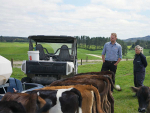
Matt Collier, Probiotic Revolution, says calves will drink a lot of milk once-a-day with their probiotic Calf Xtreme.




 increase font size
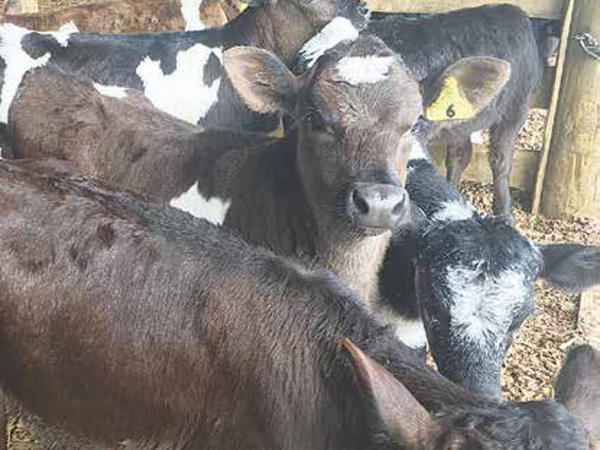 Calves grown faster in the first few weeks of their life lay down better tissue in the developing udder, and milk better as heifers.
Farmers are being urged to feed more milk to new-born calves.
Chris Collier, Probiotic Revolution, says this is based on research that shows that calves grown faster in the first few weeks of their life lay down better tissue in the developing udder, and milk better as heifers.
In a University of Illinois study, by initially growing calves faster, heifer milk an protein production increased by 10%.
Collier says Probiotic Revolution uses specific probiotics in Calf Xtreme that helps avoid nutritional scours and other health issues at the high rates of milk. Consequently calves just grow faster and with the product spilling into the rumen of calves, farmers are amazed at how much meal, hay or grass they eat after a couple of weeks, says Collier.
He says that one farmer who fed his calves 8 litres once a day, ran his heifers while out grazing with calves from two other family farms. They all had the same genetic base but at each weighing the 100 Calf Xtreme calves were a month ahead in liveweights compared with the other calves. There were no empties in these 100 calves, but 10 empties in the 150 calves not reared on the product.
Sick calves are also a nightmare and farmers know that when a calf is checked at a young age it does not perform well as a heifer.
"In times of stress or a disease challenge such as rotavirus we just doule the dose rate of Calf Xtreme," says Collier.
Crypto is more challenging and in addition to quadrupling the dose rate other control measures are needed. For coccidiosis a coccidiostat is needed.
Collier claims around 70,000 calves were reared on Probiotic Revolution's products last year and demand is expected to increase this year.
Matt Collier, Probiotic Revolution, says calves will drink a lot of milk once-a-day with their probiotic Calf Xtreme.
For decades, successful calving has centred on correct mineral supplementation to prevent milk fever, along with teat sealants to minimise calving mastitis.
Somatic cell counts on the rise in late lactation?
Success in calf rearing is often measured by minimising health issues and achieving target weaning weights.
Success in calf rearing is often measured by minimising health issues, reducing mortality rates, and achieving high growth rates.



Ravensdown shareholders have elected Jane Montgomery and Kate Acland to the Ravensdown Board for three-year terms, following a closely contested director election.

Federated Farmers says new legislation replacing the Resource Management Act will cut red tape, unlock investment and help grow New Zealand's export-led economy, after the Planning Bill and Natural Environment Bill passed their third reading in Parliament yesterday.
Leading figures from the major political parties will be questioned on their primary sector policies at the Rural Issues Debate at Mystery Creek Events Centre, Hamilton, on 30 September.
OPINION: Have a plan in place now!
Beef + Lamb New Zealand (B+LNZ) says it welcomes the passage of the Natural Environment Bill and Planning Bill, calling the bills a positive step for sheep and beef farmers.
A spate of southerly winds bringing cold temperatures has presented challenges for Taranaki dairy farmers.



OPINION: It seems Canterbury processor Synlait is still in the doldrums.
OPINION: Get offside with New Zealand First leader Winston Peters at your own peril.