Why Now Is the Time to Plan Farm Succession, Findex Says
OPINION: Succession and long-term planning are perennial topics because it is perpetually sidelined on busy farms.




 increase font size
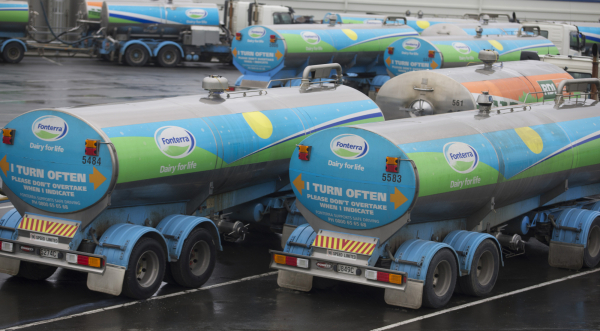
Softening global demand for milk has led Fonterra to downgrade its 2022-23 forecast milk price.
The co-operative today announced a new forecast milk price range of $8.20 to $8.80/kgMS, with a midpoint of $8.50/kgMS.
Its previous forecast price ranged from $8.50 to $9.50/kgMS, with a midpoint of $9.
Fonterra chief executive Miles Hurrell says the revised forecast milk price range reflects softened demand at a time of balanced supply.
“Demand for whole milk powder, particularly from Greater China, has been soft with prices down around 5% since the beginning of December,” he says.
“While we are encouraged by recent increased buying behaviour from China, it is too soon to determine the extent of the impact this may have on the rest of the season.
“We also remain cautious given a soft economic growth outlook in many regions globally.”
The co-op has also revised its milk collection for the season to 1,465 million kgMS, down from its previous forecast of 1,480 million kgMS.
While Fonterra’s collections for the season are up on this time last year, Cyclone Gabrielle and dry conditions in the South Island have impacted the co-op’s full season expectations.
“Globally, milk supply from key exporting regions is balanced,” says Hurrell.
“Production from Europe and the US is up on last year, but this is partly offset by lower collections in New Zealand, Australia and Latin America.
“The medium to long term outlook for dairy, in particular New Zealand dairy, looks positive. We are assessing our position for next season and will provide our opening forecast in May,” says Hurrell.
OPINION: Succession and long-term planning are perennial topics because it is perpetually sidelined on busy farms.
OPINION: It seems Canterbury processor Synlait is still in the doldrums.
OPINION: Get offside with New Zealand First leader Winston Peters at your own peril.
Farms across the upper North Island are trialling different pasture mixes as part of a research programme that aims to build greater resilience into farming systems.



For the first time in a quarter of a century, Federated Farmers has something positive to say about the Labour Party’s climate change policy leading into a general election.
A warning for New Zealand seed and grain companies – be prepared for an exodus of farmers from the arable sector.
Now in its fourth year, the 2026 Fencing Industry Awards, formed part of the proceedings of the FCANZ Conference, held in Nelson during August.
DairyNZ deputy chair Cameron Henderson has been re-appointed unopposed for another term.
OPINION: The stats speak for themselves.
Farms across the upper North Island are trialling different pasture mixes as part of a research programme that aims to build greater resilience into farming systems.




OPINION: It seems Canterbury processor Synlait is still in the doldrums.
OPINION: Get offside with New Zealand First leader Winston Peters at your own peril.