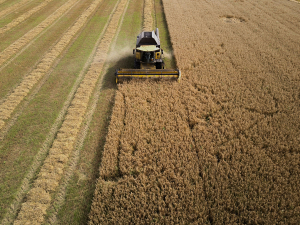
Horticulture in search of growth capital
Despite its good market returns, growth capital is limited for the horticulture sector.




 increase font size
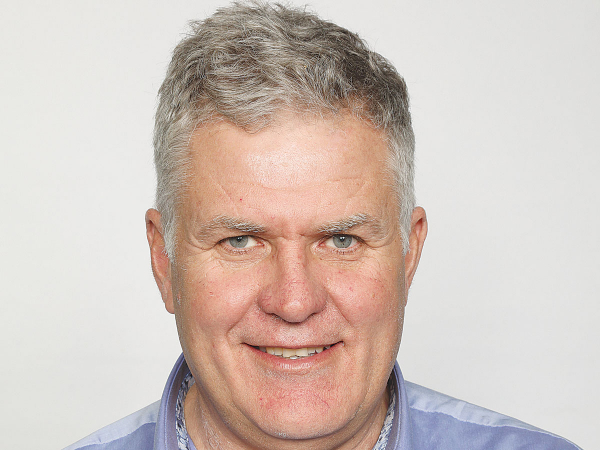 MyFarm chief executive Andrew Watters.
A fund has been set up to generate carbon credits through growing pine plantations on steep North Island hill country.
The CQuest Forestation and Carbon Fund, managed by MyFarm, is embarking on a fund raising drive, seeking an initial $15 million of investor equity to buy up to 1,500 hectares of land to plant in pine. It has secured contracts for the first two properties for purchase.
MyFarm chief executive Andrew Watters says most sheep and beef farmers will have land that is suited to planting trees and be able to directly gain exposure to increasing carbon prices. But for dairy farmers, acquiring suitable land is more difficult and not part of their core business.
CQuest offers an income from carbon credits and a hedge against the increasing price of carbon.
"We know that some form of emission charge is coming - either through the work being done by He Waka Eka Noa or the Emissions Trading Scheme. It makes sense for dairy farmers to plan ahead for this."
He Waka Eka Noa is the primary sector umbrella organisation that is tasked with building the knowledge on farm emissions and formulating and implementing an alternative plan to agriculture entering the Emissions Trading Scheme (ETS). This plan needs to be agreed by government by December 2022.
If the He Waka Eka Noa plan is not agreed, agriculture will enter the ETS in 2025, initially having to account for 5% of its emissions (increasing 1% p.a. thereafter).
Watters, who is also a dairy farm owner, says at today's carbon pricing and a 5% exposure to the ETS dairy farmers could face costs of 3 to 4 cents/kgMS - and higher at higher prices.
He says via CQuest, price exposure for 5% of emissions can be held at 1 cent/kgMS.
"While it's unclear what the impost of future carbon schemes will be, an investment in CQuest Fund is a simple way to mitigate the risk of rising carbon prices."
The fund envisages sequestering around 520 tonnes of carbon per hectare through the planting of pine trees, generating carbon credits at a cost of $20-25$/tonne.
As the trees grow to maturity, CQuest will sell the credits on the secondary market where carbon credit prices have been trading as high as $59/tonne.
The CQuest Carbon and Forestation Fund offer is open to wholesale investors with a minimum of $50,000 to invest. The offer closes Friday, October 8.
Despite its good market returns, growth capital is limited for the horticulture sector.
Low interest rates are driving record enquiries for cash yielding real assets, says the rural syndicate property investor MyFarm Investments.
Five emerging stars of the horticulture industry have been singled out for investment by a new fund which aims to raise $100 million.
An investment fund launched by MyFarm is aimed at helping ‘serious’ investors tap into the burgeoning horticulture sector.
New Zealand's horticultural sector must compete on quality, taste and branding because it will never compete globally on volume and price, says MyFarm national sales manager Grant Payton.


Farmgate lamb prices are down by 8%, beef cattle by 4.5% and farm expenditure up by 4.2%.
Kiwifruit growers are watchful but remain optimistic as concerns around the potential effects of the El Niño weather pattern this season.
Almond hulls sourced from Australian orchards may have the potential to help New Zealand cows reduce emissions, boost milk yield and lower input costs.
Striking a balance between meeting the needs of industry to speed up approval time for products but on the other hand ensuring that risks are properly assessed.
Surprised, humbled and quite thrilled. That’s the reaction of James Allen, one of the founding partners and now chief executive of AgFirst, on being made a life member of the Institute of Rural Professionals.



OPINION: It seems Canterbury processor Synlait is still in the doldrums.
OPINION: Get offside with New Zealand First leader Winston Peters at your own peril.