
Settled GDT prices lead to 5c dip in payout midpoint
Fonterra has reduced its 2020-21 forecast farmgate milk price range midpoint by 5c.




 increase font size
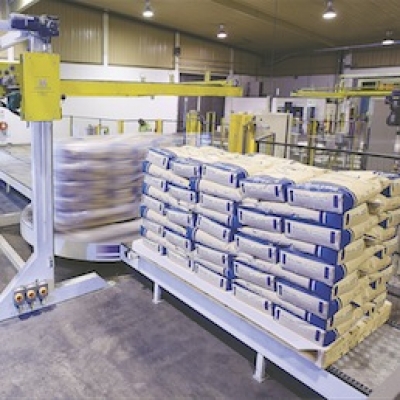 Skim milk power prices dived almost 6% last week.
‘DISAPPOINTING’ WAS economists’ key word last week as GlobalDairyTrade resumed its slide, falling 3.1% overall with powders plunging 5-6%.
All now predict a payout starting with four and a fall in Fonterra’s $5.30/kgMS forecast, possibly even before its board meets in December.
“It’s disappointing,” BNZ senior economist Craig Ebert told Dairy News. “We had wondered if we’d see a bit more stability given the previous auctions were more flat.”
BNZ didn’t immediately revise its prediction of $4.90/kgMS for 2014-15 but “downside risk” before the auction had increased, said Ebert. “We want to revise it down but it’s just a question of the timing and to what extent.”
Others moved immediately, ASB slashing 40c/kgMS off its estimate for 2014-15 to $4.70/kgMS and putting its $6.50/kgMS forecast for 2015-16 “under review”. It noted markets hadn’t responded to Fonterra’s 14% reduction in its auction offering since June and with the cooperative’s intake up 4% to date on last year, and national production 6% ahead, “there is is still plenty of milk to go around”.
“The lift in supply may create a headwind to prices recovering later in the season,” its November 19 economic update stated.
Ebert also noted the supply increase, not just in New Zealand, but across the world including China where production problems 12-18 months ago sparked a scramble for product that spiked prices but ended up in stockpiles.
Supply would eventually ease in response to lower prices but the signals are slow to reach producers in some countries and milking cows cannot be turned “on and off” quickly so price recovery could be “a bit longer coming than people think,” he warned.
“We hope it does but we need to be conscious there might be a second year of ungenerous payouts… The message is we’d be reluctant to assume there’ll be a natural bounceback as soon as 2015-16.”
ASB economist Christina Leung pointed out that low grain prices have kept US and European production growing and while there’s been a modest rally in corn and wheat values in recent weeks, “if they remain low it will continue to encourage [milk] production in these markets.”
“A lot will depend on where the New Zealand dollar goes as well. We are factoring in a further moderation which in turn will support prices,” she added, noting the Kiwi was down about 1 cent against the US dollar on Wednesday morning after the GDT result.
However, that wasn’t sustained, with the Reserve Bank’s Trade Weighted [currency] Index and 11am mid point against the US$ showing virtually no change from the previous day.
Ebert pointed out the exchange rates were actually stronger than at the previous sale a fortnight earlier (US79c v US77c).
“A while ago we thought [the NZ dollar] was on a roll good and proper but we went into this auction with it higher than it was a fortnight ago.”
What it really shows is the difficulty in forecasting milk prices given the volatility of both commodity and currency markets. “There’s a huge range possible with any forecast.”
Fonterra has reduced its 2020-21 forecast farmgate milk price range midpoint by 5c.
The firming of whole milk powder (WMP) prices in the latest Global Dairy Trade (GDT) is good news, according to analysts.
Dairy prices fell overnight in Global Dairy Trade (GDT) auction, reversing the lift in the previous event.
Whole milk powder (WMP) defied predictions and dropped in the GlobalDairyTrade (GDT) auction overnight.
Three bank economists see a risk of downside to farmgate prices from last week’s GDT auction where the overall price index dropped 2.4%.


Safer Farms is urging farmers to make sure everyone working on farm has safe, suitable footwear for the job.

The Government is backing work on a community-led water storage scheme that could irrigate up to 11,000 more hectares of the Poverty Bay flats, Agriculture Minister Todd McClay says.
Agri-tech company Herd-i has become a new all-region sponsor of the New Zealand Dairy Industry Awards (NZDIA), the largest nationwide celebration of excellence in the dairy sector.
Four candidates have been confirmed for two director positions on Fonterra’s board.
Returning to the family dairy farm after playing 20 years of professional rugby around the world is no easy task.
After delivering another record farmgate milk price to 100 supplying farms, independent milk processor Tatua is entering thee new financial year with a positive outlook.


OPINION: It seems Canterbury processor Synlait is still in the doldrums.
OPINION: Get offside with New Zealand First leader Winston Peters at your own peril.




