El Niño Warning: NZ Farmers Urged to Plan Fert Early
Plan ahead and be patient. That’s the message to farmers and horticulturalists from the chairman of the NZ Agricultural Aviation Association, Kent Weir.




 increase font size
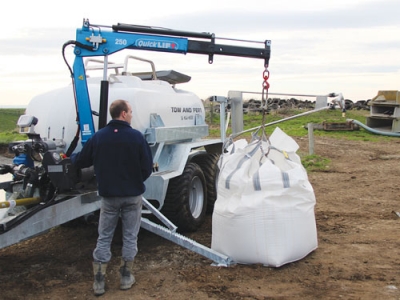 Metalform’s Tow and Fert fertiliser applicator.
Technology developed in Dannevirke is becoming disruptive in pasture grazing markets beyond New Zealand.
Tow and Fert, designed and manufactured by Metalform, has the ability to either reduce fertiliser input costs without impacting pasture yields, or maintain fertiliser inputs and improve dry matter and protein production.
Norco Rural, a dairy co-op in NSW, is the latest company to prove the efficiency of nitrogen when applied in a foliar form.
During trials it applied nitrogen at only 42% of the typical rate – 21kg/ha of foliar-applied urea versus 50kg/ha of granular urea.
Measurements were taken over nine grazing cycles; the DM/ha yield during seven of those cycles showed an increase in yield from the lower application of nitrogen.
Profitwise, on a 150ha farm milking 400 cows, a typical application of granular urea at 80kg/ha six times a year would equate to about 72 tonne of urea, costing $43,000. But if it were dissolved and applied as a foliar spray, the cost would be around $18,000, saving $25,000 annually.
From an environmental viewpoint, N escaping into the environment as ammonia, or leaching beyond the plant's root zone or escaping to atmosphere in the form of nitrous oxide, would be cut drastically because the urea would not enter the soil but be directly absorbed by plant leaves.
Metalform developed Tow and Fert, a fertiliser applicator, to quickly dissolve normal granular urea in cold water on the way to the paddock, thereby turning urea into a dissolved foliar spray quickly, conveniently, cheaply and in an environmentally responsible way.
With specific agitation patents and boom recirculation technology, the Tow and Fert dissolves soluble products and can keep insoluble products like fine lime or RPR in suspension; this allows an operator to make one-pass applications of, say, weed spray, humates, gibberellic acid and even small seeds.
Plan ahead and be patient. That’s the message to farmers and horticulturalists from the chairman of the NZ Agricultural Aviation Association, Kent Weir.
Amazone's ZG-TX combi spreader has been updated with several new features, centred around improved accuracy and easier operation.
When it comes to annual rebates, it's been a long time between drinks for Ravensdown shareholders.
Ravensdown has reported a net profit before tax and rebate of $50.1 million for the year ended 31 May 2026.
A new digital assistant is now helping Ballance Agri-Nutrients farmers speed up nutrient information and ordering.


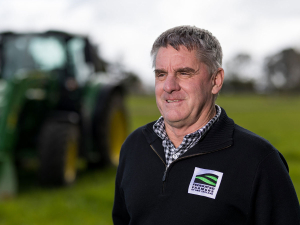
National’s pledge to introduce 19 new national standards shows the party is serious about getting Wellington out of farming, Federated Farmers says.

The National Party’s policies to make it easier to grow fresh vegetables, secure reliable water and energy and simplify farm planning are practical changes that will give growers the confidence to invest, according to Horticulture New Zealand (HortNZ).
Fonterra Co-operative Group chief financial officer Andrew Murray has resigned to take up a role outside the dairy giant.
A major move is about to get underway to improve the quality and viability of dairy beef and cattle in NZ.
Veterinarians say changes to the code of welfare for dairy cattle provides a positive foundation for improved cattle welfare across the country.
Today, 15 October, is the International Day of Rural Women, which recognises rural women’s contribution to farming, communities and the environment.


OPINION: It seems Canterbury processor Synlait is still in the doldrums.
OPINION: Get offside with New Zealand First leader Winston Peters at your own peril.