Fonterra FY26 Results: $9.69 Milk Price, $3.4bn Profit
Fonterra has unveiled its annual results for the 2026 financial year, posting $27 billion in revenue and close to $20 billion returned to New Zealand farmer owners and unit holders.




 increase font size
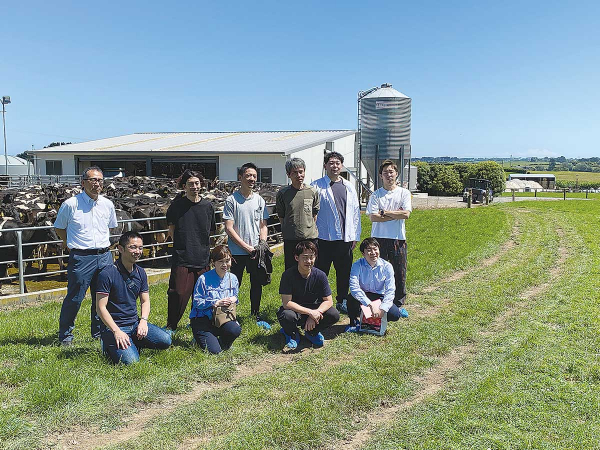 Visiting Japanese chefs on a Taranaki dairy farm last month.
A baking competition, dubbed Fonterra Grand Prix, is helping New Zealand grass-fed butter spread its market share in Japan.
Run by the co-operative, it involves Japanese chefs producing unique recipes and creations using Anchor butter, Anchor Food Professionals and NZMP brands.
New Zealand is Japan’s largest source of butter outside of the country itself.
The competition begins with recipe examinations in the first round and culminates in the final on-site baking presentations to decide three award winners for each of the bakery and confectionery categories. Well-known professional chefs who have won global culinary competitions judge the contest.
Under the competition rules, winners must commercialise their creations within 12 months of clinching an award.
Creations from 2019 and 2020 competitions are already being sold in retail stores, hotels and bakeries owned by the chefs. No competitions were held over the past two years due to Covid.
Recently seven winning chefs were in New Zealand to see first-hand to look at our pasture-based dairy industry.
The team visited a Taranaki dairy farm and Fonterra’s Whareroa plant to grassfed butter being made at the cutting-edge production facility.
The group also put on a cooking demonstration at Fonterra head office for chief operating officer Fraser Whineray and staff.
Whineray thanked the chefs for helping promote NZ grass-fed butter in Japan.
“We are very privileged to have you visit our facilities; please take your experiences back to Japan and share with Japanese consumers your wonderful using sustainably produced grass-fed NZ butter.”
Whineray told Dairy News that Japan has long been a strong protein ingredient market for Fonterra.
“With an ageing society keen to enjoy their sunset years, the market is strong for advanced proteins used in many healthy ageing and sports nutrition applications.
“This trend is set to continue particularly as Japanese continue to consume more Western-type food.
“At the same time, Japan’s domestic milk production is forecast to decrease over the long term. This combined with easing market access for NZ dairy, means there are plenty of good opportunities for further long-term growth.”
Whineray says the Japanese consumer too is becoming more aware of the value of grass-fed, sustainable dairy.
“So, that too plays into our favour,” he says.
Fonterra’s North Asia team member Masataka Matsuyama, who accompanied the Japanese chefs on their visit, says the baking competition is all about promoting New Zealand grass-fed dairy products. Matsuyama points out that while New Zealanders are familiar with the fact that dairy cows here graze outside on grass, for much of the world including Japan, grassfed dairy is rare.
“Promoting awareness and maximising the value gained from New Zealand sustainable pasture raised dairy farming is core to our strategy,” he says.
“Our world-leading processing technology also means our butters perform consistently in specialist applications.
“Take for example our pastry butters which have specific milk fat fractions to improve handling and deliver up to 20% more rise compared to standard butter.”
Matsuyama says the aim of the tour was to show them how dairy cows are farmed in New Zealand, outdoors eating fresh grass and raising them and processing their milk in a sustainable way.
“We want the winners to become NZ grass-fed ‘ambassadors’ for the Japanese market.”
Fonterra has unveiled its annual results for the 2026 financial year, posting $27 billion in revenue and close to $20 billion returned to New Zealand farmer owners and unit holders.
Fonterra Co-operative Group has confirmed the independently assessed candidates standing for election to its board in 2026.
Fonterra has revised its Farmgate Milk Price forecast for the 2026/27 season, lifting the midpoint and narrowing the range on the back of improving global dairy commodity prices.
Outgoing Fonterra Co-operative Council chair John Stevenson says that it has been a privilege to represent the co-op's farmer shareholders.
OPINION: It seems Canterbury processor Synlait is still in the doldrums.



LIC shareholders have elected a new North Island representative to the co-operative's Board, along with five representatives to its Shareholder Reference Group (SRG), following the company's Annual Meeting held in Invercargill.
Farmers across parts of Southland and South Otago are continuing to deal with difficult conditions after a prolonged run of wet weather, with pressure building around feed supply, stock management, pasture damage, farm infrastructure and everyday workloads.
Federated Farmers says it welcomes Labour's commitment to reviewing the Sharemilking Agreements Act, calling on other major parties to do the same.
For Canterbury dairy farmers Sian Meijer and Rick Wobben, wearable technology has become one of their most valuable on-farm tools - helping manage 1850 cows across an expansive, high-performing dairy operation while improving efficiency, mating outcomes and day-to-day decision making.
Fonterra has unveiled its annual results for the 2026 financial year, posting $27 billion in revenue and close to $20 billion returned to New Zealand farmer owners and unit holders.
The first major update to the Dairy Cattle Code of Welfare in more than a decade has been released, marking what DairyNZ describes as an important step in ensuring animal welfare standards continue to evolve alongside scientific evidence and on-farm realities.


OPINION: It seems Canterbury processor Synlait is still in the doldrums.
OPINION: Get offside with New Zealand First leader Winston Peters at your own peril.




