
PC1 Pause Looms as Coalition Targets Waikato Farm Rules
A pause on Waikato Regional Council's (WRC) plan change that sets new freshwater rules for farming could be announced in the coming weeks.




 increase font size
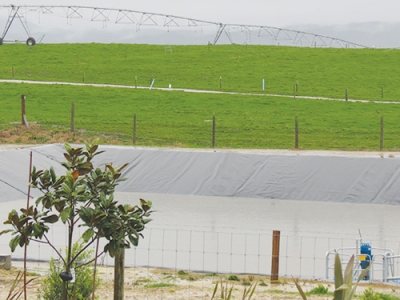 Soil is also the basis of effluent treatment systems.
Knowing the soil has always been the basis of good farming because the soil is the foundation of the production system.
And for modern dairy farmers a good understanding of soils is even more important because the soil is also the basis of the effluent treatment system. Knowing the soil conditions and how they vary during the year can help deliver practical benefits including maximising the use of nutrients in effluent and preventing contamination of groundwater and waterways.
Soil properties such as texture and structure determine the amount of water and nutrients that can enter and be retained in a particular soil, and the rate at which excess water goes through that soil. Infiltration rates, water retention, drainage characteristics and consequent leaching losses of nutrients from effluent depend much on these properties, and they vary over time as a result of weather and farming activities.
The risk of surface runoff will be significant if application is not matched to infiltration rates or if a farm is irrigating onto already saturated soils.
Treading damage during grazing, especially in wet conditions, can affect the effluent infiltration rate. So it is best to take extra care with winter grazing in your effluent area, and avoid irrigating a paddock that has been damaged until the soil recovers. If in doubt, dig a hole before irrigating and check whether the soil is loose and open or dense and compacted.
Especially regarding runoff: suspended solids in farm dairy effluent can accumulate on and just below the soil surface, creating an organic layer that temporarily acts as a surface coating. Although infiltration rates are then reduced to very low levels the effect is generally transient, lasting about a couple of days. Using low application rate equipment will help to reduce this risk. Once again you can check this by digging a hole and looking closely at the soil condition.
Another issue is that relatively dry soil contains large pores open at the surface. When irrigating in these conditions, effluent can be rapidly transported below the root zone by a phenomenon known as 'bypass flow'. This type of bypass flow can occur especially in soils that undergo shrinkage and fissuring during drying, especially when these soils have been compacted by treading. High leaching losses of nutrients can result from this. That's one reason why the regional council has rules limiting effluent application depths.
Farmers should therefore protect soils from grazing damage in wet conditions, especially in the effluent block, and check the soil condition by digging a few holes as the effluent irrigation season begins. Then you can schedule effluent irrigation to suit soil and climatic conditions.
To achieve this, storage facilities with enough capacity are needed. Minimise the risks of drainage and runoff by applying small depths of effluent. Irrigators with low application rates will help reduce these risks.
There are some important rules to follow on land application of farm dairy effluent:
Untreated effluent should not be discharged or allowed to run into a drain, stream or river
Effluent ponds, storage facilities, feed pads and standoff pads must be sealed to prevent seepage
Feed pads and standoff pads must be at least 20m from surface water
Irrigation must not exceed a depth of 25mm per application or result in more than 150kg of nitrogen being applied per hectare per year.
In my experience, farmers have been taking a real interest in understanding their soils more to help them manage effluent better. We all win if they're successful at that.
• Bala Tikkisetty is a sustainable agriculture advisor at Waikato Regional Council. Tel. 0800 800 401.
A pause on Waikato Regional Council's (WRC) plan change that sets new freshwater rules for farming could be announced in the coming weeks.

OPINION: Staying on Plan Change 1, NZ First deputy leader Shane Jones took to social media to gain some political points.
OPINION: All eyes are on the Government as Waikato farmers seek urgent help to fend off the controversial Plan Change 1 (PC1), designed to manage nutrient discharges into waterways in the region.
Waikato farmers have been told that the Government’s new planning system legislation and the region’s Plan Change 1 (PC1) “won’t mesh together very well”.
The Government is looking at intervening on behalf of Waikato farmers who face new regulations around agricultural land use while Resource Management Act (RMA) reforms are underway.



Ravensdown shareholders have elected Jane Montgomery and Kate Acland to the Ravensdown Board for three-year terms, following a closely contested director election.

Federated Farmers says new legislation replacing the Resource Management Act will cut red tape, unlock investment and help grow New Zealand's export-led economy, after the Planning Bill and Natural Environment Bill passed their third reading in Parliament yesterday.
Leading figures from the major political parties will be questioned on their primary sector policies at the Rural Issues Debate at Mystery Creek Events Centre, Hamilton, on 30 September.
OPINION: Have a plan in place now!
Beef + Lamb New Zealand (B+LNZ) says it welcomes the passage of the Natural Environment Bill and Planning Bill, calling the bills a positive step for sheep and beef farmers.
A spate of southerly winds bringing cold temperatures has presented challenges for Taranaki dairy farmers.



OPINION: It seems Canterbury processor Synlait is still in the doldrums.
OPINION: Get offside with New Zealand First leader Winston Peters at your own peril.




