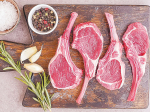
NZ Red Meat Exports Hit $867m in August, Up 23%
New Zealand's red meat and fifth-quarter exports reached $867 million in August, up 23% on the same month last year, as stronger returns lifted earnings across all major markets.




 increase font size
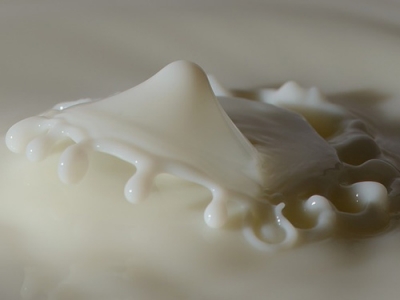 The New Zealand dairy industry is not latching on to increased demand in Asia for liquid milk.
The New Zealand dairy industry is not latching on to increased demand in Asia for liquid milk.
A recent report by the Ministry for Primary Industries shows that since 2013 imports of liquid milk from NZ's major trading partners in Asia has doubled to reach 434 million tonnes. But during that period NZ exports of liquid milk have remained static at below 100 million tonnes.
The report notes that in Europe where the milk quota was lifted last year, there has been an increase in milk production of 2.9% over the previous year with Ireland lifting its production by 12%, Netherlands by 7% and Germany by 2.4%.
But MPI says given current world dairy prices, farmers in these countries are still operating below the break-even point and they expect production to slow in the new season.
MPI says milk production for this season will be down by 7% and that doesn't take into account the effect that El Nino may have. It says dairy prices are stabilising but the recovery will be slow as the glut of milk stocks, especially in China, is depleted.
The author of the report, director of sector policy, Jarred Mair says despite the in-market issues, NZ dairy farmers are focusing on profit and fine tuning their businesses to cope with the downturn.
"A couple of things are coming through," he says.
"Farmers are looking through the cycle so they are not making decisions on the here and now. They are looking at what they can control such as their variable costs which is great and we are seeing a much bigger narrative around their systems, and their approach and their farming model.
"They are saying 'am I doing the right things for me' in these areas, which I think is also good because it allows a moment of self-reflection."
Mair says a very confident sector is continuing to invest in areas where it needs to and it hasn't put away wallets completely. Discretionary spending has obviously been dropped. "I think there are couple of trends," he says.
"There are those who are looking and saying 'how can I manage my variable costs and better understand the grass growth curve?'. But we are seeing a big push in innovation and we are seeing a lot of new farming systems come out that are sort of 'grass plus' that are just astounding in terms of what they can achieve."
Mair says New Zealanders need to understand even a small dairy farm is a multi-million dollars business and some of the bigger ones are in the $10m plus bracket.
New Zealand's red meat and fifth-quarter exports reached $867 million in August, up 23% on the same month last year, as stronger returns lifted earnings across all major markets.

OPINION: The United States wine market has changed forever, and companies cannot use same old playbook, said Erin Kirschenmann at the New Zealand Wine 2026 Wine Business Forum in August.
Meat Industry Association data, released alongside the Red Meat Sector conference in Wellington, shows export value climbing across the US, China, UK and Canada.
OPINION: The stats speak for themselves.
Chinese beef trade quotas and a looming suspension of Brazilian beef imports into the European Union are expected to reshape global beef trade flows over the remainder of 2026, with implications for New Zealand exporters, according to Rabobank's Q3 Global Beef Quarterly report.

Federated Farmers has welcomed new rural policies released by ACT, saying they align closely with its own election priorities.

Rural Contractors NZ says proposed changes to land transport rules for agricultural vehicles are a welcome response by the Government to out of date regulations which have seen members hit with huge fines.
Alliance is calling for final applications for its 2027 Graduate Programme, with applications closing on Sunday 25 October.
Decades piloting planes has ensured vet and farmer David Hayes is focused on safety. So, after a serious accident while welding on farm, he is sharing his experience so others can learn from it.
Canterbury milk processor, Synlait Milk has confirmed Leon Fung as its chief executive officer.
OPINION: Making it easier to collect rainwater and use it to grow crops and livestock is a no brainer.

OPINION: It seems Canterbury processor Synlait is still in the doldrums.
OPINION: Get offside with New Zealand First leader Winston Peters at your own peril.




