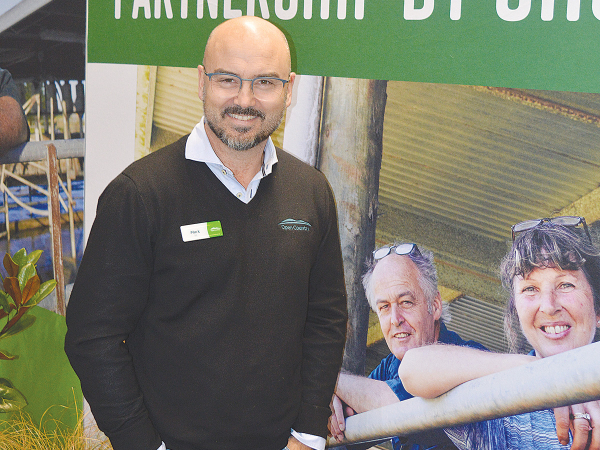
De Lautour, who took the role three months ago, says the Talley's-owned business welcomes competition.
"We welcome it because we back ourselves as being the best," he told Dairy News.
"We have a history of producing good results for our suppliers, so all we are saying is, bring it on."
Waikato, where Fonterra remains the dominant player, is a crowded field. Open Country operates alongside Fonterra, Tatua, Synlait, Yashili and the newest arrival, Singapore-based food giant and one-time Open Country stakeholder Olam.
According to DairyNZ, the Waikato region is home to nearly 29% of the nation's dairy herds, and 22% of the dairy cows.
One sign of the fierce competition is that Open Country no longer has a waiting list of suppliers in Waikato.
Be de Lautour points out that even with Olam arriving on the scene, Open Country has boosted milk supply for the new season.
The company pays its suppliers in full four times a year. For the first period of the new season, June to September, the company is forecasting a payout midpoint of $8.10/kgMS. Farmers will be paid in full in November. The payout midpoint is forecast to increase during the season.
De Lautour says farmers like their policy of paying faster and creating value at the same time.
"In a dwindling milk pool with new players coming in, you have to be a very good operator to maintain and attract suppliers. I think with on-farm costs increasing along with interest rates, our payment model creates real value."
Open Country is forecasting an average payout of around $8.25/kgMS for the new season. However, de Lautour points out that it's early days and things could change either way.
Open Country Dairy produces milk powders for export to China and other markets. It's also a major cheese producer, setting a production record last season and forecast to do even better this season.
De Lautour says it has invested in its Waharoa cheese factory to boost capacity. Sustainability changes at the plant - like wood pellets and not burning coal - attracted more global cheese customers.
"So, this gives us lots of options: We can run our cheese plant harder when there's demand and produce milk powders as well.
"We are looking at how this can be replicated in other regions."
De Lautour joined Open Country from another Talley's subsidiary, AFFCO, where he was the head of sales and marketing.
He sees a similar culture in both the companies. Neither of them are co-operatives, so their success depends on the ability to pay farmer suppliers a competitive farmgate price and provide high-level service.
"We aren't a co-operative, so farmers have the choice. They know they can hand in their notices and that makes the whole relationship, one based on trust and performance," he says.
De Lautour says Open Country prides itself on being in regular contact with farmers through its milk supply team, but without dictating how they should run their own businesses.
All Eyes On China
Open Country Dairy chief executive Mark de Lautour believes all eyes are on China as the new season progresses.
"Many buyers globally are watching China with interest, looking to see if/when Beijing is going to stimulate its internal consumer activity."
He thinks it's possible Chinese buyers will remain subdued, and utilise domestic inventories until early 2024, after which milk powder imports from New Zealand become tariff-free.
He says there are two reasons for this: state-owned dairy companies don't want to end the financial year with high-priced inventories, and they expect to benefit from the final tariff removal from January 1 next year.