
Tongan Student Wins Final William Gearish Award
Vetekina Pau'u is the first Tongan to win the William Gearish Memorial prize and sadly she will also be the last recipient.




 increase font size
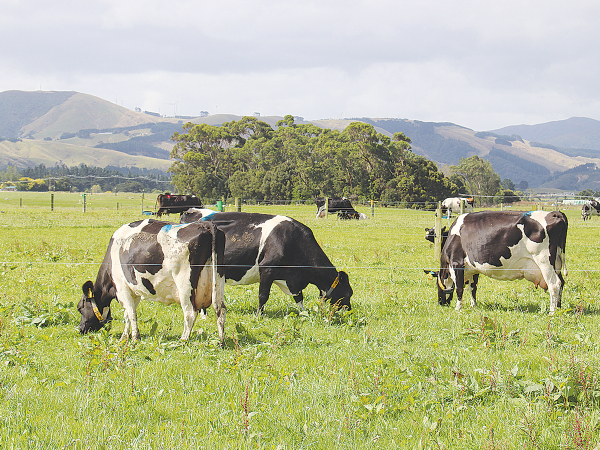 The trials at Massey have involved running 80 cows over pasture which incorporates ecotain plantain.
Dairy farmers could save more than a billion dollars over a decade by incorporating plantain into their pastures.
This was revealed at special field day at Massey University in Palmerston North this month to highlight the benefits of dairy farmers using plantain as part of their pasture sward to reduce nitrogen leaching
Presently, only Ecotain plantain produced by PGG Wrightson has been proved to do this following four years of trials at one of the university’s farmlets.
The $22 million project, known as Plantain Potency Practice (PPP) programme, is funded by DairyNZ , MPI through the SFFF, PGG Wrightson Seeds and Fonterra, but work on the programme has been done by a number of other science institutes, including AgResearch, Lincoln University, Plant and Food Research, Manaaki Whenua, Fonterra, DairyNZ and Agricom.
The trials at Massey have involved running 80 cows over pasture which incorporates ecotain plantain.
DairyNZ chief executive Tim Mackle, who fronted a media event at Massey, says the results are exciting and show that by feeding cows plantain, nitrogen leaching on a dairy farm can be reduced by between 20-60%. But to achieve this there is one proviso – it requires somewhere between 24-45% of the farm to have plantain in the pasture. He says there is now robust scientific evidence that Ecotain plantain is an effective solution to help dairy farmers further reduce their environmental footprint and continue playing their part in improving water quality.
“We all want healthy freshwater to swim and play in, and dairy farmers can confidently use Ecotain plantain on-farm to support that,” he says.
 |
|---|
|
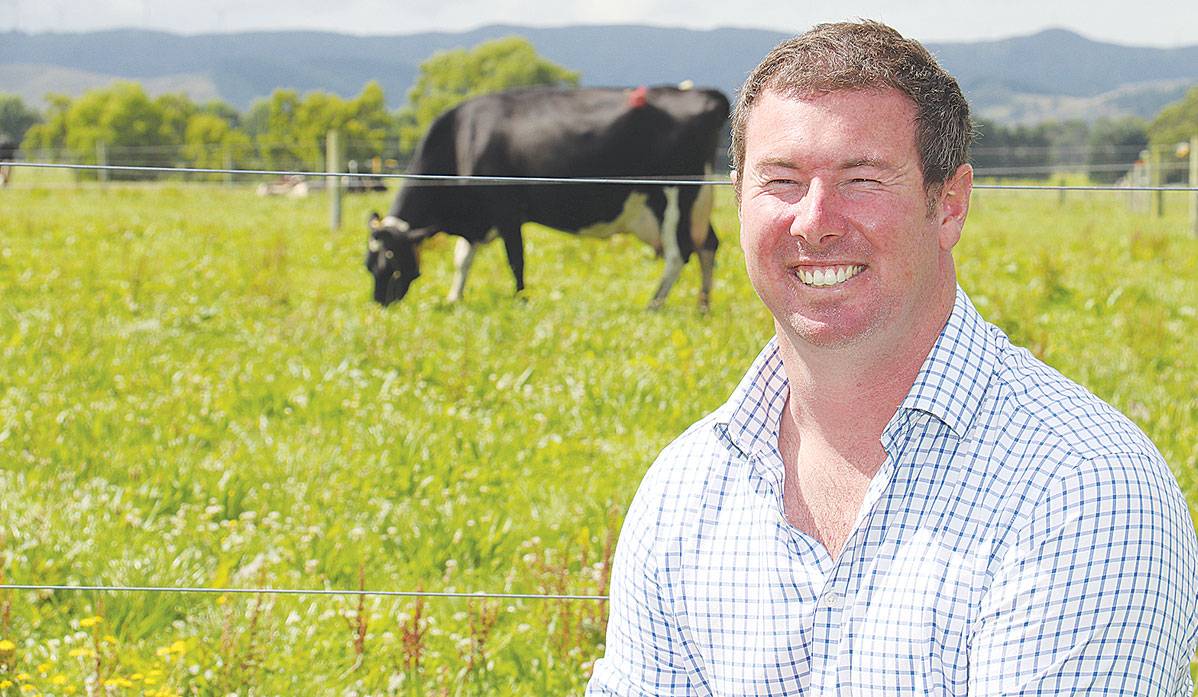
Dannevirke farmer Thomas Read is a strong advocate for plantain. |
Mackle says, of the contaminants that dairy farmers have to deal with, nitrogen is by far the biggest. He says the project is an integrated one and it’s important that local regional councils are involved and recognise the significance of the technology.
“You have to look at it in the context of the whole value chain to make sure all the issues have been solved, such as plantain not affecting production or milk quality, which it doesn’t.
“The great thing is the cost benefit side which only requires plantain to be added to the seed mix,” he says.
Mackle says more science is still needed to get clarity around persistence right across the dairying regions. He says the project excites him – especially seeing some of the best minds in agriculture, including farmers, working together to solve big issues.
Vetekina Pau'u is the first Tongan to win the William Gearish Memorial prize and sadly she will also be the last recipient.
Researchers at Massey University are using a special piece of scientific equipment to improve the measurement of greenhouse gas emissions from pasture soils.
Interest in agritech and production animal systems has prompted Massey University's School of Agriculture and the Environment to new majors to its popular animal science degree.
The industry is crying out for graduates with agricultural related degrees.
A four year trial has reaffirmed that mixing plantain into dairy pastures can help reduce nitrogen losses to freshwater while maintaining milk production and profitability, say researchers.


Federated Farmers has welcomed new rural policies released by ACT, saying they align closely with its own election priorities.

Rural Contractors NZ says proposed changes to land transport rules for agricultural vehicles are a welcome response by the Government to out of date regulations which have seen members hit with huge fines.
Alliance is calling for final applications for its 2027 Graduate Programme, with applications closing on Sunday 25 October.
Decades piloting planes has ensured vet and farmer David Hayes is focused on safety. So, after a serious accident while welding on farm, he is sharing his experience so others can learn from it.
Canterbury milk processor, Synlait Milk has confirmed Leon Fung as its chief executive officer.
OPINION: Making it easier to collect rainwater and use it to grow crops and livestock is a no brainer.


OPINION: It seems Canterbury processor Synlait is still in the doldrums.
OPINION: Get offside with New Zealand First leader Winston Peters at your own peril.




