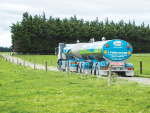
Fonterra FY26 Results: $9.69 Milk Price, $3.4bn Profit
Fonterra has unveiled its annual results for the 2026 financial year, posting $27 billion in revenue and close to $20 billion returned to New Zealand farmer owners and unit holders.




 increase font size
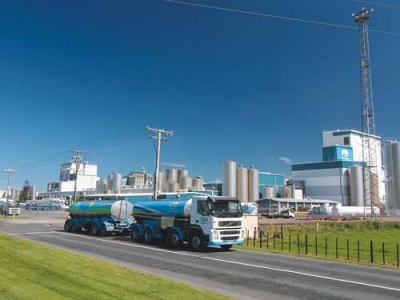 Milk production is down 6% this season, says Fonterra.
Fonterra's milk collection across New Zealand last month dipped 3% compared to the same month last year.
For the seven months of the season, ending December 31, milk collection reached 932 million kgMS, 4% lower than last season.
The co-op says lower milk collection for the 2015/16 season is largely a result of the low milk price environment, where farmers have reduced stocking rates and supplementary feeding in order to reduce costs.
North Island milk collection in December reached 118 million kgMS, 6% lower than December last season; for the season to date North Island milk collection is down 6%.
South Island milk collection in December was 77 million kgMS, 2% higher than December last season. However, it's down 1% for the season to date.
Fonterra says its Australian milk collection in December reached 12 million kgMS, 5% lower than December last season. Milk collection has slowed due to low pasture availability in most dairy regions. Milk collection across Australia for the six months to December 31 reached 70 million kgMS, in line with the same period last season.
While farmers are feeding mostly pasture to cows to keep costs down, DairyNZ says data from past El Nino years suggests farmers in some regions can expect a drop in pasture growth this summer.
DairyNZ has reviewed pasture growth data from the three strongest El Nino years – 1972-73, 1982-83 and 1997-98 – which this summer is predicted to mirror.
DairyNZ senior developer for productivity, Kim Mashlan, says if similar years are anything to go by, then many farms could grow 2-3 tonnes less feed per hectare than normal.
"Some areas like Northland, Bay of Plenty and parts of Waikato and Canterbury show lower than average pasture growth rates from January through to April, compared to an average year," says Mashlan.
"This information isn't meant to be a crystal ball but highlights the importance of preparing for the worst and hoping for the best, which many farmers are already doing.
"The key is to have completed a written summer management plan that identifies triggers for a change in farm management. For example, if grazing residuals go below 4cm, what will happen? An action might be to feed 4kg grass silage per cow per day.
"It's a good idea to body condition score the herd fortnightly and remember to keep an eye on young stock – providing supplements if pasture is inadequate.
"Review the weather forecasts regularly and, if needed, adjust the plan based on predicted pasture growth rates, which tools like DairyNZ's Pasture Growth Forecaster can help predict."
There are still decisions that can be made to prepare for a dry period, says Mashlan.
In some parts of the country, where moisture levels are adequate, there is an opportunity to build up feed with nitrogen, she says.
Booking your herd's pregnancy testing early means those last culls can go as early as possible, reducing feed demand. Also, consider milking once-a-day before feed gets short, says Mashlan.
DairyNZ economist Matthew Newman says milk production nationwide is already well below last year, after farmers culled cow numbers heavily earlier in the season, due to a low milk price. If dry summer conditions put pressure on pasture growth, then milk production will drop further.
"Currently, I'd say we are tracking for a 6% drop in milk production this season, but if El Nino conditions affect us badly this summer, it could be 10% or more down in some regions," says Newman.
DairyNZ has revised its break-even milk price up to $5.40/kgMS, due to the decrease in expected production for the 2015-16 season and a slight lift in farm working costs.
DairyNZ tips for dealing with a dry summer:
◦ Consider milking once-a-day.
◦ Accurately body condition score fortnightly and dry-off according to body condition score rules.
◦ Protect pastures from over-grazing.
◦ Check young stock at least monthly if off-farm and monitor weight gains whether on or off-farm. Plan to bring in extra feed should weight gains fall below target.
◦ Sell off remaining culls as soon as the herd has had a final pregnancy diagnosis.
Visit dairynz.co.nz/summer
Fonterra has unveiled its annual results for the 2026 financial year, posting $27 billion in revenue and close to $20 billion returned to New Zealand farmer owners and unit holders.
The first major update to the Dairy Cattle Code of Welfare in more than a decade has been released, marking what DairyNZ describes as an important step in ensuring animal welfare standards continue to evolve alongside scientific evidence and on-farm realities.
Fonterra Co-operative Group has confirmed the independently assessed candidates standing for election to its board in 2026.
Fonterra has revised its Farmgate Milk Price forecast for the 2026/27 season, lifting the midpoint and narrowing the range on the back of improving global dairy commodity prices.
Outgoing Fonterra Co-operative Council chair John Stevenson says that it has been a privilege to represent the co-op's farmer shareholders.



Federated Farmers says it welcomes Labour's commitment to reviewing the Sharemilking Agreements Act, calling on other major parties to do the same.
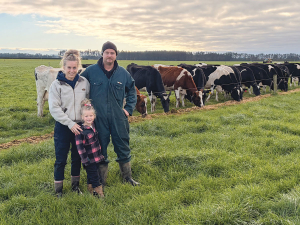
For Canterbury dairy farmers Sian Meijer and Rick Wobben, wearable technology has become one of their most valuable on-farm tools - helping manage 1850 cows across an expansive, high-performing dairy operation while improving efficiency, mating outcomes and day-to-day decision making.
Fonterra has unveiled its annual results for the 2026 financial year, posting $27 billion in revenue and close to $20 billion returned to New Zealand farmer owners and unit holders.
The first major update to the Dairy Cattle Code of Welfare in more than a decade has been released, marking what DairyNZ describes as an important step in ensuring animal welfare standards continue to evolve alongside scientific evidence and on-farm realities.
Ravensdown shareholders have elected Jane Montgomery and Kate Acland to the Ravensdown Board for three-year terms, following a closely contested director election.
Federated Farmers says new legislation replacing the Resource Management Act will cut red tape, unlock investment and help grow New Zealand's export-led economy, after the Planning Bill and Natural Environment Bill passed their third reading in Parliament yesterday.



OPINION: It seems Canterbury processor Synlait is still in the doldrums.
OPINION: Get offside with New Zealand First leader Winston Peters at your own peril.




