
Alex Turnbull Appointed CEO of Yili Oceania Division
Former Fonterra executive Alex Turnbull has been appointed CEO to lead all five Yili Oceania Business Division companies in New Zealand.




 increase font size
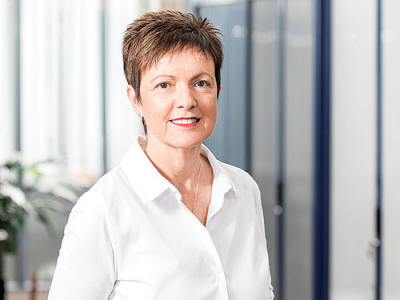 Westland Milk Chief Executive Toni Brendish.
Westland Milk has secured a $10 million loan from the Government to help build a new plant.
The loan from the Government’s Provincial Growth Fund will help build a $22million plant at Hokitika. The plant will allow Westland to separately process (segregate) multiple types of special quality milks into high value products to meet growing global and domestic demand; returning more money to shareholder farmers and the regional economy.
Chief Executive Toni Brendish says segregated production of speciality milks is a key component of Westland’s five-year strategy.
“Westland needs to reduce its dependency on bulk dairy commodities with their volatile pricing cycles,” says Brendish.
“We’ll do this by expanding our capacity to produce high-value products, differentiated by the special qualities of the milk used to make them. This will include A2 milk and our new Ten Star Premium Standard*milk.
“There is also potential, in later stages of the project, for other segregated products such as grass-fed, pure Jersey, goat or sheep milk, or even plant-based nutrition.”
Brendish says the Provincial Growth Fund investment allows the company to bring forward development of its segregation capacity; bringing the benefits back to the company, its shareholders and the regional economy far sooner.
The new plant will also allow the cooperative to produce high value segregated product even during the peak milk season.
“Currently, while we can produce some segregated product on the shoulders of the season, at peak our existing plant capacity forces us to process low value bulk commodities just to get the milk volume through.”
The plant will be operating in time for the 2019-20 season. It will create an additional eight to ten jobs at Hokitika, but the benefits to the West Coast economy will go far beyond that. A purpose-designed plant for processing multiple segregated products will be a first for the New Zealand dairy industry, and a real boost for the West Coast region.
“Westland Milk Products is already a key economic driver of the West Coast economy,” Brendish says. “Dairy generated more than 14.3% ($234.4 million) in gross domestic product in the region in 2016 alone and 9.2 percent of the region’s workforce are directly employed staff (shareholder farmers and their employees are additional).
“However, we do face challenges to our objective of delivering our shareholders a competitive and sustainable payout that ensures their future, and the future of dairying in our region.
“We simply can’t compete in the bulk dairy commodities arena where we have little influence or control over the vagaries of the global dairy trade, and a reduced ability to ride out its highs and lows. If Westland is to thrive, and grow our vital contribution to the West Coast economy, we must focus on our best assets, including our heritage, location, people and, particularly, our smaller size, with the agility and flexibility that comes with that.
“It makes sense for us to focus on low volume, segregated, high value products that are far less susceptible to the cycles of the global dairy trade market. There is growing demand from customers prepared to pay premium prices for bespoke products that meet their, and their consumers’, particular needs.
“More money going into dairying will lead to more spending across the whole region, with benefits far beyond dairying. Businesses aligned to agriculture do better, more staff can be employed on farms and in support businesses, more people are attracted to the West Coast to work, there’s more spending in the community, more children in schools and so on.”
Brendish says some specialised staff are likely to be attracted to the region by the requirements of the new plant, and Westland’s skills development programme means these skills will be passed on to existing staff and new people coming through, benefitting the West Coast generally.
“Most importantly, this is a great best chance to ensure that West Coast dairying remains a viable and sustainable contributor to the region for generations to come,” Brendish concluded.
Former Fonterra executive Alex Turnbull has been appointed CEO to lead all five Yili Oceania Business Division companies in New Zealand.
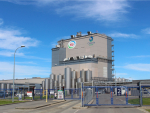
Chinese dairy giant Yili Group says its New Zealand operations are on track for strong revenue growth in 2025 after recording significant year-on-year growth for the first half of the year.
Arguably one of the country's top dairy company's chief executives, Richard Wyeth has abruptly quit Chinese owned Westland Milk Products (WMP)
OPINION: This old mutt well remembers the wailing, whining and gnashing of teeth by former West Coast MP and Labour Agriculture Minister Damian O’Connor when Chineseowned Yili took over the troubled dairy company Westland Milk a few years back.
Westland Milk has reaffirmed its commitment to pay farmer suppliers 10c above Fonterra farm gate milk price for the following two seasons.


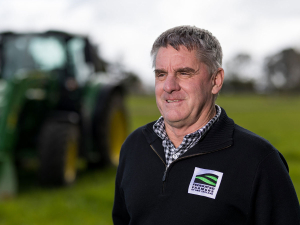
National’s pledge to introduce 19 new national standards shows the party is serious about getting Wellington out of farming, Federated Farmers says.
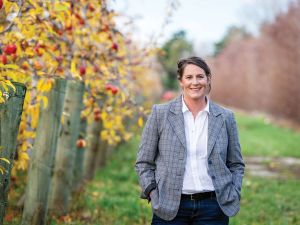
The National Party’s policies to make it easier to grow fresh vegetables, secure reliable water and energy and simplify farm planning are practical changes that will give growers the confidence to invest, according to Horticulture New Zealand (HortNZ).
Fonterra Co-operative Group chief financial officer Andrew Murray has resigned to take up a role outside the dairy giant.
A major move is about to get underway to improve the quality and viability of dairy beef and cattle in NZ.
Veterinarians say changes to the code of welfare for dairy cattle provides a positive foundation for improved cattle welfare across the country.
Today, 15 October, is the International Day of Rural Women, which recognises rural women’s contribution to farming, communities and the environment.

OPINION: It seems Canterbury processor Synlait is still in the doldrums.
OPINION: Get offside with New Zealand First leader Winston Peters at your own peril.




