Fonterra FY26 Results: $9.69 Milk Price, $3.4bn Profit
Fonterra has unveiled its annual results for the 2026 financial year, posting $27 billion in revenue and close to $20 billion returned to New Zealand farmer owners and unit holders.




 increase font size
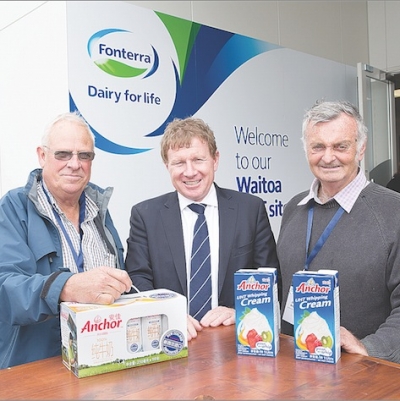 Fonterra chairman John Wilson (centre) with Lloyd Downing (left) and John Walsh.
FONTERRA IS offering winter milk contracts in Waikato to keep its new $120m UHT plant in year-round production. The plant at Waitoa has eight lines and can produce 28 packets of UHT milk and cream per second; it needs 100m L of milk every year.
The plant produces cream for food service clients in Asia and pineapple flavoured ‘Kids Milk’ for China.
Year-round milk supply is needed for high value, short shelf-life products.
Fonterra chairman John Wilson says some farmers are moving off the strict grass curve and milking cows throughout the year.
“This gives us an opportunity to work with these farmers. We have signalled we need more milk for this plant over the next 18 months,” he told Dairy News. “Farmers in Waikato will now plan for that.”
Winter milk suppliers are paid a premium and get “deferential” transport pricing. They must spend heavily to commit to year-around milking, most needing to calve two or three times a year to produce quality milk in autumn and winter.
In addition to a premium price for winter milk, the suppliers need good returns from such a deal, Wilson says. “They are proud to see quality milk turned into high value products for export [but] also need to see returns coming in above milk prices.”
The Waitoa UHT factory was opened by Primary Industries Minister Nathan Guy last month. It has five production lines with provision for three more lines.
Fonterra global director operations Robert Spurway says 1200 staff and contractors completed the 12-month project. “We are proud of the finished plant.”
No milk is stored at the plant. Fresh milk arriving is immediately processed by heating for the required shelf life then turned into products.
Tetra Pak supplied the plant, which has a helix-shaped accumulator that allows filling lines to keep running during minor repairs and adjustments.
Fonterra has unveiled its annual results for the 2026 financial year, posting $27 billion in revenue and close to $20 billion returned to New Zealand farmer owners and unit holders.
Fonterra Co-operative Group has confirmed the independently assessed candidates standing for election to its board in 2026.
Fonterra has revised its Farmgate Milk Price forecast for the 2026/27 season, lifting the midpoint and narrowing the range on the back of improving global dairy commodity prices.
Outgoing Fonterra Co-operative Council chair John Stevenson says that it has been a privilege to represent the co-op's farmer shareholders.
OPINION: It seems Canterbury processor Synlait is still in the doldrums.


Federated Farmers says it welcomes Labour's commitment to reviewing the Sharemilking Agreements Act, calling on other major parties to do the same.
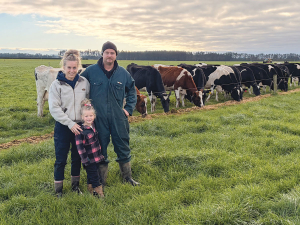
For Canterbury dairy farmers Sian Meijer and Rick Wobben, wearable technology has become one of their most valuable on-farm tools - helping manage 1850 cows across an expansive, high-performing dairy operation while improving efficiency, mating outcomes and day-to-day decision making.
Fonterra has unveiled its annual results for the 2026 financial year, posting $27 billion in revenue and close to $20 billion returned to New Zealand farmer owners and unit holders.
The first major update to the Dairy Cattle Code of Welfare in more than a decade has been released, marking what DairyNZ describes as an important step in ensuring animal welfare standards continue to evolve alongside scientific evidence and on-farm realities.
Ravensdown shareholders have elected Jane Montgomery and Kate Acland to the Ravensdown Board for three-year terms, following a closely contested director election.
Federated Farmers says new legislation replacing the Resource Management Act will cut red tape, unlock investment and help grow New Zealand's export-led economy, after the Planning Bill and Natural Environment Bill passed their third reading in Parliament yesterday.




OPINION: It seems Canterbury processor Synlait is still in the doldrums.
OPINION: Get offside with New Zealand First leader Winston Peters at your own peril.




