Visitors to Fieldays this year will get a taste of how cow collar technology Halter works.
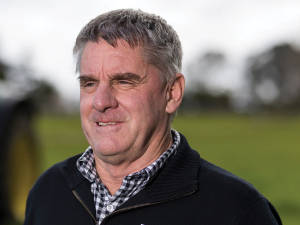
Halter farmer, Pete Morgan, runs a 600-cow farm in the Waikato. He will live stream the technology to shift his cows from the Halter Fieldays site.
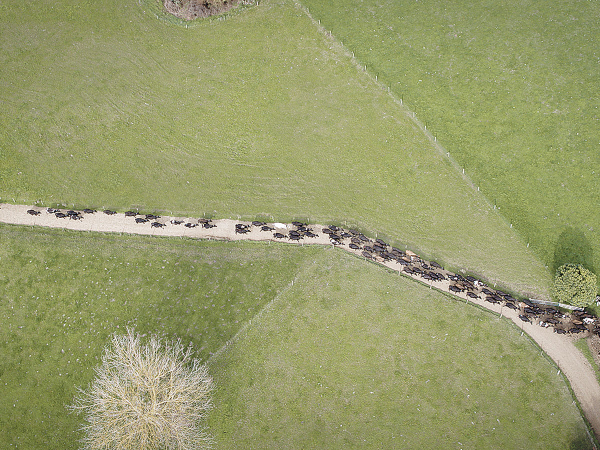
While on site at Mystery Creek, Pete will use the Halter app to remotely shift his mob in Te Awamutu. A live stream will show cow movements in real-time, starting at 2.30pm on Thursday and Friday.
"At our farm, we are designing breaks with different shapes that optimise exactly the accurate allocation of feed, cows move quietly at their own pace, and the farm has had a huge lift in productivity," says Morgan.
"Without a doubt, Halter has changed the way we farm."
Halter chief executive Craig Piggott is looking forward to sharing their groundbreaking technology with such a wide and captive audience.
"Pete will shift his cows from Fieldays, and this is huge because he can be at Fieldays, or anywhere really, and his farm continues to operate.
"I love seeing a farmer's reaction to a virtual shift. It's a look of sheer wonder as they see cows calmly moving to another break, all at their own pace.
"No dogs, no motorbikes, no walking behind cows: just a collar and a smartphone. Fieldays is a great opportunity for us to show just how simple and life-changing it can be."
Just like Fieldays, Waikato is where Halter began. From humble beginnings on their research farm in Morrinsville six years ago, Halter claims to now support "hundreds of farmers and tens of thousands of cows" across New Zealand, with significant uptake in the South Island.
The company says it supports farmers in unlocking the most productive and sustainable farms.
"The system combats labour shortages and improves animal health and performance by enabling farmers to remotely shift, virtually fence and proactively monitor the health of their cows.
"Halters also features an integrated pasture management system to help farmers get the most out of their grass.
"By leveraging real-time data, Halter automatically calculates feed and, coupled with their virtual fencing, allows for more precise kgDM or pasture allocation per cow.
"By automating some of the most time-consuming tasks on the farm, Halter significantly reduces workloads, allowing farmers to use their time more efficiently."
Piggot says Halter is meeting the industry's demand for positive and more efficient change.