Claas Balers Turn 30
Claas built its first variable chamber round baler - the Variant 100 - in 1996, so 2026 marks 30 years and the fifth generation of the Variant name, recently complemented by the new Cerex Series introduced in 2025.




 increase font size
 Amazone’s new Centaya-C harrowmounted seed drills.
Available in working widths of 3, 3.5 and 4 metres, Amazone’s new Centaya-C harrow-mounted seed drills are said to allow precise seed metering and exact depth placement at operating speeds of up to 12 km/h.
It comes with either RoTeC pro single-disc coulters or TwinTeC double-disc coulters on 12.5 or 15cm row spacings. A 2,000-litre twin-chamber hopper allows different combinations and application rates of seeds, fertiliser or other inputs to be sown in a single pass. Infinitely adjustable electric metering units allow precise application rates of 0.5 to 400 kg/ha.
RoTeC utilises a proven ‘single shot’ process, where the two inputs – for example, fertiliser and seed – are individually metered and then conveyed to a single-entry point via a shared conveying system. By comparison, TwinTeC is a two-shot process whereby the two inputs are individually metered and conveyed to different entry points via separate conveyors.
The main hopper can be divided 70/30 or 60/40, to suit a combination of seed and fertiliser requirements, while also offering a large opening for easy filling and access to the hopper and metering units via the loading platform. Meanwhile, an optional storage compartment is available for additional bags of seed and the drill can be equipped with a quick-emptying device for fast seed change-over.
The SmartCenter control panel is used for calibration and establishing machine settings, while the metering system is controlled via the AMAZONE AmaTron 4 terminal inside the cabin.
The unit can be easily connected to other AMAZONE tillage implements, such as the KE rotary harrows or the KG rotary cultivators, via the QuickLink quick coupling system and can also be used in conjunction with the GreenDrill 200 for the simultaneous sowing of catch crops or fine seeds. This combination allows a third material to be applied to the soil surface via baffle plates, with seed fed directly from the 200-litre mounted hopper.
Claas built its first variable chamber round baler - the Variant 100 - in 1996, so 2026 marks 30 years and the fifth generation of the Variant name, recently complemented by the new Cerex Series introduced in 2025.
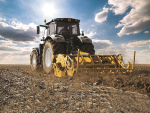
Distributed in New Zealand by OriginAg and supported by its nationwide dealer network, the Italian-built Alpego brand offers an extensive range of solutions including power harrows, rotary hoes, mulchers and subsoilers.
John Deere is introducing its 500R self-propelled sprayer to the NZ market, offering small-grain growers a new option designed for precise application, operator comfort and efficient field performance.
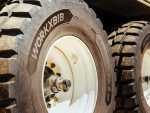
Global tyre manufacturer Michelin has extended its agricultural trailer tyre range, with the introduction of its new WorkxBib series, designed for tipping trailers, slurry tankers and manure spreaders.
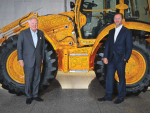
Following the record-breaking success of its hydrogen-powered Hydromax, JCB is ramping up its investment in the business, key to the first major change at the executive level of the business, with George Bamford stepping up to the post of joint chairman, alongside his father Lord Bamford.
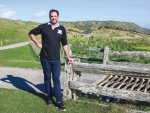

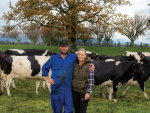
When dairy manager Miriam Lauridsen learned the farm, she was joining held weekly health and safety meetings, she initially thought that was “a bit over the top”. Experiencing that culture changed her mind.
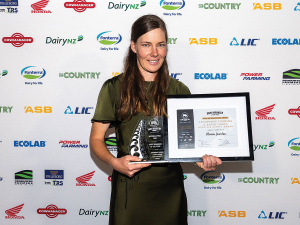
Nominations are open for the 2027 Fonterra Dairy Woman of the Year Award.
Keeping up with pasture moisture demands is likely to be the key challenge for dairy farmers during this season’s El Niño weather pattern, says Blue Skies Weather & Climate Services meteorologist Tony Trewinnard.
Farmers have until the end of this week to help shape DairyNZ’s future focus.
Wayne McNee, chief executive of AgriZeroNZ, has resigned and will leave the organisation on 15 January 2027.
The New Zealand dairy sector set a record in the 2025/26 season, producing more than two billion kilograms of milksolids for the first time.

OPINION: It seems Canterbury processor Synlait is still in the doldrums.
OPINION: Get offside with New Zealand First leader Winston Peters at your own peril.