Stihl Launches BT140, Its First Battery-Powered Auger
With battery tools becoming more widespread and more importantly, productive and reliable, it was only time before we saw augers or post-hole borers.




 increase font size
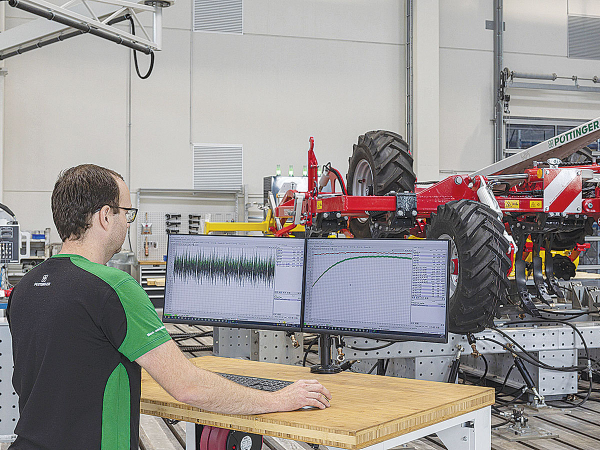 Pöttinger, as the lead company, is running a state-of-the-art research and testing centre.
The technology and Innovation Centre (TIZ 3) at Grieskirchen in Austria was founded in 2002 and is operated by three shareholders.
Pöttinger, as the lead company, is running a state-of-the-art research and testing centre, offering prototype construction, testing, measurement and inspection technology.
The latter is used not only for Pöttinger’s agricultural machinery, but also for running pilot projects for external customers.
During development of agricultural machinery, the test centre has the task of generating knowledge for the transfer to series production and collaborating with testing companies to guarantee the best possible working result. Additionally, durability testing is carried out on the test beds that cover the full-service life under operational conditions such as those found in the field.
A recent expansion at the Centre provides 1800m² of additional floor space; 1300m² of this is dedicated to testing technology, with the remainder for prototyping, with equipment that includes a 360m² component testing station for individual test bed setups.
Described as using the most modern component testing equipment in Europe, the Centre also provides access to test scenarios for e-mobility including testing of high-voltage components.
Markus Baldinger, Pöttinger managing director, explains that in addition to investing in modern production plants, the company has a strong focus on testing and inspecting agricultural machinery.
“This additional investment in TIZ 3 sees us fulfilling our promise to our customers regarding high quality, strength, reliability and durability.
“The tests that simulate real operating conditions save up to 75% of the time and costs compared to practical tests performed in the field.”
With battery tools becoming more widespread and more importantly, productive and reliable, it was only time before we saw augers or post-hole borers.
Austrian manufacturer Pottinger has released details of a new compact, linkage-mounted compact twin rotor rake, without a chassis, that is said to deliver impressive manoeuvrability.
The new Lemken Saphir XMR mechanical seed drill has been introduced as the successor to the proven Saphir 10m, with the manufacturer claiming new standards for precision, ease of use and area coverage.
Krone's XDisc 710 direct-cut header can now be used by John Deere and New Holland forage harvesters, as well as the Krone Big X it was originally designed for.
Fifty Eight years ago, on the 16th of August 1968, August Claas, the founder of the harvesting company and father of Helmut Claas, personally presented a Claas Senator combine harvester to Scottish farmer John Steven.


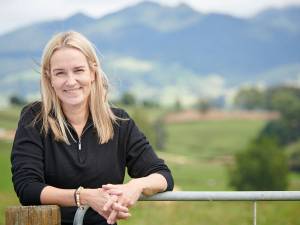
Minister of Conservation Hon Tama Potaka has appointed Susan O'Regan as Chair of the Queen Elizabeth II National Trust (QEII) for a three-year term.
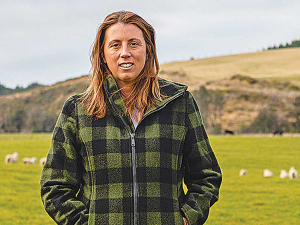
Red meat farmers are welcoming Labour’s plan to review the Emissions Trading Scheme and not to campaign on pricing agricultural emissions.
Where any worker in the kiwifruit industry is mistreated, we expect the authorities to take action.
Mid Canterbury Federated Farmers arable chair, Bevan Lill, said Beef + Lamb NZ data indicated that for the last six years, the average arable return on investment was about 0.8% while inflation ran about 4% - so the average arable farm was going backwards at about 3% a year.
Seed and grain companies share the concerns of arable farmers about the viability of their sector, says Seed and Grain New Zealand chief executive Dr Sarah Clark.
The New Zealand Institute of Forestry (NZIF) says unnecessary changes to New Zealand’s Emissions Trading Scheme (NZ ETS) will seriously erode investor confidence and result in significant reductions in forest planting rates.



OPINION: It seems Canterbury processor Synlait is still in the doldrums.
OPINION: Get offside with New Zealand First leader Winston Peters at your own peril.




