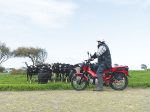
Still going strong!
The saying goes ‘if it ain’t broke -don’t fix it’, so it’s no surprise to see an old favourite in the shape of the Honda CT125 still doing it like it always did, but with a revamp from the iconic CT110 that started things.




 increase font size
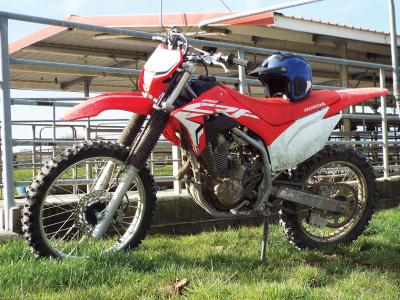 Honda’s latest CRF 250F.
Regardless of the debate about quads versus side x sides, two-wheelers remain crucial to many livestock farmers.
Honda’s latest CRF 250F takes such machines to another level, with Blue Wing Honda claiming this one is equally great on farm and off the property for weekend fun.
Dairy News spent a couple of weeks riding one in Waikato just as the cold and wet set in, plus the start of the calving season for good measure.
First impressions are of a machine slightly tall for some riders, but not so for this 1.8m reviewer. It has a seat 88cm high, firm yet comfortable and long enough so that the rider can move back during acceleration to get weight onto the rear wheel.
Power, and there’s plenty of it, comes from an all new 250cc single cylinder, SOHC unit with fuel injection and electric start. The engine mates with a five-speed gearbox that sends the final drive to the rear wheel with an O-ring sealed chain, so no maintenance worries.
The newly designed frame uses a lightweight, twin spar set-up with manufacturing quality and finish you’d expect from Honda. In use it proved stable and easily moved between the rider’s legs to adapt to changing terrain and angles.
Up front, a 21-inch wheel is held in 41mm front forks with long travel, excellent damping and controlled rebound over all surfaces.
At the rear, the preferred choice is an 18-inch wheel working with the central Pro-Link single shock configuration that is smooth, progressive and controlled in all situations.
A well engineered side stand completes the frame detail.
Noticeable on the CRF 250F is the lack of any excess controls, so it’s easy to operate and has less to go wrong. Other than a headlight, there’s an ignition key, kill switch and electric starter button – that’s it. No speedo, no fuel gauge, although the 6L fuel tank warning light shows when its down to the reserve.
Add to that an hour meter next to the headstock for routine servicing intervals, then you’ll get the idea.
Performance is impressive across a broad spread of engine speed, with smooth delivery.
Clutch and brake levers are light to operate, with the latter easily giving a controlled stop by ‘wave style’ discs at front and rear.
Living with the machine was easy given its simplicity, and it felt well engineered and put together.
Are there any negatives? It might be a little ‘tall’ in the gearing for following a dairy herd along a race, but that’s easily fixed with a sprocket change. And the seat may be too high for a short rider.
A neutral light would be nice, as would a small rack to carry a few electric fence standards, but overall an easy machine to live with.
The saying goes ‘if it ain’t broke -don’t fix it’, so it’s no surprise to see an old favourite in the shape of the Honda CT125 still doing it like it always did, but with a revamp from the iconic CT110 that started things.
Back in 1990, Malcolm Gray was an importer and distributor of conventional motorcycle helmets.
Police are urging dirt bike riders to get their motorbike driver’s license before riding in public places.
Honda's Pioneer UTV has a huge following on the farms and back blocks of New Zealand, no doubt driven by its reliability, but also by a host of technical features that makes it stand out from a crowded market.
Remarkably there are still many of the venerable Honda step-throughs operating on rural properties throughout New Zealand.

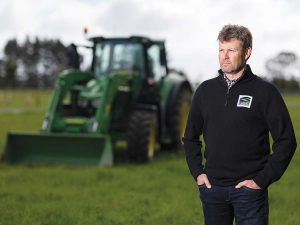
Mobile phone coverage and reliability are deteriorating in rural areas, and farming families are bearing the cost, according to a Federated Farmers survey.

HelloFresh New Zealand has launched a limited-edition Country Cookout Box of Southern-inspired meals, arriving as the 2026/27 rodeo season gets underway.
Beef + Lamb New Zealand Incorporated (BLNZ Inc) is marking 40 years of promoting red meat to New Zealand consumers, citing its taste, family meals and nutritional benefits.
Pāmu has welcomed Taranaki student Paige Burston as its newest First Foundation Scholar, supporting her journey towards a career in agriculture and animal science.
Farmer-owned fertiliser company, Ballance Agri Nutrients is welcoming National’s plan to negotiate security agreements with key supplier countries to protect New Zealand-bound products from export restrictions and greater supply chain certainty.
Carrfields has announced the appointment of Stu Hall to the newly created role of chief operating officer, Carrfields Ltd, reflecting the continued growth of their agribusinesses and the need to ensure the company has the leadership capacity and support in place as it pursues the emerging opportunities ahead.


OPINION: It seems Canterbury processor Synlait is still in the doldrums.
OPINION: Get offside with New Zealand First leader Winston Peters at your own peril.




