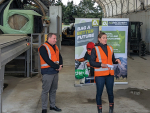
New Rural Recycling Scheme to Replace Voluntary Farm Plastics Programmes by 2027
Environment Minister Nicola Grigg has announced details of a new rural plastics recycling scheme.




 increase font size
A new strategy is in place for the upcoming Effluent and Environment Expo in Waikato.
The strategy is in response to farmers wanting to know more about managing their total environmental footprint, including effluent management, says Amanda Hodgson, who owns and run the event with her husband Matt.
“Management of a farm’s total environment is under the spotlight more than ever, so farmers are asking for wider solutions than just how to manage effluent around their dairies
or dairy housing systems,” Hodgson said.
“Effluent management is still the expo’s primary focus for now, but we can see potential to broaden it to offer farmers advice, products and services across the entire farm environment package.”
Renamed the Effluent and Environment Expo, the event returns to Mystery Creek Events Centre on November 19 and 20.
At least 90 exhibitors will be available to advise on design, storage, containment, management, application and technology for farm systems.
DairyNZ is sponsoring the two-day event and will be on site with resources and independent advisers.
Seminars led by industry experts, including some from DairyNZ, will provide farmers opportunity to ask questions and talk with other farmers.
This year’s keynote speaker is former All Blacks coach Sir Graham Henry.
DairyNZ’s biosecurity experts will be on hand to talk about simple steps to protect against disease, pests and weeds. Waikato Regional Council, Ministry for Primary Industries and OSPRI will also be on the biosecurity stand to help answer questions and to check farmers’ NAIT accounts.
Entry is free and farmers can choose to attend one or both days. To register online or to secure a seat in the seminars, visit effluentexpo.co.nz
At the expo, farmers will have access to companies accredited for effluent advice and work. DairyNZ helped to set up training for designers of effluent management systems to attain accreditation, which is an assessment of competency.
The Farm Dairy Effluent System Design Accreditation programme is administered by IrrigationNZ and funded by DairyNZ. It requires designers to show systems and processes that provide assurance of good design practice resulting in fit-for-purpose effluent systems.
Of the 18 accredited companies most will be at the Expo.
Environment Minister Nicola Grigg has announced details of a new rural plastics recycling scheme.

The Ballance Farm Environment Awards are coming to the West Coast of the South Island.
There's been widespread support from the primary sector for the Government's announcement on changes to freshwater farm plans that come under the Natural Environment Bill, which is now set to replace the existing RMA.
The chair of the country's environmental regulator, the Environmental Protection Authority (EPA), says changes are already under way to improve the performance of the agency to better meet the needs of those who interface with them.
New Zealand's Emissions Trading Scheme (NZ ETS) encourages afforestation while not achieving climate goals, says a new report released by the Parliamentary Commissioner for the Environment, Simon Upton.



Rural Contractors NZ says proposed changes to land transport rules for agricultural vehicles are a welcome response by the Government to out of date regulations which have seen members hit with huge fines.
Alliance is calling for final applications for its 2027 Graduate Programme, with applications closing on Sunday 25 October.
Decades piloting planes has ensured vet and farmer David Hayes is focused on safety. So, after a serious accident while welding on farm, he is sharing his experience so others can learn from it.
Canterbury milk processor, Synlait Milk has confirmed Leon Fung as its chief executive officer.
OPINION: Making it easier to collect rainwater and use it to grow crops and livestock is a no brainer.
As part of its Election 2026 coverage, Rural News asked political parties how they would help pull the arable sector out of the doldrums. Here's what they said:


OPINION: It seems Canterbury processor Synlait is still in the doldrums.
OPINION: Get offside with New Zealand First leader Winston Peters at your own peril.




