Beef Cows To The Rescue
OPINION: Could beef cows play an increasingly important role in improving profitability and resilience on hill country farms?




 increase font size
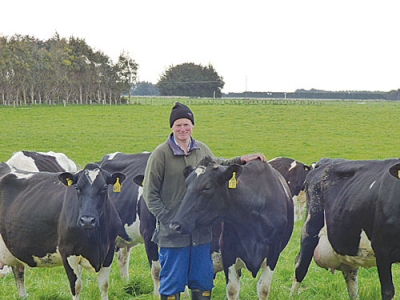 Bruce Dinnington, Southland, says it has been a tough start to spring.
The Southland winter-spring, with prolonged incessant rain, cold wind and low sunshine hours, have depressed grass growth well below normal.
Crop planting is nearly impossible, comments Elanco, the maker of Rumensin.
The company quotes Bruce Dinnington, Dacre, as saying he has not seen such a tough spring for many years. “It has not really dried out since late May, with only a few brief periods of reasonable weather.”
During a life of farming in Southland he has experienced enough El Nino conditions to know this is probably what the region will face this season – wet, cold conditions in the south and increasingly drier conditions in the east.
“We had a run of them through the 1980s and 90s, and if you were around then to see them you don’t easily forget how hard things can get.”
Those conditions require the flexibility to adjust stocking rates when things get tight, to help reduce the stress such conditions bring, versus having a highly stocked, tightly grazed milking platform that offers few alternatives than to increase the supplementary feed inputs or reduce herd numbers.
Dinnington’s 360ha farm milks 580 Friesians, and he is aiming at a self-contained stocking platform that also runs all the young stock for the herd. It is a more traditional, lower intensity option on an area some farmers may choose to stock as high as 1000.
“We have aimed to move more towards being self-contained. The costs of wintering cows off in Southland now is getting high -- as much as $35-$38/head/week -- and it’s getting harder to get good graziers who will do the job right. Being self-contained gives you so many more options, particularly in a year like this.”
The herd is wintered in a tunnel-house wintering shed with concrete feed pad, enabling it to be fully wintered on baleage supplement.
He aims to avoid cropping and the inherent pressure that puts on stocking rate with land out for the better part of the year; instead he opts for grass-grass pasture renewal.
The one compromise he makes to boost the herd’s energy intake is supplementing their diet with grain pellets through the lactation period.
Nineteen years ago Dinnington started adding Rumensin powder to the herd’s grain supplement to help maximise the energy value of the feed.
He then started using liquid Rumensin through the water lines, partly to reduce the risk of bloat.
“Ever since I have come back here and used Rumensin, and now Rumensin Max liquid through the water lines, I have only ever lost one cow, and we have never drenched for bloat.”
Given the high producing nature of his herd, with an average of 580kgMS/cow/year, he says he needs his herd “running on all cylinders”.
While Rumensin Max may commonly be used for lactating cows, Dinnington puts it through the water lines all year, ensuring dry cows and young stock get it all year.
“I always had the feeling that Rumensin would be beneficial to young stock too, and that is the case.
“We get better feed to weight conversion, and overall better looking stock by using it.”
OPINION: Could beef cows play an increasingly important role in improving profitability and resilience on hill country farms?
Two months after unveiling a major upgrade to its beef product, Halter says its farmers are on track for major production gains and additional grass growth.
Farmers can now get a more reliable view of pasture covers across their farm, thanks to a combination of three data sources.
A warning to dairy farmers not to expect the same good conditions that they experienced last season, has been issued by a leading farm consultant.
South Waikato farmer Bas Nelis is always interested in fine-tuning his business to improve results.

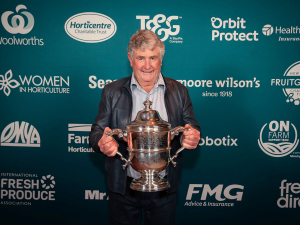
Potatoes New Zealand has congratulated Peter Reynolds of TA Reynolds Ltd in Pukekohe on being awarded the Horticulture New Zealand Bledisloe Cup, recognising a lifetime of service and contribution to New Zealand horticulture.
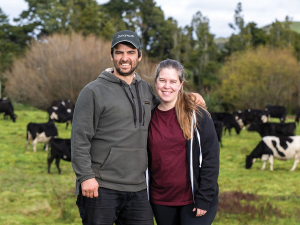
Signing up to a benchmarking tool is not about competition, but about improving collectively, says Ximena Puig and Alvaro Luzardo who are 50-50 sharemilkers at a 164-hectare (effective) dairy farm in Eketāhuna in the Lower North Island.
A leading British farming politician says he's impressed with the positive attitude of New Zealand farmers that he met during his recent trip here.
OPINION: With 10,500 dairy farms, New Zealand continues to punch above its weight around the world.
The Southern Dairy Hub (SDH), which runs a demonstration farm for South Island farmers, has a new general manager.
Esther Guy-Meakin has been announced as the new chief executive of the New Zealand Meat Board (NZMB).

OPINION: The Irish dairy sector is facing a new dilemma - maintaining year-round fresh milk supplies.
OPINION: Could beef cows play an increasingly important role in improving profitability and resilience on hill country farms?