Good strides are being made in the Ministry for Primary Industry’s Mycoplasma bovis eradication programme, according to its new head.
He says the predominance of infected beef as opposed to dairy enterprises recently identified by the programme suggests good gains in its capacity to find, contain and control the infection.
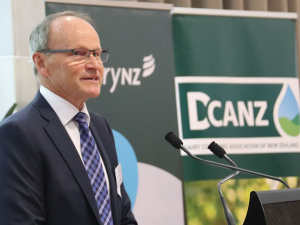
Stuart Anderson, formerly MPI’s director of fisheries management, took over this week from Geoff Gwyn, who has led the initial response and later eradication programme for the past three years.
While confirmed infections on properties classed as beef or other (lifestylers, calf rearers and graziers) have continued to creep up through the first quarter of the year, there was a period of more than two months with no new confirmed infections on any dairy farm, since late January.
Just one new infection – on a dairy enterprise – was confirmed in the week ended April 3.
Current figures (as at April 3) are 245 confirmed – 59 dairy, 133 beef, and 53 other – of which 31 are active and 214 cleared.
Properties under a Notice of Direction stand at 153 – the lowest it has been since May last year.
Of those, 98 are beef and 33 dairy, and of the farms under Active Surveillance, 68 are beef and 101 dairy.
Anderson explains that for each infected dairy enterprise, the programme expects to trace forwards to more than one infected beef farm.
“The Programme identifies infected dairies by tracing cattle and milk movements and also by screening bulk tank milk samples.
“In March 2020 the Programme confirmed infection in a dairy that was investigated based on January 2020 bulk tank milk screening results. There are certain periods in the lactation cycle where the Programme is more likely to detect infection, if present, via bulk tank milk screening.
Anderson said it was important to compare seasons of screening to identify national trends.
“Of the farms with a screening result prompting on-farm investigation through spring 2018, 5.3% were confirmed as infected (‘the conversion rate’).
“The conversion rate for spring 2019 screening was 2.7%. Declining conversion rates are consistent with a reduction in the number of infected dairy farms nationally.”
Autumn-winter 2020 screening begins next month. The conversion rate observed through this period can be compared to that for 2019 to assess for similar trends, said Anderson.
Meanwhile, the National Beef Survey, which aims to find out exactly how far Mycoplasma bovis has penetrated the beef sector, has been paused under Covid-19 Level 4 movement restrictions.
The survey was announced in January and involves sampling about 2500 beef herds with no known link to Mycoplasma bovis.
It rolled out to national coverage shortly before the COVID-19 lockdown but has now been paused and will recommence as soon as possible, said Anderson.
“While good progress has been made, data sets are yet to be processed.”
However, routine Mycoplasma bovis programme sampling continues, Anderson says.