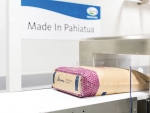
Powder plant triples yield
Fonterra says its $231 million upgrade to its dairy processing plant at Pahiatua in the Tararua district will give the company more flexibility in the products it can produce at other plants.




 increase font size

Simon Walker was keen to ride the milk wave, but he wasn't willing to convert his sheep and beef farm at Mokomoko near the town of Pahiatua in the Tararua District.
But in the best tradition of Kiwi ingenuity, Walker has found a way of being part of the success story of dairying, without making a lot of changes to his existing farming operations.
He and wife Louise run 3000 romney breeding ewes and 100 angus beef cows on his property called Ross na Clonagh. They are the fourth generation to farm the property.
It has an interesting history and its name dates back to Walker's great grandfather who left Ireland in the 1880's at just 17 and soon found himself gaining the property initially by way of ballot.
The place is as beautiful as the name Ross na Clonagh sounds.
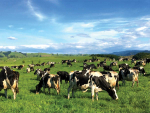
But about 12 years ago he decided to diversify and as he puts it "got to be part of the great white milk wave without milking a cow''. He has succeeded and his method is pretty simple. He buys in 3-month-old weaner heifers, mainly jerseys, from a local farmer, mates them and sells them on as in calf heifers 18 months later.
"I was also sick of farming fresian bulls. They used to annoy me. The profitability went out of it and about this time the nuisance factor went up. So I made a change. I buy the weaners from a very reputable local farmer. He's a neighbour who's got a very high performing jersey herd. I use a bull to mate the heifers rather and AI them. This is because mating usually occurs at docking time which means we are very busy," he says.
The heifers are mated in mid-October and are then sold in May of the following year when they are about 18 months old. Walker says while most of weaners he buys are jersey he's also bought fresians and some of these have been sold to Fonterra for their newly developed farms in China.
"For the most part we sell mainly locally. We've got a stock agent who's become a mate and he's worked here and has got pretty good connections locally so most of the animals are sold in this district," he says.
A key factor in the success of his operation is feeding the heifers. "They have taken priority for many years because they have been the most profitable class of stock. We feed them like dairy farmers do – it's not rocket science. However there are a bit of conflict at the moment with lamb finishing, because lamb prices are so good," he says.
Walker says the move to raising the heifers has been good, especially given the expansion in the dairy industry.
He says the market has been both strong and profitable and made it worthwhile to be a part of the "milk wave''.
Fonterra says its $231 million upgrade to its dairy processing plant at Pahiatua in the Tararua district will give the company more flexibility in the products it can produce at other plants.
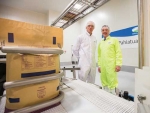
Fonterra's $231 million upgrade of its processing plant at Pahiatua has used new technology to reduce the amount of water consumed, while trebling production.
Fonterra's new $235 million dryer at its Pahiatua site in Manawatu has processed its first milk.
PAHIATUA DAIRY farmer David Swansson says farmers need to be better prepared to deal with events such as droughts, floods and storms. After getting caught a few years ago he vowed never to let it happen again.
SIMON WALKER and his wife Louise are the fourth generation to farm Ross na Clonagh just out of Pahiatua in the Tararua District. The name of the property dates back to Simon's great grandfather who left Ireland aged 17 in the 1880s and soon acquired the property by ballot.


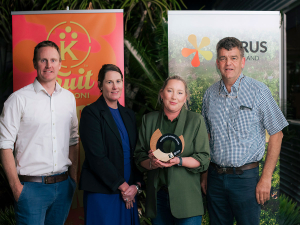
New Zealand's citrus growers were challenged to build their future on the value embedded in their fruit rather than the volume they produce, at Citrus New Zealand's annual gathering in Gisborne on 17 September.
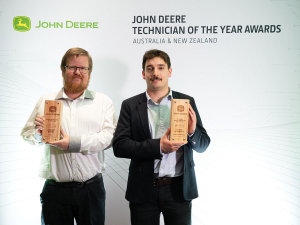
Leading John Deere technicians and apprentices from New Zealand and Australians were recognised at the recent sixth annual JD Technician of the Year Awards, held in Brisbane.
In Dacre, near Invercargill in New Zealand’s South Island, Bruce Dinnington is running a dairy operation unlike any other.
A free online platform aggregating governance vacancies across rural and regional New Zealand has been launched.
Environment Minister Nicola Grigg has announced details of a new rural plastics recycling scheme.
Agricultural drone operators say that a government decision to allow lower-risk drone work without certification won’t lower standards but drive innovation and efficiency.


OPINION: It seems Canterbury processor Synlait is still in the doldrums.
OPINION: Get offside with New Zealand First leader Winston Peters at your own peril.




