Farmers to get more feed choices as Farmlands acquires SealesWinslow
From this winter farmers will have a greater choice of feed types and blend options than ever before, thanks to Farmlands' purchase of animal nutrition company SealesWinslow.




 increase font size
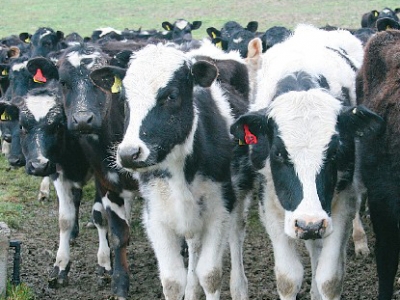
Animal nutrition company SealesWinslow says weaning calves from milk when they reach 65kg could add to the bottom line if a good value meal and pasture is added to the diet early on.
Wendy Morgan, nutrition and quality manager at animal nutrition company SealesWinslow, says farmers who are looking for ways to make cost savings this season could review the cost of rearing calves.
“To wean from milk, start weighing calves at six weeks of age. An animal can be weaned once it has reached 65kg, has an obvious rumen (a pot belly when looking at it from behind) and is eating 1kg of meal for three consecutive days,” she says.
Morgan says the whole feed programme can be evaluated.
“The process of moving calves from milk (highest cost feed) to meal (mid cost) to pasture (cheapest feed option) can be made more economically efficient. The key is selecting a formulated calf feed which will encourage early intake, maximise rumen development and allow the calf to be ready to digest pasture as quickly as possible.”
Morgan says this is especially relevant when it comes to replacement heifers.
“Heifer replacements influence future milk production so giving them the best start will assist them to be efficient when in the milking herd. In calves, starch is crucial for the development of rumen papillae and formulated calf meal contains a balance of starches to help maximise this growth.
“Premium calf meal also contains sugars, protein and minerals, which contribute to optimum skeletal growth and muscle development. Feeds which are not specifically targeted for calves may not include these nutrients, or may not be in the correct proportions for the calf.”
Morgan says if animals are not weighed regularly to identify a good weaning weight, they may reach a weight of 80kg or more while still on milk.
“There is no need to keep providing milk through to this weight range when the animal could have been weaned on to meal and pasture,” she argues.
“Four litres of milk is equivalent to 1kg of meal in feed value for a calf. At a $3.85 payout, calf meal at, for example $850 per tonne, costs 85 cents per kg of dry matter. The equivalent four litres of milk at 8% solids equates to 0.32MS and costs $1.23 per feed.
“Even at a below average payout, income is optimised by leaving milk in the vat,” says Morgan.
From this winter farmers will have a greater choice of feed types and blend options than ever before, thanks to Farmlands' purchase of animal nutrition company SealesWinslow.
Good milk flows, healthy cows and fewer spring headaches are all possible if cow body condition score (BCS) is well managed between drying off and next season's calving.
Trace elements are the ‘invisible fence at the top of the cliff’ that can protect a dairy herd’s health and ensure cows meet their full production potential, says SealesWinslow nutrition extension specialist Simon Butler.
OPINION: Few things are more stressful for dairy farmers than running out of feed when cows need it most.
Waikato dairy farmers are well-placed heading into the peak of summer, thanks to favourable growing conditions late last year that resulted in abundant onfarm feed reserves.



Now in its fourth year, the 2026 Fencing Industry Awards, formed part of the proceedings of the FCANZ Conference, held in Nelson during August.
DairyNZ deputy chair Cameron Henderson has been re-appointed unopposed for another term.
OPINION: The stats speak for themselves.
Farms across the upper North Island are trialling different pasture mixes as part of a research programme that aims to build greater resilience into farming systems.
Election years are always a concerning time for farmers, according to DairyNZ chair Tracy Brown.
The Ballance Farm Environment Awards are coming to the West Coast of the South Island.




OPINION: It seems Canterbury processor Synlait is still in the doldrums.
OPINION: Get offside with New Zealand First leader Winston Peters at your own peril.