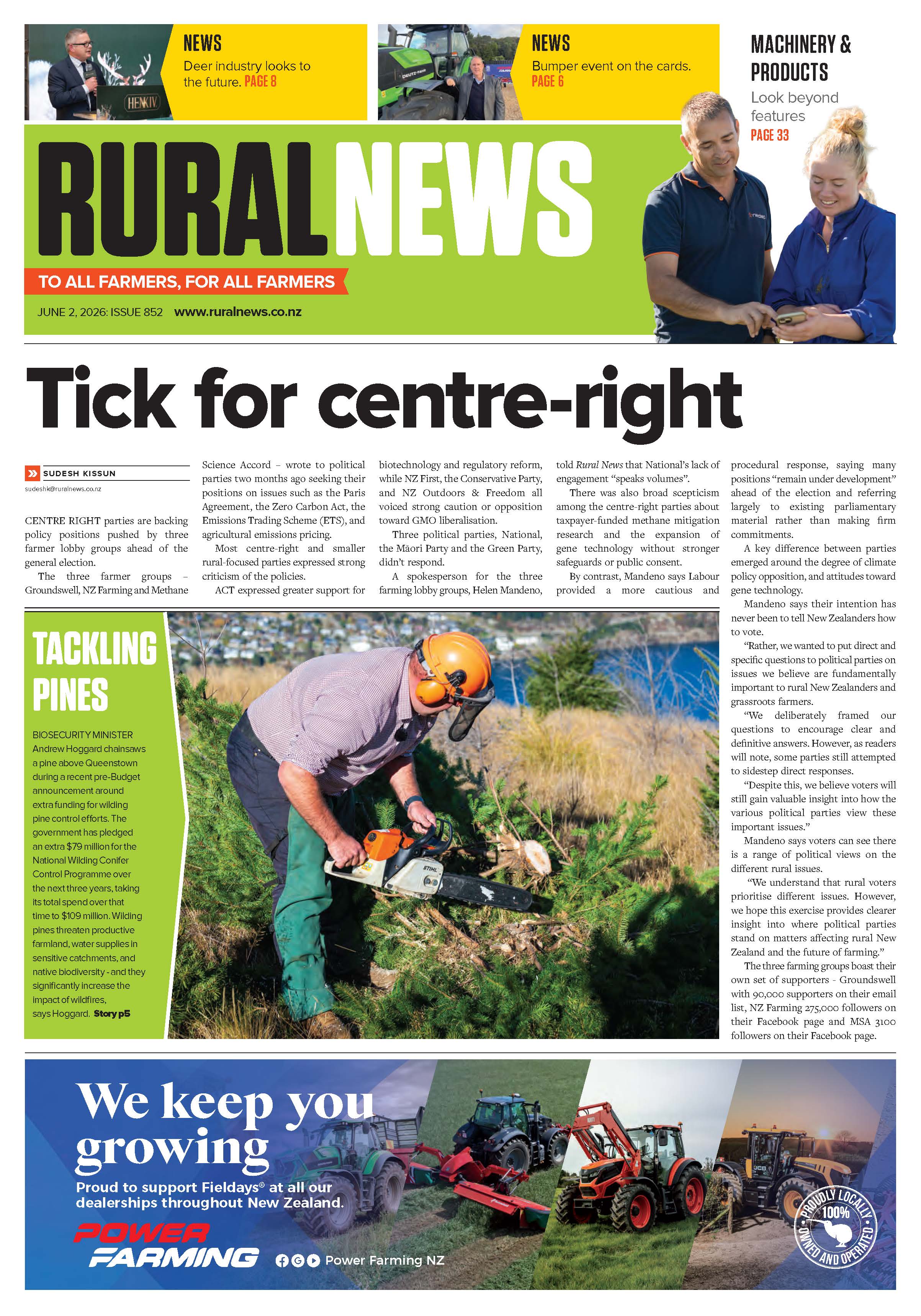
Closing the Loop: Carbon Amendments & Vineyard Soils
New Zealand’s wine industry produces around 100,000 tonnes of grape marc waste annually, while the forestry sector generates over five million tonnes of wood residue.




 increase font size
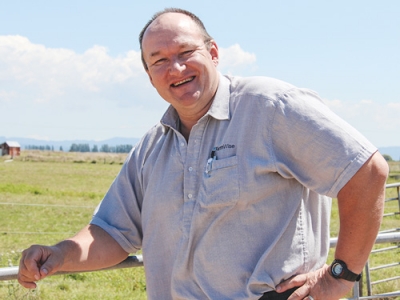 Brent Boyce.
Pasture quality is crucial for achieving profitability, high milk solids production, cow condition score targets and good in-calf results. But what a pain it has been trying to manage quality during this season of stop-start growth.
Research has long backed the need for quality pasture at every grazing. Lately the Lincoln University Dairy Farm has attained impressive performance by focusing on producing high ME feed for every grazing.
How do we emulate these results on our own farms?
Crucially, aim always to get the cows to graze down to a post grazing residual of 1500-1600kgDM/ha -- the famous 7-8 clicks. Most importantly, target grazing at the third leaf stage of pasture growth by means of correct grazing rotation.
Trouble is many farms don't have perfect paddocks or a high enough stocking rate to apply enough grazing pressure every day during the critical times of the season. Also many farms do not have pivot irrigation or they have minimal new pastures; and some farmers lack the time or management skills to achieve the desired post grazing residuals at every single grazing. Mistakes happen.
With the cold winter for many this season, the onset of sudden stem syndrome will come surprisingly early in a lot of regions. Ryegrass stem elongation (with the associated hardened stalky clumps) is appearing now, well in advance of typical seed head emergence. Average pasture covers are going from rags to riches on my farms and right around the country from all accounts.
This is starting to cause serious grazing management issues.
If too much grass has been left behind, another common option earlier in the season has been to use available dry cows or yearling heifers to clean up. Alas these 'follow-up' grazers often don't take the clumps down. They simply take the grass down between the clumps, further exacerbating the quality issue.
We dearly need those hardened clumps back in the grazing round as they typically grow twice as fast as the rest of the sward. They will produce lots of available feed in the next round if they can be made palatable again.
Paddocks are being dropped out for supplements and summer/winter cropping, and of course the milking cows are being put back into paddocks wherever practical to clean up high grazing residuals; then, the first thing to ask is "is it achievable?"
Sometimes the pasture quality in that residual may be too far gone (stalky and ungrazeable) and you may achieve very little apart from cows bellowing at the gate and a shock in the vat at the next milking.
Also, consider the cost of time shifting the mob twice, the likelihood that the next designated paddock will now also have a quality problem due to a grazing delay, and the possible issues you may have with lost milk production, increased lameness, reduced cow condition score or reproduction losses due to the likelihood of underfeeding or low quality feed during the clean-up of that paddock.
For many, the problem of these increasing post grazing pasture residuals will need to be dealt with by burning diesel. So, if we are going to burn diesel, what's the best way to do this?
Be strategic with your mowing:
Always let the cows graze it first when you have it right.
If the cows leave clumps that will have a detrimental effect on cow performance – top it.
Top any clumps or high residuals left after grazing. If you can't mow the paddock, use the cows to clean it up; but expect lower production. Aim for 1500-1600 residuals with the mower.
Mow excess feed in front. That is, feed 200kgDM/ha + more than cow requirements, but only mow in front if you have quality feed down to the 1500-1600 residual. This can be a useful tool if you don't have a genuine surplus -- just a couple of paddocks -- or if the silage contractor is delayed.
Note that if there was poor quality, a high residual or weeds on the last round, better to let the cows pick the eyes out of it and top behind. You can then mow in front on the next round if there is excess feed, or simply let the cows graze it.
It is important to remember that clumps left going into summer don't grow either. They are usually unpalatable and are not eaten by the cows – so top any rubbish pasture going into the dry. It is good practice to get these clumps sorted down to 1500-1600 whenever practical.
• Brent Boyce is FarmWise consultant for Nelson & Marlborough.
New Zealand’s wine industry produces around 100,000 tonnes of grape marc waste annually, while the forestry sector generates over five million tonnes of wood residue.
A young man just five years out of his Lincoln University degree already has his foot in the door of farm ownership, as equity manager of a large new dairy conversion now taking shape in Mid- Canterbury.
Analysis of decades of research has revealed the good farming pracrtice plays a critical role in reducing nutrient losses to improve freshwater outcomes.
A Lincoln University research fellow is working to safeguard grapevine species from extinction, using careful science and liquid nitrogen.
The South Island Dairy Event has announced Jessica Findlay as the recipient of the BrightSIDE Scholarship Programme, recognising her commitment to furthering her education and future career in the New Zealand dairy industry.


Joshua Irving has been named the 2026 Ormond Nurseries North Canterbury Young Viticulturist of the Year.

Vets say they support the responsible use of virtual fencing and virtual herding technology for cattle and wants to work with farmers, manufacturers and government to help shape standards for future use backed by ongoing research to strengthen animal welfare outcomes.
National and world records tumbled as top Kiwi axeman claimed two Stihl Timbersports world titles at the same event in Budapest, Hungary over the first weekend in June.
A safety push across New Zealand has revealed significant gaps in hazardous substances management, farm vehicles, tractors, quad bikes and side-by-sides.
New Zealand farmers have earned a global edge by consistently yet cautiously taking advantage of emerging agri-technology.
New season data from LIC shows a strong reproductive performance for the 2025-26 season, with a lift in key metrics compared to last season.
OPINION: Reckless action by Greenpeace in 2024 forced Fonterra to shut down a drying plant for four hours, costing the co-op…
OPINION: The global crusade against fossil fuel is gaining momentum in some regions.