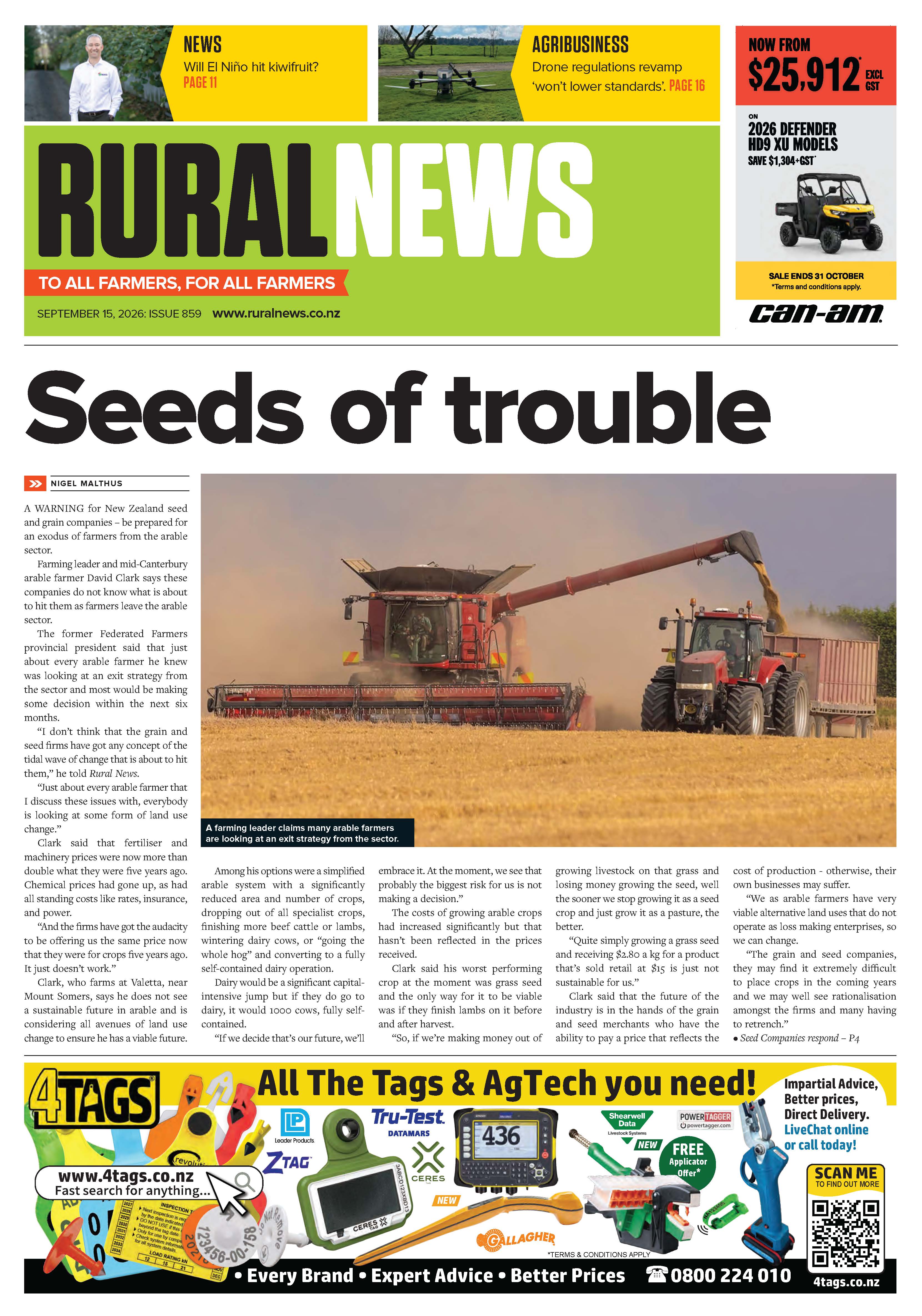
Right trace element will boost growth
Trace element deficiencies can reduce growth rates in both R1 and R2 cattle, delaying time to service and extending age at calving, says Annie Williams, an Agrimin animal scientist.




 increase font size
UK company Agrimin Ltd, maker of trace element boluses for cattle and sheep, has launched its products in New Zealand through its subsidiary Agrimin NZ Ltd.
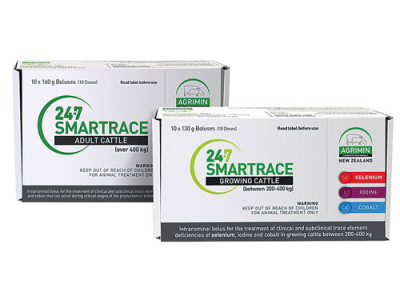
Its Smartrace Adult Cattle and Growing Cattle bolus products are registered as veterinary medicine products with ACVM; they provide cost-effective avoidance of deficiencies in growing and adult cattle in a single easy application.
Agrimin 24·7 Smartrace Adult Cattle and Smartrace Growing Cattle are intra-ruminal eroding boluses for the treatment of clinical and subclinical trace element deficiencies. The boluses have been evaluated at Te Kauwhata under practical farm conditions; they are widely used in the UK and globally.
“Trace elements deficiencies are a significant, but treatable drain on performance and profitability; selenium, iodine and cobalt are particularly influential,” says Annie Williams, Agrimin’s animal scientist.
“They promote growth, fertility and a healthy immune system. Providing a balanced supply of trace elements allows animals to perform to their potential with more cost-effective growth.”
Agrimin’s sustained-release eroding bolus constantly supplies key trace elements at a controlled dose rate. Administered using a specially designed applicator, the bolus moves quickly to the rumen and, due to its high density, lodges safely in the reticulum.
The wrapper dissolves and the two parts of the bolus physically erode to release the elements. As the density remains unchanged, the bolus stays in the reticulum. There is 100% retention and no residue at the end of the bolus’s life.
“The trace elements are dispersed evenly throughout the bolus ensuring rapid and consistent supply into the bloodstream,” says Williams.
“Trace elements are released from the bolus from the day of application, with immediate benefit. As dosing can be combined with other treatments there is minimal stress to the animal.”
The 24·7 Smartrace Adult Cattle bolus is for the treatment of selenium, iodine and cobalt deficiencies that can occur during critical stages of the production or breeding cycle. They are formulated for adult cattle weighing in excess of 400kg. It should be used during the winter period and at dry-off. The iodine content makes it ideal for brassica fed animals which are particular susceptible to iodine deficiency.
The growing cattle bolus is designed to treat deficiencies of the same vital elements in younger cattle weighing 200-400kg. It is for supplementing cattle on marginal land, and for animals reared off farm and in calf heifers.
“24·7 Smartrace boluses offer a convenient, fast acting and efficient approach for producers determined to reduce the economic losses associated with trace element deficiencies,” says Williams.
Trace element deficiencies can reduce growth rates in both R1 and R2 cattle, delaying time to service and extending age at calving, says Annie Williams, an Agrimin animal scientist.


In Dacre, near Invercargill in New Zealand’s South Island, Bruce Dinnington is running a dairy operation unlike any other.

A free online platform aggregating governance vacancies across rural and regional New Zealand has been launched.
Environment Minister Nicola Grigg has announced details of a new rural plastics recycling scheme.
Agricultural drone operators say that a government decision to allow lower-risk drone work without certification won’t lower standards but drive innovation and efficiency.
OPINION: Warning bells are ringing in the arable sector.
Farmgate lamb prices are down by 8%, beef cattle by 4.5% and farm expenditure up by 4.2%.


OPINION: It seems Canterbury processor Synlait is still in the doldrums.
OPINION: Get offside with New Zealand First leader Winston Peters at your own peril.