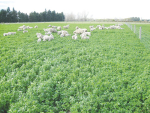
B+LNZ Urges Farmers to Graze Lucerne Hard Before Winter Weed Control
Beef + Lamb New Zealand is reminding farmers with lucerne stands to graze them hard over the next few weeks in preparation for a winter weed control programme.




 increase font size
 It is important to empty your ponds and storage in preparation for spring.
As we approach the winter months it’s important to be prepared for the challenges and uncertainties that come with unpredictable weather events.
Winter can be challenging enough as it is, so having some contingency measures in place can help take some of the stress off. Here are some contingency measures you can take to protect your farm.
1. Ensure council and dairy company compliance: Make sure you’re compliant with both your local council and dairy company (this will likely be a condition of supply.) The last thing you need over winter is to be pressured to make changes, or worse, slapped with a fine. If you’re unsure or just want expert advice on the best plan of action so you can do it once and do it right, talk to an accredited effluent management system designer. They’ll be able to tailor a plan for your situation.
2. Ensure the functionality of your storm water diverter: Now is a good time to make sure your storm water diverter is functioning correctly or get one installed if needed.
3. Prepare storage and effluent management equipment: If you need more storage, or want back-up storage, consider purchasing a bladder tank. These can be both cost-effective and easy to install, requiring minimal earthworks. Being closed storage you also won’t be worried about it filling up with rain.
It is important to empty your ponds and storage in preparation for spring. This is a good opportunity to review your effluent equipment in terms of efficiency, effectiveness and functionality and repair/ replace anything that is not up to scratch.
Portable effluent management equipment that doesn’t require electricity to operate can be a huge benefit.
Tractor driven PTO pond stirrers can be taken to multiple storage areas and are also great to ensure the pond is thoroughly mixed before emptying with minimal sludge or solids left behind. PTO pumps are great for pumping thicker slurries and from various places.
As for spreading, both drag hose systems and slurry tankers give the ability to spread anywhere over the farm. Drag hose systems are an efficient option for farms with large storage wanting to empty ponds fast, and all in one go. Slurry tankers are a great all-round solution. They allow for easy spreading when you want to, while also being great for handling thicker slurry, and cleaning out ponds, troughs, underbarn storage and weeping walls without the mess of a digger.
4. Invest in a flood pump: If you live in an area prone to flooding, consider purchasing a flood pump as a ‘no-brainer’ insurance policy. The key to saving crops and pasture from drowning is time, so pumping the water off fast is critical. It will also save the stress and hassle of having to re-grow and buy in additional feed. Sharing a pump with your neighbours could be a good option if appropriate.
If you do have or get a flood pump, find a good place to park it so that in the event of a flood you can act fast to deploy it. The faster you can act, the less impact the water will have on your crops and revenue.
5. Be prepared for power outages: With unpredictable weather patterns, it’s important to be prepared for power outages. Consider purchasing backup generators or alternative sources of energy to ensure your farm can continue to operate during outages.
By taking these steps now, you can have peace of mind knowing your farm is as protected as you can make it against the challenges and uncertainties of the winter months.
Lloyd Thomas is a Nevada effluent management specialist
Beef + Lamb New Zealand is reminding farmers with lucerne stands to graze them hard over the next few weeks in preparation for a winter weed control programme.

Southland farmers are being encouraged to get ahead of the winter grazing season by attending a practical field day in Pukerau next week.
Traditional spreading via tankers or umbilical systems have typically discharged effluent onto splash-plates, resulting in small droplet sizes, which in turn lead to odours, but probably more importantly, the loss of nitrogen by volatilisation.
How often should an effluent pond be stirred?
Growing more with less water: these buzzwords get attention from people as the right, responsible, way to proceed with water use.



Federated Farmers has welcomed new rural policies released by ACT, saying they align closely with its own election priorities.

Rural Contractors NZ says proposed changes to land transport rules for agricultural vehicles are a welcome response by the Government to out of date regulations which have seen members hit with huge fines.
Alliance is calling for final applications for its 2027 Graduate Programme, with applications closing on Sunday 25 October.
Decades piloting planes has ensured vet and farmer David Hayes is focused on safety. So, after a serious accident while welding on farm, he is sharing his experience so others can learn from it.
Canterbury milk processor, Synlait Milk has confirmed Leon Fung as its chief executive officer.
OPINION: Making it easier to collect rainwater and use it to grow crops and livestock is a no brainer.




OPINION: It seems Canterbury processor Synlait is still in the doldrums.
OPINION: Get offside with New Zealand First leader Winston Peters at your own peril.




