Why Now Is the Time to Plan Farm Succession, Findex Says
OPINION: Succession and long-term planning are perennial topics because it is perpetually sidelined on busy farms.




 increase font size
OPINION: It was only in 2018 that the Chinese Government embarked on a mission to lift domestic milk production and stop billions of dollars from leaving the country and into the hands of exporters like New Zealand.
It paid off. Chinese net total dairy product import volumes fell 15.7% year on year in 2023, with imports of whole milk powder - a major New Zealand export product - down 395.
However, six years later over-leveraged Chinese farmers are dumping milk and culling cows because it’s no longer financially viable to be a dairy farmer.
Demand for milk has fallen in China because of a slowing birth rate and a broader pullback in consumer spending, a hallmark of China’s struggle to recover its economy.
Now, the Government is rolling out stimulus packages to help dairy farmers.
A drop in China’s milk production may be good news for NZ exporters. China’s pain could be NZ’s gain.
OPINION: Succession and long-term planning are perennial topics because it is perpetually sidelined on busy farms.
OPINION: Being a stock manager of a Government MP's farm can come in handy.
OPINION: Groundswell's opinion of the incumbent farm industry representatives isn't high.
Farms across the upper North Island are trialling different pasture mixes as part of a research programme that aims to build greater resilience into farming systems.


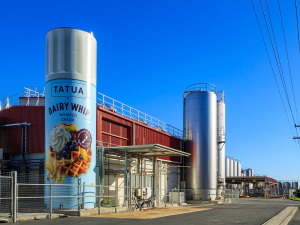
Waikato milk processor Tatua has again declared a record milk payout to farmer shareholders, leaving other processors in the dust.

A Labour-led Government won’t be bringing back the controversial freshwater rules of 2020.
National’s much-touted free trade deal with India featured in the Rural Issues Debate at Mystery Creek, Hamilton on Wednesday night.
New Zealand's 2026-27 freshwater fishing season has opened, with anglers encouraged to head to rivers and lakes over the coming days as conditions look favourable across much of the country.
Central Otago District Council (CODC) has voted against a plan to spread treated sewage sludge from Cromwell and Alexandra on farmland near Lauder, a decision Federated Farmers says reflects strong opposition from rural residents.
Pāmu has released its FY26 Integrated Annual Report, reporting a Net Operating Profit of $113 million, more than double the $49 million recorded in FY25.

OPINION: It seems Canterbury processor Synlait is still in the doldrums.
OPINION: Get offside with New Zealand First leader Winston Peters at your own peril.