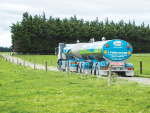
Fonterra FY26 Results: $9.69 Milk Price, $3.4bn Profit
Fonterra has unveiled its annual results for the 2026 financial year, posting $27 billion in revenue and close to $20 billion returned to New Zealand farmer owners and unit holders.




 increase font size
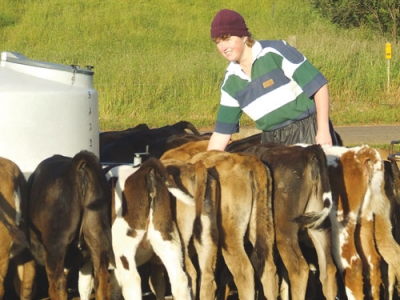 Australian farmer Cheryl McCartie wants opening milk prices announced earlier.
Australian farm leaders have again called for earlier forecasts of seasonal prices, eyeing companies that announced this season’s prices only one week out from the financial year.
United Dairyfarmers of Victoria president Adam Jenkins says the industry wanted profitable growth and would benefit from earlier forecasts of prices.
“We understand the market is volatile and everyone’s cautious, but we should get earlier notice,” he says.
“It is tricky because anything could happen in a month or so before the opening price, but an indication of a 12-monthly rolling average would be good for our businesses. It would help with planning.
“We’re generally autumn calvers in Victoria and you’re finishing off the last season’s pricing and then you’re not sure what the system looks like heading into the next season. As soon as you get a clearer line of sight you can make on-farm decisions.”
Fonterra last month said its opening average farmgate milk price would be NZ$6.30/kgMS for its Australian suppliers, who don’t own shares in the co-op. In May Fonterra announced an opening forecast price of $5.25/kgMS for its New Zealand farmer shareholders.
Fonterra is also forecasting an average closing farmgate milk price range of NZ$6-$6.83/kgMS for Australian suppliers this season.
Fonterra competes with Australian dairy co-op Murray Goulburn and foreign-owned processors Lion and Saputo for milk. Unlike NZ, where Fonterra dominates the market, in Australia MG, the biggest player, is the price setter.
Murray Goulburn last month also announced an opening forecast price of NZ$6.30/kgMS. The MG price for the southern milk region was forecast during its share offer at the start of May and farmers want those earlier predictions to continue.
South Australian Dairy Farmers Association president David Basham says that under their current mode of operation it would be difficult for processors to announce prices earlier, but he supported the call for lead-up predictions.
“Murray Goulburn this year with their capital raising said where they hoped the price would be and it hasn’t changed. Farmers are usually guessing until this point; there should be some predictions about what’s coming.”
McCartie says having earlier notice of likely prices would help farmers.
“The earlier we see those figures the better for everyone’s planning,” she says. “A lot of us are dealing with banks who want to know what’s happening. The more planning we can have, the better it will be.”
Fonterra has unveiled its annual results for the 2026 financial year, posting $27 billion in revenue and close to $20 billion returned to New Zealand farmer owners and unit holders.
Fonterra Co-operative Group has confirmed the independently assessed candidates standing for election to its board in 2026.
Fonterra has revised its Farmgate Milk Price forecast for the 2026/27 season, lifting the midpoint and narrowing the range on the back of improving global dairy commodity prices.
Outgoing Fonterra Co-operative Council chair John Stevenson says that it has been a privilege to represent the co-op's farmer shareholders.
OPINION: It seems Canterbury processor Synlait is still in the doldrums.


Federated Farmers says it welcomes Labour's commitment to reviewing the Sharemilking Agreements Act, calling on other major parties to do the same.
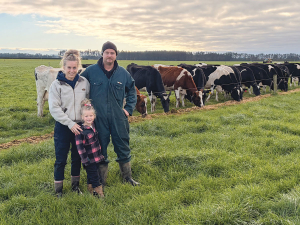
For Canterbury dairy farmers Sian Meijer and Rick Wobben, wearable technology has become one of their most valuable on-farm tools - helping manage 1850 cows across an expansive, high-performing dairy operation while improving efficiency, mating outcomes and day-to-day decision making.
Fonterra has unveiled its annual results for the 2026 financial year, posting $27 billion in revenue and close to $20 billion returned to New Zealand farmer owners and unit holders.
The first major update to the Dairy Cattle Code of Welfare in more than a decade has been released, marking what DairyNZ describes as an important step in ensuring animal welfare standards continue to evolve alongside scientific evidence and on-farm realities.
Ravensdown shareholders have elected Jane Montgomery and Kate Acland to the Ravensdown Board for three-year terms, following a closely contested director election.
Federated Farmers says new legislation replacing the Resource Management Act will cut red tape, unlock investment and help grow New Zealand's export-led economy, after the Planning Bill and Natural Environment Bill passed their third reading in Parliament yesterday.


OPINION: It seems Canterbury processor Synlait is still in the doldrums.
OPINION: Get offside with New Zealand First leader Winston Peters at your own peril.




