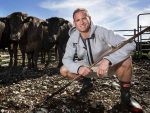
Former All Black backs down-to-earth rural internet provider
With the COVID-19 lockdown placing even greater emphasis on the need for reliable internet networks, a former All Black is working to keep New Zealand’s rural folk connected.




 increase font size

POLICY WORK on the $150m extension to the Rural Broadband Initiative (RBI) announced just before the election is now being carried out, says Communications Minister Amy Adams.
The new funding includes a $100 million contestable fund for further extension of broadband services into rural areas outside of the Ultra-Fast Broadband footprint and a $50 million Mobile Black Spot Fund, Adams explains.
She told Rural News it is too soon to know what form the improved services will take and/or the price for these services. “A range of possible options will be looked at including how the provision of internet to those in remote areas could be improved or supported.”
When she announced the deal, Adams said it would extend the number of rural customers which could access faster broadband. It will be financed by a three-year extension of the Telecommunications Development Levy – the levy on telecommunications companies.
RBI is a government initiative launched in 2011 to bring faster broadband to 252,000 rural households. Through RBI, Vodafone is building new wireless towers and upgrading existing ones for fixed wireless broadband service and improved cellular coverage for rural areas. Chorus is bringing new fibre to 799 rural schools and the 154 RBI wireless towers.
The latest update shows upgrades are now available to 230,000 households. However, questions have been asked by Labour’s telecommunications spokesperson Clare Curran and analyst Jonathan Brewer about the uptake, particularly of wireless RBI.
Both believe it is low, but say it’s hard to get figures. In answer to questions from Curran in Parliament in July, MBIE Minister Steven Joyce said the uptake for the RBI package fixed line, which includes fixed wireless, is 22.6% -- about 57,000 rural homes and businesses. The wireless Rural Broadband Initiative has only about 6000 users
Adams told Rural News for the Chorus fixed line upgrades, out of 72,068 households 57,375 had taken up the service at June 30, 2014 (79.6% uptake). At least 100,000 households will be upgraded under that programme.
Labour’s communications spokesperson Clare Curran says there’s a low awareness of RBI and she believes there should be much stronger marketing. While she applauds the extension of services announced before the election, she hopes it is a truly contestable fund with smaller internet service providers having a fair chance. Curran says she hopes it is not just a “slush fund” for the bigger players – Chorus and Vodafone – to further extend their RBI services, some of which she claims are “substandard”.
She believes smaller internet service providers can often provide specialist services designed for individual communities, which many rural areas need.
However, Adams says the Government is satisfied with the uptake rate given the roll-out is continuing. She adds that consumers in a number of areas now have added choices of providers and services, and access to better mobile coverage.
“As competition increases across the New Zealand broadband market we are seeing larger data caps and a variety of packages at different price points becoming available.
Adams says in addition to wireless broadband, new cellphone towers have increased mobile phone coverage in rural areas and are available to retail mobile providers.”
Slow uptake
Telecommunications consultant and analyst Jonathon Brewer says for the first year of service RBI wasn’t great and that didn’t help the uptake.
“That said, today I think RBI Wireless can be an excellent product,” he told Rural News. “RBI Wireless can be a faster, more reliable option for rural users who are on an ADSL cabinet installed before 2007.”
However, he says smaller providers outside of RBI claim to have thousands of customers between them.
“There are local and regional options from more than 20 small wireless ISPs that can offer better service at the same price as RBI,” he claims.
Brewer analysed broadband in New Zealand looking at the cost compared to recommendations from UNESCO and another UN organisation, ITU – that it ideally should cost no more than 5% of the median income of a country.
With the COVID-19 lockdown placing even greater emphasis on the need for reliable internet networks, a former All Black is working to keep New Zealand’s rural folk connected.

Farmers are calling for an improvement of the rural broadband network.
Rural Women New Zealand (RWNZ) says it is pleased to hear the Government’s announcement of new funding for improved rural broadband.
The Government will spend $15 million to improve rural broadband.
All three big telcos – Vodafone, Spark and 2degrees – are offering 24/7 unlimited data for urban broadband users in response to the COVID-19 lockdown forcing people to stay at home.



Three and a half years on from when Cyclone Gabrielle hit Hawke's Bay, some orchardists in the region are still receiving counselling to help them deal with the trauma they suffered.
South of the central Hawke’s Bay town of Waipukurau is Taniwha Station – a highly successful 550ha bull beef farming operation.
Beef + Lamb NZ funded research has shown that some simple changes to pasture management could help farmers make better use of rainfall and build resilience before dry conditions hit.
OPINION: There could hardly be a more appropriate theme for a conference than the one chosen by the red meat sector - Navigating Volatility.
When Northland leather worker Vernon Suckling started making horse saddles 50 years ago, quad bikes and side-by-side vehicles were unheard of.
Alliance Group has confirmed that eligible farmer-shareholders who supply and continue to back the business will receive up to $20 million later this year, following the strategic investment partnership with Dawn Meats.





OPINION: The same mainstream media muppets that brought you Jacindamania in 2017 have been flat out pimping for the Opportunities…
OPINION: Your old mate reckons the atrocious way farmers in the UK are treated by their lords and masters in…




