Dairy
Supply pressures are continuing to provide support to commodity prices.
Most of the dairy complex saw prices lift across the month of October, with milk powder prices performing best. Further upside in commodity markets cannot be ruled out, as a slow start to the Oceania season coupled with sluggish production in the northern hemisphere has buyers on high alert. Milk production for September in New Zealand was behind last year by -4.3% on a tonnage basis (or -4% YOY on a kgMS basis), pulling milk production for the season to September lower by 3.5% YOY. October brings peak milk collections and RaboResearch anticipates the weaker supply trend will continue. Full-year production is now likely to be in negative territory.
Beef
The North Island bull price is holding firm as the new season gets underway.
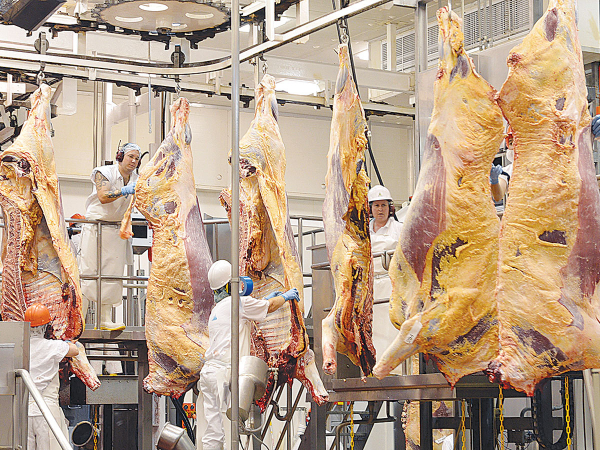
The schedule continues to track well ahead of the five-year average, with the North Island bull price sitting NZ$1.20/kg cwtahead of the five-year average in the last week of October. The South Island bull price at the end of October was sitting slightly behind the North Island on NZ4 6.15/kg cwt. The bobby calf kill for the 2021 season is back 1.5% on the previous season, despite more cows being retained. The cow kill is back around 1% compared to the 2020 season due to farmers choosing to retain more cows to capitalise on the high milk prcie forecasts. Although there is a strong beef schedule, anecdotally we understand that there are fewer 100kg calf contracts available this spring, making it unclear how many calves will be available for future beef supply.
The outlook for farmgate pricing is positive, however the strong NZ/US dollar cross is likely putting pressure on exporter margins. Rabobank anticipates farmgate beef pricing to remain elevated through to December due to strong demand from key markets and ongoing lower global beef supply.
Sheepmeat
There was a small lift in New Zealand sheepmeat exports for the 2020/21 season (+ 0.55%) compared to the 2019/2020 season. This was despite Covid-19 continuing to cause disruptions across the supply chain and in key markets throughout the 2020/2021 season. A significant decline in exports into New Zealand's second largest market, the EU-27 countries, has been offset by growth into China (largest market), and into the US (fourth largest market). The UK was New Zealand's third largest export destination for sheepmeat in the 2020/21 season. Lamb prices have slowed down, but remain firm.
The slow, cold start to spring in many areas of New Zealand is likely to result in weaning dates being pushed two to three weeks back. This delay could help to keep pricing elevated as processors compete for limited lambs supply, however, a late influx of lambs could then cause processing delays in December. RaboResearch anticipates farmgate lamb pricing will remain elevated for the remainder of 2021 due to strong demand from key markets and tighter new season lamb supply.
Exchange rate
The NZ$ gained 3% over October, with a firm footing above USc 0.71 by the end of the month. Near certainty of an interest rate rise in the last week of November, together with ongoing inflation concerns that mean another may follow quickstep, or as a double up, has lifted our expectations for the NZ dollar. The mid-October release of New Zealand's Q3 CPI inflation data at a much faster than expected rate (4.9% YOY and 2.2% QOQ for the biggest quarterly lift since 2010) triggered the most recent lift in the NZ$ and provided more reason for us to believe that the RBNZ will lift the cash rate by 50 bps by the end of the year. Rabobank forecasts the NZ$ will trade near to USc 0.71 on a three-month view and towards USc 0.73 on a nine-month view.
Farm inputs
Rabobank expects prices of fertiliser will remain at least at today's prices in the run-up to next winter. Of even bigger concern is supply, with challenges growing in the last month. It's due to these supply concerns that we think it is prudent that farmers assess their ordering options for next year's supplies - if they haven't done so already. While supply issues are ongoing, we expect demand will continue to act as a floor for high fertiliser prices, even if supply issues ease somewhat. On the agrochemical front, according to Chinese market commentator BAINFO, Chinese glyphosate suppliers are still not taking new orders, and have not been doing so for the last month.