
Diplomatic Incident
OPINION: Your old mate hears an international incident is threatening to blow up the long-standing Anzac alliance as Kiwis and Aussies argue over who wants new Australian resident and former NZ Prime Minister Jacinda Ardern.




 increase font size
 Photo: Maritime Trade Intelligence
An Australian scheme to better look after the welfare of exported livestock is working as intended, a federal Government report says.
The Department of Agriculture report says since it began in 2011 the Exporter Supply Chain Assurance System (ESCAS) has improved the welfare of exported animals.
ESCAS requires exporters to have commercial arrangements with supply chain partners to provide humane treatment and handling of livestock from arrival in the importing country to the point of slaughter.
Animal handling and slaughter at the destination must meet World Organisation for Animal Health standards and exporters must have control of all supply chain arrangements for livestock transport, management and slaughter. All livestock has to remain in the supply chain and the exporter must be able to trace or account for all of them.
The scheme is in response to public anger about the mistreatment of animals on their arrival in Middle East and Southeast Asian destinations.
Agriculture Minister Barnaby Joyce says the live animal export trade is essential to the livelihoods of thousands of Australians and underpins the economies of many communities. “In short it is essential for our nation,” he says.
Australia is the world’s second-largest exporter of live sheep and the fifth-largest exporter of live cattle.
Joyce says ESCAS began Australia has exported eight million livestock to 18 countries in 1139 consignments with only 22 incidents of animal welfare concern. “In light of this, government and industry are working together to open new export markets and to improve market access for Australian livestock to existing markets.”
The emphasis now, he says, is on the continuity of supply, “and this government has worked hard to repair the damage done by the previous (Labour) government to our international reputation as a reliable supplier.”
However, Royal Society for the Prevention of Cruelty to Animals chief executive Heather Neil says ESCAS has set a low bar and does not prevent Australian exported animals suffering.
The report says government and industry are working with trading partners to enhance animal handling and husbandry skills and improve animal welfare outcomes – training 7000 people to date.
“Industry is helping to upgrade facilities to meet international animal welfare standards and our commitment to this work is ongoing,” Joyce says.
In 2013–14 live exports earned A$1.24bn and represented 7% (live cattle) and 6% (live sheep) of total turnover in their respective industries.
Up to 10,000 are people involved directly and indirectly in the industry.
OPINION: Your old mate hears an international incident is threatening to blow up the long-standing Anzac alliance as Kiwis and Aussies argue over who wants new Australian resident and former NZ Prime Minister Jacinda Ardern.

OPINION: Your old mate hears that at a recent China Business Summit, PM Christopher Luxon delivered a none-too-subtle "could try harder" report card on the red meat industry regarding its exports to China - particularly when compared to Australia.
More Australian states are embracing virtual fencing technology, opening growth opportunities for Kiwi companies like Halter.
Fonterra says its ongoing legal battle with Australian processor Bega Cheese won’t change its divestment plans.
Farmers in the Australian state of New South Wales will soon be able to use virtual fencing and herding technology to boost farm productivity.


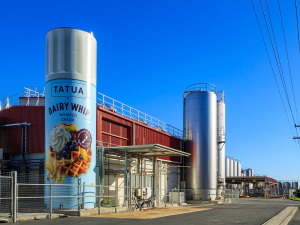
Waikato milk processor Tatua has again declared a record milk payout to farmer shareholders, leaving other processors in the dust.

A Labour-led Government won’t be bringing back the controversial freshwater rules of 2020.
National’s much-touted free trade deal with India featured in the Rural Issues Debate at Mystery Creek, Hamilton on Wednesday night.
New Zealand's 2026-27 freshwater fishing season has opened, with anglers encouraged to head to rivers and lakes over the coming days as conditions look favourable across much of the country.
Central Otago District Council (CODC) has voted against a plan to spread treated sewage sludge from Cromwell and Alexandra on farmland near Lauder, a decision Federated Farmers says reflects strong opposition from rural residents.
Pāmu has released its FY26 Integrated Annual Report, reporting a Net Operating Profit of $113 million, more than double the $49 million recorded in FY25.





OPINION: The same mainstream media muppets that brought you Jacindamania in 2017 have been flat out pimping for the Opportunities…
OPINION: Your old mate reckons the atrocious way farmers in the UK are treated by their lords and masters in…




