It's The Margins That Matter
OPINION: It appears to be difficult for people who haven’t tried to run a business to understand the difference between assets and cash.




 increase font size
 Photo: Andy Bourne.
Ravensdown’s Primary Growth Partnership programme has been extended so that research outputs will be valid for 90% of hill country.
The research involves aerial scanning of hill country farms combined with actual soil tests so a predictive model of soil fertility can be calibrated across the varied terrain.
New additional funding has been made available by Ravensdown and the Ministry for Primary Industries on a 60:40 basis so that the North Canterbury and Southland regions can be modelled and tested.
The farmer-owned cooperative has committed to invest $564,000 to complete this additional work, with MPI investing $376,200.
This PGP programme, called Pioneering to Precision, and an aligned Ravensdown funded programme, which is investigating improved aerial spreading precision, is at the three-quarter mark on its seven-year journey. The special aerial camera used by the programme scans 1,000 hectares per hour. These ‘AirScans’ can be turned into a soil fertility map that directs a GPS-enabled topdressing aircraft with computer-controlled doors to deliver fertiliser where it’s needed, instead of where it’s not.
Of the farms using the aerial spreading precision service so far, the system ensured fertiliser was avoided for 14% of land either because it was ineffective, culturally sensitive or environmentally vulnerable. The technology also makes it safer for pilots and can be better for productivity and the environment.
“When it comes to the aerial scanning of hill country, there will be some climate and soil differences which means you can’t necessarily take results from one part of the country and apply it to another,” says Mike Manning, Ravensdown’s general manager innovation and strategy.
“We’ve done a fair amount of calibrating actual soil results with modelled results across the east coast and central parts of the North Island, South Canterbury and Otago. While we wouldn’t expect the differences to says Manning.
Ravensdown is looking for farms in the newly-added areas who want to test their farm using the AirScan service.
“This additional funding and research extension is a great vote of confidence in the emerging technology, our management of this PGP programme, the promising results and relevance at a time when farming is tackling its environmental impact.”
OPINION: It appears to be difficult for people who haven’t tried to run a business to understand the difference between assets and cash.
OPINION: In the 1980s, concern was expressed in West Germany about the falling birth rate. Some simple analysis was performed by Professor Helmut Sies, physician and biochemist at Dusseldorf University. His letter ‘A new parameter for sex education’ was published in Nature in 1988:
When it comes to annual rebates, it's been a long time between drinks for Ravensdown shareholders.
Ravensdown has reported a net profit before tax and rebate of $50.1 million for the year ended 31 May 2026.
Farmer owned co-operative Ravensdown has signed a two-year naming rights sponsorship of the Canterbury A&P Show.

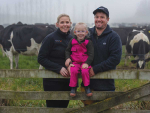
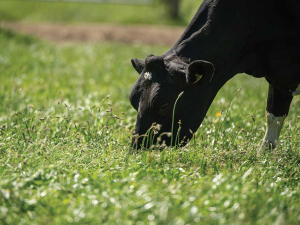
Farms across the upper North Island are trialling different pasture mixes as part of a research programme that aims to build greater resilience into farming systems.
Election years are always a concerning time for farmers, according to DairyNZ chair Tracy Brown.
The Ballance Farm Environment Awards are coming to the West Coast of the South Island.
Most dairy regions around the country have had a pretty good season so far says Tracy Brown.
Rural leader Mark Hooper has been appointed as an independent director to the NZPork board, bringing extensive farming, governance and advocacy experience to the role.

OPINION: The same mainstream media muppets that brought you Jacindamania in 2017 have been flat out pimping for the Opportunities…
OPINION: Your old mate reckons the atrocious way farmers in the UK are treated by their lords and masters in…