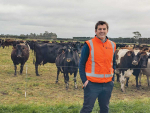
New Dairy Holdings CEO Backs Self-Contained Model
Running a tight and self-contained ship is the key to the success of the country's largest dairy farmer, says Blair Robinson, the new man at the helm of Dairy Holdings.




 increase font size
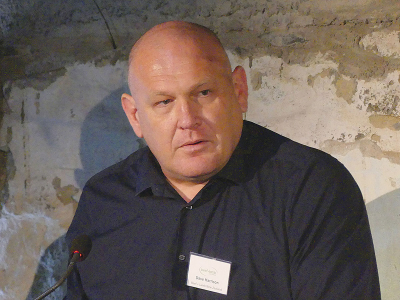 BLNZ general manager policy & advocacy, Dave Harrison.
Beef + Lamb New Zealand will soon start consulting with its farmers on the proposed levy to pay for the beef sector’s share of the Mycoplasma bovis response.
Beef farmers will be asked to approve a levy probably set at a maximum of $2.00 per cattle beast at slaughter.
BLNZ general manager policy & advocacy, Dave Harrison, told Rural News he was about to put a paper to the board and a recommendation will go to farmers shortly after, probably proposing a levy of up to $2.00.
But the levy would “fairly quickly decrease after that because most of the costs are incurred in the first two years,” he said. “We would pay that back over maybe three or four years, then the levy would drop markedly.”
BLNZ is in a similar position to DairyNZ, both having recently joined the Government Industry Agreement for Biosecurity Readiness and Response (GIA) in setting a base biosecurity levy to cope with a worst-case scenario -- a moderate foot and mouth outbreak. In BLNZ’s case that is 45 cents per animal at slaughter.
Both levying bodies now have to raise the levy limit to deal with their share of the M. bovis response.
The proposed $2.00 levy would be imposed on beef cattle, not dairy or sheep.
Speaking to the recent BLNZ annual meeting in Timaru, chairman Andrew Morrison said it had consulted with farmers when first joining the GIA and it will consult again over raising the levy.
The Crown is paying 68% of the cost of the M. bovis response and industry 32%, of which dairy will pay 94% and beef 6%.
Morrison said “a maturity of process” has got the parties to where they are now; Dairy NZ and BLNZ got together and agreed to ask an independent panel to decide the split between them, and to abide by the panel’s decision.
Meanwhile, Harrison says the M. bovis tracing system seems to be “getting ahead” of the disease.
“The advice from the technical experts is that it’s tracking as well as can be expected -- even better than we expected.... So on the basis of that and the information we get... there’s nothing [saying] we’re not moving in the right direction.”
Harrison said that for a long time the response had been well behind in its tracing, with a number of new traces arising from every infected property, all taking time to handle.
“It was just expanding, basically. And now we’re at the stage where we’re getting ahead of that.”
Running a tight and self-contained ship is the key to the success of the country's largest dairy farmer, says Blair Robinson, the new man at the helm of Dairy Holdings.
OPINION: It's no surprise that "world-class biosecurity" continues to dominate as the top priority for agribusiness leaders, holding the number one spot for the 16th consecutive year in KPMG's latest agribusiness report.
Matt McRae, a farmer from Mokoreta in Southland who runs a sheep, beef and dairy support business alongside a sheep stud, has been elected to the Beef +Lamb NZ Board as a farmer director.
Compensation assistance for farmers impacted by Mycoplama bovis is being wound up.
Recent widespread autumn rain will have triggered the germination of subterranean clover seeds, and the resulting seedlings should be allowed to reach the 3–4 trifoliate leaf stage before grazing, says Beef+Lamb NZ.

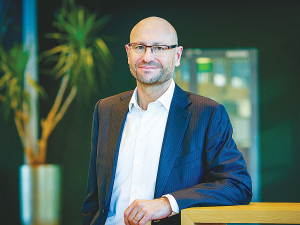
Farmer-owned fertiliser company, Ballance Agri Nutrients is welcoming National’s plan to negotiate security agreements with key supplier countries to protect New Zealand-bound products from export restrictions and greater supply chain certainty.
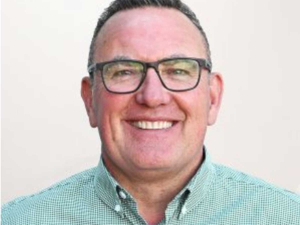
Carrfields has announced the appointment of Stu Hall to the newly created role of chief operating officer, Carrfields Ltd, reflecting the continued growth of their agribusinesses and the need to ensure the company has the leadership capacity and support in place as it pursues the emerging opportunities ahead.
New Zealand's role is not to compete with Indian growers, according to NZ Apples and Pears.
The potato industry is celebrating the success of two rising stars - James Blair, the 2026 Young Grower of the Year and runner-up and innovation award winner, Amber Davy.
Twenty-eight emerging leaders from across the horticulture sector spent two days last month learning valuable skills and connecting with industry experts.
There are five entrants in this year’s Young Horticulturist of the Year, competing in a series of technical, practical, business and leadership challenges.


OPINION: The same mainstream media muppets that brought you Jacindamania in 2017 have been flat out pimping for the Opportunities…
OPINION: Your old mate reckons the atrocious way farmers in the UK are treated by their lords and masters in…




