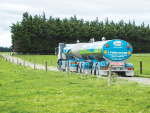
Fonterra FY26 Results: $9.69 Milk Price, $3.4bn Profit
Fonterra has unveiled its annual results for the 2026 financial year, posting $27 billion in revenue and close to $20 billion returned to New Zealand farmer owners and unit holders.




 increase font size
 Francesca Eggleton.
Fonterra aspires to play a global leadership role in reducing biological emissions in dairy, says Francesca Eggleton, the co-op’s group environment manager.
New Zealand is among the most emissions-efficient producers of milk, Eagleton told ‘Facing Disruption’, the recent Australia-New Zealand Climate Change and Business Conference in Auckland.
She says we can share knowledge and innovation while helping reduce domestic emissions. Dairy produces 25% of NZ’s greenhouse gas emissions.
Innovation will play a key role in addressing the problem.
“We clearly have a role to play in meeting the Paris agreement. Fonterra is NZ’s second-largest user of coal so again, we clearly have a role to play,” Eagleton says.
Fonterra’s vision for 2050 is to get its fossil fuel emissions down to net zero.
“We need to nail soil carbon storage and methane storage as well. We need to nail precision farming and keep working with our farmers to help them lower their environmental footprint.”
Eagleton says along with Fonterra’s 2050 targets it also has shorter-term targets. More information on those will be coming out shortly.
Last year, with the UN’s Food and Agriculture Organisation, Fonterra signed the dairy declaration setting out the key role dairy has to play in the UN sustainable development goals -- including climate action and livelihoods.
Dairy is a huge provider of livelihoods – and food security – in rural communities, Eagleton points out.
“We would like to say ‘nutritional security’ because it is not the calories that matter, it is how much nutrition you are getting and dairy is extremely nutritious.”
Collaboration is the key and Fonterra has partnered with DairyNZ on the Dairy for Climate Change Action Plan which sets out a framework for how the dairy industry will contribute to the Paris agreement.
“It is a phased approach and the first phase is very much focused on getting the foundations right. It is about making sure we’ve got the right education and awareness, demonstration farms, pilot measurement and then continuing to work on what that looks like.”
Fonterra has unveiled its annual results for the 2026 financial year, posting $27 billion in revenue and close to $20 billion returned to New Zealand farmer owners and unit holders.
Fonterra Co-operative Group has confirmed the independently assessed candidates standing for election to its board in 2026.
Fonterra has revised its Farmgate Milk Price forecast for the 2026/27 season, lifting the midpoint and narrowing the range on the back of improving global dairy commodity prices.
Outgoing Fonterra Co-operative Council chair John Stevenson says that it has been a privilege to represent the co-op's farmer shareholders.
OPINION: It seems Canterbury processor Synlait is still in the doldrums.



Federated Farmers says it welcomes Labour's commitment to reviewing the Sharemilking Agreements Act, calling on other major parties to do the same.
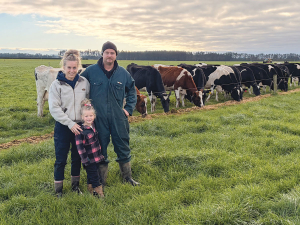
For Canterbury dairy farmers Sian Meijer and Rick Wobben, wearable technology has become one of their most valuable on-farm tools - helping manage 1850 cows across an expansive, high-performing dairy operation while improving efficiency, mating outcomes and day-to-day decision making.
Fonterra has unveiled its annual results for the 2026 financial year, posting $27 billion in revenue and close to $20 billion returned to New Zealand farmer owners and unit holders.
The first major update to the Dairy Cattle Code of Welfare in more than a decade has been released, marking what DairyNZ describes as an important step in ensuring animal welfare standards continue to evolve alongside scientific evidence and on-farm realities.
Ravensdown shareholders have elected Jane Montgomery and Kate Acland to the Ravensdown Board for three-year terms, following a closely contested director election.
Federated Farmers says new legislation replacing the Resource Management Act will cut red tape, unlock investment and help grow New Zealand's export-led economy, after the Planning Bill and Natural Environment Bill passed their third reading in Parliament yesterday.





OPINION: The same mainstream media muppets that brought you Jacindamania in 2017 have been flat out pimping for the Opportunities…
OPINION: Your old mate reckons the atrocious way farmers in the UK are treated by their lords and masters in…




