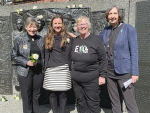
Award winner aims to put farmers in the clover
This year's Kate Sheppard Memorial Award recipient will support research to ultimately help New Zealand farmers choose forages for best production and drought resistance.




 increase font size

LINCOLN UNIVERSITY has welcomed the Government's decision to increase the level of Student Achievement Component (SAC) funding for science and agricultural based programmes.
Lincoln sees it as positive first step in ensuring the economic viability of supplying skilled graduates into New Zealand's most important sector.
SAC funding is the Government's contribution to the direct costs incurred by a teaching institution in delivering a particular course and varies depending on course type. The fees paid by a domestic student for tuition only cover a portion of the total cost incurred.
Lincoln University has argued for some time that the current level of SAC funding was inadequate relative to the costs associated with delivering primary sector science and business programmes. Further, it was felt that the scale of funding did not adequately reflect the contribution the primary sector makes to the New Zealand economy, nor the importance of ensuring skilled graduates into primary industry professions. Under the current funding model, some Lincoln University agricultural programmes have to be cross-subsidised.
"Countries such as Australia, which also owe a significant part of their GDP to the primary sector, provide far more funding toward such programmes," says Lincoln university assistant vice-chancellor (scholarship and research), Stefanie Rixecker.
"For instance, in the case of Australia, this can be around $10,000 more per fulltime student than in New Zealand. That means their funding could sit at around the same rate as dentistry or medicine. This shows the value they place on ensuring functional, technologically advanced land-based industries with skilled employees," she says.
For Rixecker, the move by the Government to increase SAC funding for university courses aligned to the land-based industries is encouraging, and, when coupled with other significant initiatives, such as the Lincoln Hub, indicates a sea change in attitude toward the science and business of the primary sector.
"The contribution the primary sector makes to the New Zealand economy is, and always has been, significant, and so the increase in funding is welcome," says Rixecker. "As New Zealand's specialist land-based university, over 50% of our student cohort is involved in study or research in agriculture – whether in commerce, science or both – or life sciences. As such, the SAC increase will go some way to help Lincoln University continue to deliver high quality programmes in these key areas, thereby contributing to New Zealand's competitive advantage.
"It's important to realise that this may very well be New Zealand's century. Global population pressures mean more demand for food, and this means increased food prices; irrespective of any added value in our current exports. If we get this right, if we're smart across all aspects of the sector – production, environment, biosecurity, marketing – then the country stands to gain handsomely. But this means continual support for the primary industry as a whole and the training institutions that supply the graduates," she says.
This year's Kate Sheppard Memorial Award recipient will support research to ultimately help New Zealand farmers choose forages for best production and drought resistance.

A Lincoln-based wool products company believes it offers a glimmer of hope against the increasing negativity currently saturating New Zealand’s strong wool industry.
The “mythology” of regenerative agriculture and lack of scientific evidence has prompted two renowned plant scientists to write to Ag Minister Damien O’Connor.
New research from Lincoln University has revealed that the genetic disposition of dairy cows could significantly reduce nitrate leaching.
Budget 2020 hasn’t provided anything of note for the primary sector at a time when it is leading our nation’s rebuild, National’s Agriculture spokesperson Todd Muller says.



LIC shareholders have elected a new North Island representative to the co-operative's Board, along with five representatives to its Shareholder Reference Group (SRG), following the company's Annual Meeting held in Invercargill.
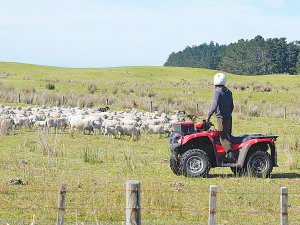
Farmers across parts of Southland and South Otago are continuing to deal with difficult conditions after a prolonged run of wet weather, with pressure building around feed supply, stock management, pasture damage, farm infrastructure and everyday workloads.
Federated Farmers says it welcomes Labour's commitment to reviewing the Sharemilking Agreements Act, calling on other major parties to do the same.
For Canterbury dairy farmers Sian Meijer and Rick Wobben, wearable technology has become one of their most valuable on-farm tools - helping manage 1850 cows across an expansive, high-performing dairy operation while improving efficiency, mating outcomes and day-to-day decision making.
Fonterra has unveiled its annual results for the 2026 financial year, posting $27 billion in revenue and close to $20 billion returned to New Zealand farmer owners and unit holders.
The first major update to the Dairy Cattle Code of Welfare in more than a decade has been released, marking what DairyNZ describes as an important step in ensuring animal welfare standards continue to evolve alongside scientific evidence and on-farm realities.





OPINION: The same mainstream media muppets that brought you Jacindamania in 2017 have been flat out pimping for the Opportunities…
OPINION: Your old mate reckons the atrocious way farmers in the UK are treated by their lords and masters in…




