Mark Hooper Joins NZPork Board as Independent Director
Rural leader Mark Hooper has been appointed as an independent director to the NZPork board, bringing extensive farming, governance and advocacy experience to the role.




 increase font size
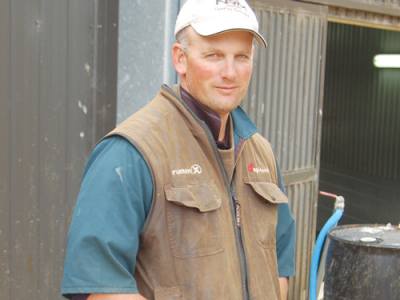 Federated Farmers Waikato president Chris Lewis.
Discussions held with Waikato Federated Farmers members have revealed significant concerns about the impact of the Waikato Regional Council's proposed 'Plan Change One'.
Federated Farmers hosted a meeting for the release of the report on its Farm Plan Project, which aimed to test drive the Farm Environment Plan part the proposed 'Healthy Rivers' Plan.
The Farm Plan Project used 13 Waikato (mainly drystock) farms as case studies to implement the 'Farm Environment Plans' which will be required by the new council Plan.
Fonterra also ran a parallel process to look at the effects of the report on 11 Fonterra dairy farms.
These farms were selected to represent a variety of land uses, farm types, catchments and geographic areas. The report only covered the FEP part of the Plan change. It did not cover costs and restrictions from the Nitrogen reference point and associated reductions, and also the land conversion restrictions.
At a meeting with the farmers involved the overall concern was that some farmers, even when they want to comply, won't be able to afford to do so. In particular there are worries that drystock farms in hill country simply will not be able to fence off all waterways from a costs or practical point of view.
The report shows considerable variation in the costs required to comply with the FEP policy, from $0 to more than $500,000, mainly for hill country fencing and water reticulation.
Federated Farmers Waikato president Chris Lewis says the project was conducted to take a snapshot of were the proposed Plan would impact most.
"It has been a very useful exercise for us to undertake," Lewis says.
"This report has given us practical experience of how this proposed plan would roll out.
"And now we know what the issues are, we will be making some strong submissions to council, and we’ll be calling for some substantial revision of parts of the policy."
Federated Farmers members from Auckland and Rotorua/Taupo could also be affected by the WRC Plan.
"We accept we are part of the problem, and need to be part of the solution," Alan Wills, Federated Farmers Rotorua/Taupo president says.
"But it is confronting for any farmer to face such a significant impact on their business."
Federated Farmers Auckland president Andrew Maclean shares similar concerns.
"We have members who have invested very significant capital in their businesses, over many years, and they are key employers in their communities.
"A plan like this puts a huge amount of uncertainty into small rural communities. We are planning on working solidly with the council to reduce the financial impact of these changes as much as possible, while achieving better water quality outcomes."
Rural leader Mark Hooper has been appointed as an independent director to the NZPork board, bringing extensive farming, governance and advocacy experience to the role.
OPINION: Get offside with New Zealand First leader Winston Peters at your own peril.
Milk powder prices are keeping farmgate prices up, helping processors offset the dip in milk fat prices.
Climate, nature and animal wellbeing make up Fonterra's refreshed sustainability roadmap released last week.



Now in its fourth year, the 2026 Fencing Industry Awards, formed part of the proceedings of the FCANZ Conference, held in Nelson during August.
DairyNZ deputy chair Cameron Henderson has been re-appointed unopposed for another term.
OPINION: The stats speak for themselves.
Farms across the upper North Island are trialling different pasture mixes as part of a research programme that aims to build greater resilience into farming systems.
Election years are always a concerning time for farmers, according to DairyNZ chair Tracy Brown.
The Ballance Farm Environment Awards are coming to the West Coast of the South Island.


OPINION: The same mainstream media muppets that brought you Jacindamania in 2017 have been flat out pimping for the Opportunities…
OPINION: Your old mate reckons the atrocious way farmers in the UK are treated by their lords and masters in…